Updates

  1. Person pages list letters, writing, profiles and links as sortable tables with filters, and show each person's companies as links; Fund letters show each letter's description in its own column.
  2. Experts show a checked job title and a short description of each person; 30 more people have photographs.
  3. Every company, fund, university and publication the experts work for has a page listing the people there.
  4. Fund letters show each letter's thesis and filter by it; 225 person pages list the essays, columns and newsletter issues the person wrote.
  5. Person pages list every essay and newsletter issue a person wrote, and their own books as a table in List view.
  6. Recommends shows the five largest kinds of book and the rest under More; browse pictures load sooner.
  7. Podcasts and talks link the original episode, filter by Audio and video or Press, and list each publisher once.
  8. Pages are wider, Recommends has List and Grid, and a filter clicked again turns off.
  9. Book cards sit in a ruled grid with Open Library and Goodreads links and each book's one-line note.
  10. Funds is now Investors; each investor's styles are buttons that filter the table.
  11. Podcasts and talks on a person's page filter by year and publisher and show as a list or a grid of pictures.
  12. Quotes show only people's own words: 472 summaries written by list sites are gone.
  13. Country pages open from Browse again, and every link on the shelf lands on a page.
  14. Subject and person pages show their sections as tabs, and each book appears once on a person's page.
  15. Book cards show the quote, who said it and the source; grids show five cards to a row.
  16. On a phone, a menu holds the sections, search, Updates, Feedback and dark mode.
  17. Feedback takes a screenshot of the page with no browser prompt, opens a screenshot full size when you click it, and clears itself once sent.
  18. Book cards are centred, search names the topic each book sits in, and any text cut short shows whole on hover.
  19. Search groups its results by kind: people, companies, geographies, subjects, topics, books, funds, fund letters and papers.
  20. The Books table lists who recommended each book by name, and the browser tab names the section you are in.
  21. Feedback can take a screenshot of the page, or one you paste or choose, and opens in the corner beside Updates.
  22. Each rail button reopens its section where you left it, and Browse, Table and People show on every book and subject page.
  23. Filters grey out choices that hold nothing instead of hiding them, and Books › People filters by authors or recommenders.
  24. Feedback takes a subject line and up to three screenshots.
  25. Biographies are grouped by the person they are about: 41 new pages, from Abraham Lincoln to Lee Kuan Yew.
  26. Sport splits into 23 sports, and Religion into one topic per faith.
  27. Book lists show as cards: the cover, one recommendation quote and every recommender by name.
  28. Seventeen subjects that had two or three pages under different names now have one page each.
  29. Every page lists its Experts as authors and recommenders, with a link to them on the Experts tab.
  30. Economics, Financial history, Financial panics and Accounting are subjects of their own, with one page per financial crisis.
  31. Book, person and subject pages open inside the app, so the tabs stay in view.
  32. 996 more book covers, and photographs or logos for 227 more people and companies.
  33. Books › Browse shows every subject as cards, and the rail holds Fund letters, Papers, Experts, Books and Funds.
  34. Every topic over 150 books splits into narrower topics, each with a page of its own.

Send feedback

What is it?
Screenshots, up to 3 (optional)
or paste one with Ctrl+V

We use your email only to reply to you.

Sneaker Wars

Sneaker Wars

Barbara Smit
2008
T3 384 pages · about 6h 24m to read Open Librarygoodreads

Adidas and Puma; the rivalry Nike displaced.

Summary

Barbara Smit, a Dutch journalist, tells the history of Adidas and Puma through the Dassler family, and in doing so writes the history of modern sports marketing. Adolf and Rudolf Dassler made shoes together in Herzogenaurach from the 1920s, fell out permanently during and after the war, and founded competing companies on opposite sides of the same river.

The commercial history is the substance. Smit documents the invention of athlete endorsement as a business: paying athletes to wear a brand, initially in cash handed over in secret because amateurism rules prohibited it, and the escalation of those payments through successive Olympic Games. She covers Horst Dassler, Adolf's son, who understood that controlling the sports federations mattered more than signing individual athletes, and who built relationships with officials at the International Olympic Committee and FIFA. Horst founded ISL, the agency that consolidated the marketing rights to major sporting events, and Smit traces the payments that accompanied those relationships and the ISL collapse in 2001 that eventually exposed them.

She also covers Nike's rise, the Adidas decline in the 1980s and its near-failure under Bernard Tapie's ownership, and the Reebok acquisition. The book combines family drama with a serious account of how sports became a marketing industry, and it is the standard source on the origins of the FIFA corruption that later became a criminal matter. It is journalism and reads quickly.

Key takeaways 7

  1. Athlete endorsement payments began as secret cash transfers because amateurism rules prohibited them.
  2. Horst Dassler recognised that influence over sports federations was worth more than contracts with individual athletes.
  3. ISL consolidated marketing rights to major sporting events and made the federations dependent on a single commercial partner.
  4. Payments to sports officials were an established business practice decades before they became a criminal matter.
  5. Adidas nearly failed in the early 1990s under financial ownership that had no interest in the product.
  6. Nike won the American market by understanding running as a consumer culture rather than as a competitive sport.
  7. Smit argues that the family conflict between the Dassler brothers created the competitive dynamic that built both companies.

Who should read it

Operators and investors in consumer brands and sports who want the origin of endorsement marketing and of the commercial structure of international sport.

Similar books 6

Chosen by shared topics, the entries that hold them, and the people who recommended both.
Phil Knight · 2016

How a running-shoe importer became Nike, surviving one cash crisis after another.

“…books I've recommended, highlighted to death, or forced on friends.” — Andrew Wilkinson

Source: Andrew Wilkinson's Bookshelf, neverenough.com

Recommended by: Andrew Wilkinson, Bill Gates, Mohnish Pabrai and 25 others
Dan Wetzel, Don Yaeger · 2000

Nike money inside youth basketball and endorsement pipelines.
Kenny Moore · 2006

Bill Bowerman, Oregon track coach and Nike co-founder, told by one of his runners.
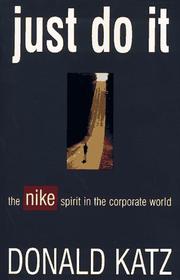
Donald R. Katz · 1994

A year inside Nike as it marketed its image worldwide in the 1990s.

Where it sits in the reference 2

Companies
Industries

Topics

Company HistoriesSportSport in general