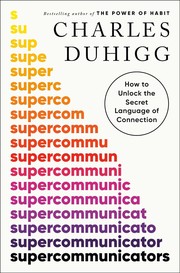
Supercommunicators
The three kinds of conversation, practical, emotional and social, and how to connect.
Summary
Charles Duhigg argues that whenever people speak they are taking part in one of three conversations: practical (what is this really about?), emotional (how do we feel?) and social (who are we?). Connection is hard when two people are having different conversations. Supercommunicators recognise which kind is under way and match it, and they hear the emotions, negotiations and beliefs that shape what is said. Duhigg notes that neuroscientists find the three kinds use different parts of the brain.
He sets out rules for having each conversation well; for an emotional one, the best response is to show empathy and match the other person's emotion, which does not mean claiming to know exactly how they feel. He mixes research with stories from jury deliberations, CIA recruitment, Netflix's company-wide conversations about equity and the writers' room of The Big Bang Theory. Published in 2024.
Key takeaways 5
- Every conversation is practical, emotional or social, and confusion arises when partners are in different ones.
- Asking whether someone wants to be helped, hugged or heard identifies the conversation.
- In an emotional conversation, empathy works better than solutions.
- Identities raised in a conversation, such as being a parent, change how people hear each other.
- Communication skill can be learned rather than being a fixed trait.
Who should read it
Anyone whose work depends on conversations, from managers to negotiators, who wants research-based rules for them.
Who recommended it 1 · 1 direct
Similar books 6
Chosen by shared topics, the entries that hold them, and the people who recommended both.
How to see other people deeply and make them feel seen.
“First part was great - so empathetic - about how and why to really get to know someone. I skipped the middle part about difficult conversations in the Culture Wars. Last part was great, about what it is to be wise.” — Derek Sivers
Source: Derek Sivers book notes (primary, rated list) · Rating: 8/10
Recommended by: Andrew Wilkinson, Bill Gates, Derek Sivers

Techniques for handling people, being liked and winning others to your view.
“If you want to learn what people want, read Dale Carnegie's How to Win Friends and Influence People.” — Paul Graham
Source: Why Smart People Have Bad Ideas
Recommended by: Mohnish Pabrai, Patrick Collison and 14 others

Why people misjudge advantage, and how underdogs win.
“…books I've recommended, highlighted to death, or forced on friends.” — Andrew Wilkinson
Source: Andrew Wilkinson's Bookshelf, neverenough.com
Recommended by: Andrew Wilkinson, John C. Bogle and 2 others
Four steps to speak without blame: observations, feelings, needs and requests.
“After years of so many people telling how much this book has helped them, I finally read it. And yeah, it’s impressive. Very compassionate and actively empathetic. Everyone who communicates should read this and take it to heart.” — Derek Sivers
Source: Derek Sivers book notes (primary, rated list) · Rating: 8/10
Recommended by: Andrew Wilkinson, Derek Sivers and 4 others
The lessons of The Tipping Point reframed, with cases from Miami to the Ivy League.
Recommended by: Andrew Wilkinson
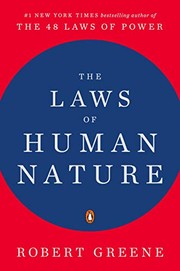
Eighteen patterns of human behaviour, from irrationality on, and how to handle them.
“If you've ever been curious about psychology or human behavior, it is by far the most comprehensive and memorable book I've found.” — Andrew Wilkinson
Source: Newsletter
Recommended by: Andrew Wilkinson, Library Mindset