Technics and Civilization
A history of the machine and a critical study of its effects on civilization.
Summary
Lewis Mumford's 1934 book presents a history of the machine and a critical study of its effects on civilisation. Drawing on art, science, philosophy and cultural history, he explains the origins of the machine age and traces its social results. His central historical claim is that modern technology has its roots in the Middle Ages, not in the Industrial Revolution.
Mumford argues that the moral, economic and political choices people made, not the machines themselves, determined the industrial economy of his time. The book combines history with polemic and was the first comprehensive attempt in English to describe the development of the machine age over the previous thousand years. It was written before television, the personal computer and the internet, and the publisher presents it as an early account of the hold technology keeps over modern life.
Key takeaways 4
- The machine age began in the Middle Ages, long before the Industrial Revolution.
- Social choices, not technology alone, shape how an economy uses machines.
- A thousand-year view of technology shows patterns that a focus on recent inventions misses.
- History of technology has to draw on art, philosophy and culture as well as engineering.
Who should read it
Readers interested in the history and social effects of technology who want a founding work of the field.
Who recommended it 1 · 1 direct
Similar books 6
Chosen by shared topics, the entries that hold them, and the people who recommended both.
A history of mechanical and engineering drawing.
Recommended by: Patrick Collison
Nineteenth-century cases of technological change and how society reacted to it.
Recommended by: Patrick Collison, Marc Andreessen
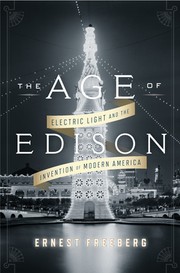
How Edison's electric light changed American life and marked a new age.
Recommended by: Alfred Lin, Patrick Collison

How the bomb was built, from the discovery of atomic energy to Hiroshima.
Recommended by: Jim Collins, Chris Dixon, Elon Musk and 2 others
How printing transformed communication and culture in early modern Europe.
Recommended by: Patrick Collison