Men, Machines, and Modern Times
Nineteenth-century cases of technological change and how society reacted to it.
Summary
Elting Morison uses a series of nineteenth-century cases to study the nature of technological change, the rifts it opens in society, and how society reacts. First published in 1966, the book aims at a positive alternative to Orwell's 1984: a way to organise ideas, energies and machinery so that they fit human dimensions.
It opens with resistance inside the United States Navy after an officer found a more accurate way to fire a gun at sea. Morison then tells the history of the Wampanoag, a new model of steamship of the 1860s; the difficulties met by pasteurisation of milk; the development of the Bessemer process for making steel; and, last, the computer. Each account carries anecdotes, and each bears on the same problem of how organisations absorb, or reject, a better technique.
Key takeaways 4
- Organisations often resist an innovation that is plainly better, as the US Navy resisted improved gunnery.
- Technical change splits societies and provokes predictable reactions.
- Morison draws cases from naval gunnery, steamships, pasteurisation, steelmaking and computing.
- He argues that systems of machinery should be managed to fit human needs.
Who should read it
Managers and historians of technology who want case studies of how institutions accept or block innovation.
Who recommended it 2 · 1 direct
Similar books 6
Chosen by shared topics, the entries that hold them, and the people who recommended both.

How the bomb was built, from the discovery of atomic energy to Hiroshima.
Recommended by: Jim Collins, Chris Dixon, Elon Musk and 2 others
A history of mechanical and engineering drawing.
Recommended by: Patrick Collison
A history of the machine and a critical study of its effects on civilization.
Recommended by: Patrick Collison
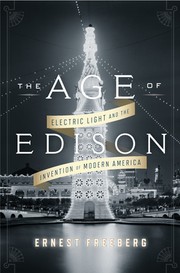
How Edison's electric light changed American life and marked a new age.
Recommended by: Alfred Lin, Patrick Collison
The building of the Panama Canal, from France's failed attempt to US completion.
“I read this to prepare for a family vacation to Panama. It's pure McCullough: epic drama, political intrigue, heartbreaking defeats, and eventual triumph.” — Bill Gates
Recommended by: Mohnish Pabrai, Bill Gates, Marc Andreessen