The Art of Worldly Wisdom
Three hundred maxims with commentary on how to live and advance in society.
Summary
Baltasar Gracian, a Spanish Jesuit priest and philosopher, published The Art of Worldly Wisdom in 1647. It is a collection of 300 maxims, each followed by a short commentary, on how to live fully, advance in society and become a better person. It belongs to the didactic prose of the Spanish Baroque.
The maxims give rules for succeeding in a complex and unstable society, on the premise that human nature changes little, so the advice still applies. The book was meant as practical guidance on living well, and the collection became popular across Europe; Arthur Schopenhauer translated it into German, and it influenced Nietzsche, Voltaire and Jacques Lacan. Joseph Jacobs's English translation of 1892 is one of several, alongside Christopher Maurer's of 1992.
Key takeaways 4
- Short maxims can carry a full guide to conduct.
- Gracian's advice assumes human nature is constant across centuries.
- Advancing socially and becoming a better person are treated as compatible aims.
- Schopenhauer's translation carried the book into German philosophy.
Who should read it
Readers who like aphorisms and practical philosophy on getting on with people and in careers.
Who recommended it 1 · 1 direct
Similar books 6
Chosen by shared topics, the entries that hold them, and the people who recommended both.
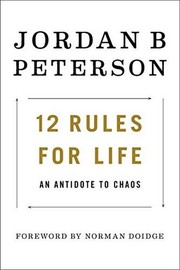
Twelve rules for living, each drawn from clinical practice, biology and myth.
“A unique thinker with strong opinions presented as indisputable fact. More surprisingly interesting ideas than almost any book I've ever read. Extremely thoughtful, but occasionally abruptly concludes with an unsupported point. It has a conservative “this is how it is” certainty. It’s a broad collection of thoughtful insights on life, mixed with a lot of Bible interpretation.” — Derek Sivers
Source: Derek Sivers book notes (primary, rated list) · Rating: 9/10
Recommended by: Derek Sivers, Guy Spier, Nat Eliason and 8 others
Aphorisms from the emperor's speeches, collected by Balzac in four themes.
Recommended by: Nat Eliason
A short New Thought essay on how a person's thinking shapes their life.
Recommended by: Nat Eliason, Tim Ferriss, Tony Robbins
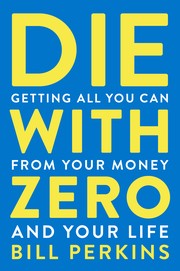
Why to spend and live fully while alive, rather than die with money unspent.
Recommended by: Ali Abdaal, Nat Eliason, James Altucher
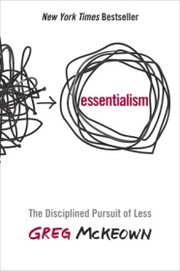
A method for finding the few activities that matter and dropping the rest.
“My favorite book of 2014. I bought it for the whole team at AppSumo.” — Noah Kagan
Source: The 25 Best Business Books I Ever Read (Out of 697)
Recommended by: Austen Allred, Matt Mullenweg, Nat Eliason and 10 others
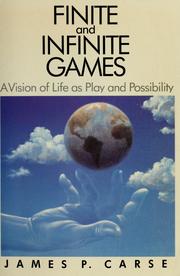
Finite games are played to win; infinite games are played to keep playing.
“So abstract. Maybe the most abstract book you'll ever read. Compares "finite" games with rules and winners, versus "infinite" games without winners where we can play with the game itself.” — Derek Sivers
Source: Book notes by Derek Sivers
Recommended by: Derek Sivers, Graham Duncan, Mohnish Pabrai and 9 others