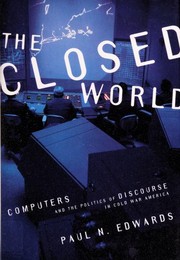
The Closed World: Computers and the Politics of Discourse in Cold War America (Inside Technology)
Computers as tools, metaphors and political icons in Cold War America.
Summary
Paul N. Edwards offers an alternative to the standard histories of computers and cognitive science. He argues that computers can only be understood as tools if their roles as metaphors and political icons are understood at the same time, and he shows how the social and cultural contexts of the Cold War shaped emerging computer technology and were in turn changed by it.
The book examines three histories that seem separate, the history of American global power, the history of computing machines and the history of subjectivity in science and culture, through the lens of the American political imagination. In the process Edwards traces close links between the military projects of the Cold War, the development of digital computers, and the origins of cybernetics, cognitive psychology and artificial intelligence. It was published in 1996 in the Inside Technology series.
Key takeaways 4
- Cold War military projects shaped the design of early digital computers.
- Computers worked as political symbols as well as machines.
- Cybernetics, cognitive psychology and artificial intelligence grew from the same military setting.
- Technology and political culture changed each other.
Who should read it
Readers of the history of computing, the Cold War and science and technology studies.
Who recommended it 1 · 1 direct
Similar books 6
Chosen by shared topics, the entries that hold them, and the people who recommended both.
How chips became the key to economic and military power, made in a few chokepoints.
Recommended by: Andrew Wilkinson
Douglas Engelbart and the origins of personal computing and its interfaces.
Recommended by: Patrick Collison
How the Bell Labs team of Shockley, Bardeen and Brattain invented the transistor.
Recommended by: Patrick Collison
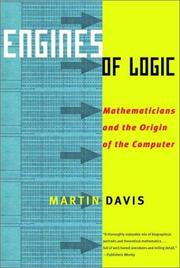
The mathematicians whose logic led to the computer.
Recommended by: Patrick Collison
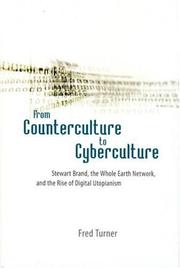
How computers went from tools of the Cold War to symbols of the counterculture.
Recommended by: Patrick Collison
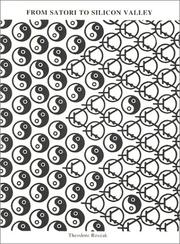
San Francisco's counterculture and its links to Silicon Valley.
Recommended by: Patrick Collison