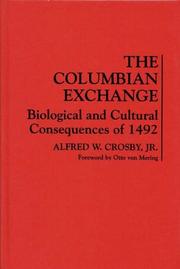
The Columbian Exchange
The movement of plants, animals, diseases and people between the Old and New Worlds.
Summary
Alfred W. Crosby's 1972 book coined the term Columbian exchange and helped found the field of environmental history. The exchange was the movement of cultivated plants, domestic animals, diseases and human culture between the Old World and the New in the centuries after Christopher Columbus's voyage of 1492; the subtitle is Biological and Cultural Consequences of 1492.
Crosby begins by contrasting the Old World and the New in the fifteenth century, then examines how the conquistadors brought disease and death to the indigenous peoples they met. He considers which Old World plants and animals were taken to the Americas, and re-evaluates the early history of syphilis, which broke out in Europe immediately after Columbus's sailors returned. He then examines the effect of New World foods on the population of the Old World, arguing that they substantially improved nutrition and population growth in the following centuries, and ends with the continuing effects of the exchange. The book is illustrated with historic images and with maps such as one of the distribution of blood-group genes among the world's aboriginal peoples.
Key takeaways 4
- European diseases devastated the indigenous peoples of the Americas.
- Plants and animals crossing the Atlantic changed farming on both sides.
- New World crops fed population growth in the Old World.
- Crosby treats biology as a main force in history.
Who should read it
Readers of world history, environmental history and the consequences of 1492.
Who recommended it 1 · 1 direct
“Alfred Crosby's The Columbian Exchange, which is basically what Jared Diamond ripped off when he wrote his book.”
Similar books 6
Chosen by shared topics, the entries that hold them, and the people who recommended both.
What the Americas were like before Europeans arrived, against the old view.
Recommended by: Mohnish Pabrai
The biological upheaval that followed Columbus's voyages, and the world it made.
Recommended by: Mohnish Pabrai
An ecological history of North America from the asteroid that killed the dinosaurs.
Recommended by: Stewart Brand
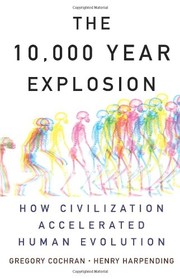
How lactose tolerance, malaria resistance and blue eyes evolved in 10,000 years.
Recommended by: Mohnish Pabrai, Nick Szabo
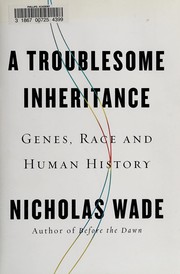
The genetic basis of race and its role in human history, from genome mapping.
Recommended by: Mohnish Pabrai
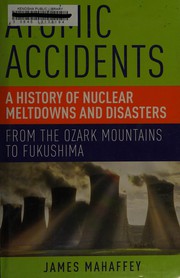
Nuclear accidents, what went wrong in each, and what each taught about the atom.