Updates

  1. Person pages list letters, writing, profiles and links as sortable tables with filters, and show each person's companies as links; Fund letters show each letter's description in its own column.
  2. Experts show a checked job title and a short description of each person; 30 more people have photographs.
  3. Every company, fund, university and publication the experts work for has a page listing the people there.
  4. Fund letters show each letter's thesis and filter by it; 225 person pages list the essays, columns and newsletter issues the person wrote.
  5. Person pages list every essay and newsletter issue a person wrote, and their own books as a table in List view.
  6. Recommends shows the five largest kinds of book and the rest under More; browse pictures load sooner.
  7. Podcasts and talks link the original episode, filter by Audio and video or Press, and list each publisher once.
  8. Pages are wider, Recommends has List and Grid, and a filter clicked again turns off.
  9. Book cards sit in a ruled grid with Open Library and Goodreads links and each book's one-line note.
  10. Funds is now Investors; each investor's styles are buttons that filter the table.
  11. Podcasts and talks on a person's page filter by year and publisher and show as a list or a grid of pictures.
  12. Quotes show only people's own words: 472 summaries written by list sites are gone.
  13. Country pages open from Browse again, and every link on the shelf lands on a page.
  14. Subject and person pages show their sections as tabs, and each book appears once on a person's page.
  15. Book cards show the quote, who said it and the source; grids show five cards to a row.
  16. On a phone, a menu holds the sections, search, Updates, Feedback and dark mode.
  17. Feedback takes a screenshot of the page with no browser prompt, opens a screenshot full size when you click it, and clears itself once sent.
  18. Book cards are centred, search names the topic each book sits in, and any text cut short shows whole on hover.
  19. Search groups its results by kind: people, companies, geographies, subjects, topics, books, funds, fund letters and papers.
  20. The Books table lists who recommended each book by name, and the browser tab names the section you are in.
  21. Feedback can take a screenshot of the page, or one you paste or choose, and opens in the corner beside Updates.
  22. Each rail button reopens its section where you left it, and Browse, Table and People show on every book and subject page.
  23. Filters grey out choices that hold nothing instead of hiding them, and Books › People filters by authors or recommenders.
  24. Feedback takes a subject line and up to three screenshots.
  25. Biographies are grouped by the person they are about: 41 new pages, from Abraham Lincoln to Lee Kuan Yew.
  26. Sport splits into 23 sports, and Religion into one topic per faith.
  27. Book lists show as cards: the cover, one recommendation quote and every recommender by name.
  28. Seventeen subjects that had two or three pages under different names now have one page each.
  29. Every page lists its Experts as authors and recommenders, with a link to them on the Experts tab.
  30. Economics, Financial history, Financial panics and Accounting are subjects of their own, with one page per financial crisis.
  31. Book, person and subject pages open inside the app, so the tabs stay in view.
  32. 996 more book covers, and photographs or logos for 227 more people and companies.
  33. Books › Browse shows every subject as cards, and the rail holds Fund letters, Papers, Experts, Books and Funds.
  34. Every topic over 150 books splits into narrower topics, each with a page of its own.

Send feedback

What is it?
Screenshots, up to 3 (optional)
or paste one with Ctrl+V

We use your email only to reply to you.

The Farmer from Merna

The Farmer from Merna

Karl Schriftgiesser
1955
T3 278 pages · about 4h 38m to read Open Librarygoodreads

Summary

Schriftgiesser wrote an authorised company history of State Farm Mutual Automobile Insurance and of its founder George J. Mecherle, a farmer from Merna, Illinois, who started the company in 1922.

The founding insight was actuarial and distributional. Mecherle argued that farmers drove less, drove on less crowded roads and had fewer accidents than city drivers, and that charging them the same rates as urban drivers was both unfair and a commercial opportunity. He organised State Farm as a mutual, owned by its policyholders, which removed the need to pay returns to outside shareholders and allowed lower premiums. He also changed the payment structure, charging a membership fee plus a semi-annual premium rather than the industry's annual payment, which reduced the amount a farmer had to find at one time.

Distribution was the other element. State Farm built through farm bureau connections and then through exclusive agents who sold only State Farm products, which gave the company a captive sales force with local relationships rather than independent brokers who would sell whatever paid best.

The reference has not verified the specific figures and episodes in this authorised 1955 history, which was written with company cooperation and is not widely available. Its interest is as an account of how a mutual insurer built a national position through a segmentation insight, a lower-cost ownership structure and a controlled distribution network, which are the same elements that later insurance disruptors have used.

Key takeaways 7

  1. State Farm was founded on the observation that rural drivers had materially lower accident rates than urban drivers and were being charged the same premium.
  2. Mutual ownership by policyholders removed the requirement to pay returns to outside shareholders, which allowed permanently lower premiums.
  3. Changing the payment structure to a membership fee plus semi-annual premiums reduced the amount a farmer had to find at once, which was a distribution advantage rather than a pricing one.
  4. Building an exclusive agent network rather than selling through independent brokers gave the company a sales force that could not switch to a competitor's product.
  5. Segmenting a risk pool that competitors treat as uniform is the fundamental insurance opportunity, and it requires data the incumbents have and do not use.
  6. Farm bureau and community relationships supplied trust and distribution that a new insurer could not have purchased.
  7. The reference has not verified the specific detail of this authorised company history.

Who should read it

Insurance operators and founders interested in risk segmentation, mutual structure and controlled distribution as the basis of a durable position.

Who recommended it 1

Similar books 6

Chosen by shared topics, the entries that hold them, and the people who recommended both.

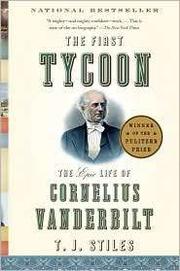
T. J. Stiles · 2009

Vanderbilt's rise through ferries, steamships and railroads.

Recommended by: Mohnish Pabrai

Ron Chernow · 1998

How Rockefeller built Standard Oil, faced its breakup and gave his fortune away.

“…books I've recommended, highlighted to death, or forced on friends.” — Andrew Wilkinson

Source: Andrew Wilkinson's Bookshelf, neverenough.com

Recommended by: Andrew Wilkinson, Charlie Munger and 12 others

Where it sits in the reference 3

Companies
Industries
Financial history

Topics

Company HistoriesFinancial History