Updates

  1. Person pages list letters, writing, profiles and links as sortable tables with filters, and show each person's companies as links; Fund letters show each letter's description in its own column.
  2. Experts show a checked job title and a short description of each person; 30 more people have photographs.
  3. Every company, fund, university and publication the experts work for has a page listing the people there.
  4. Fund letters show each letter's thesis and filter by it; 225 person pages list the essays, columns and newsletter issues the person wrote.
  5. Person pages list every essay and newsletter issue a person wrote, and their own books as a table in List view.
  6. Recommends shows the five largest kinds of book and the rest under More; browse pictures load sooner.
  7. Podcasts and talks link the original episode, filter by Audio and video or Press, and list each publisher once.
  8. Pages are wider, Recommends has List and Grid, and a filter clicked again turns off.
  9. Book cards sit in a ruled grid with Open Library and Goodreads links and each book's one-line note.
  10. Funds is now Investors; each investor's styles are buttons that filter the table.
  11. Podcasts and talks on a person's page filter by year and publisher and show as a list or a grid of pictures.
  12. Quotes show only people's own words: 472 summaries written by list sites are gone.
  13. Country pages open from Browse again, and every link on the shelf lands on a page.
  14. Subject and person pages show their sections as tabs, and each book appears once on a person's page.
  15. Book cards show the quote, who said it and the source; grids show five cards to a row.
  16. On a phone, a menu holds the sections, search, Updates, Feedback and dark mode.
  17. Feedback takes a screenshot of the page with no browser prompt, opens a screenshot full size when you click it, and clears itself once sent.
  18. Book cards are centred, search names the topic each book sits in, and any text cut short shows whole on hover.
  19. Search groups its results by kind: people, companies, geographies, subjects, topics, books, funds, fund letters and papers.
  20. The Books table lists who recommended each book by name, and the browser tab names the section you are in.
  21. Feedback can take a screenshot of the page, or one you paste or choose, and opens in the corner beside Updates.
  22. Each rail button reopens its section where you left it, and Browse, Table and People show on every book and subject page.
  23. Filters grey out choices that hold nothing instead of hiding them, and Books › People filters by authors or recommenders.
  24. Feedback takes a subject line and up to three screenshots.
  25. Biographies are grouped by the person they are about: 41 new pages, from Abraham Lincoln to Lee Kuan Yew.
  26. Sport splits into 23 sports, and Religion into one topic per faith.
  27. Book lists show as cards: the cover, one recommendation quote and every recommender by name.
  28. Seventeen subjects that had two or three pages under different names now have one page each.
  29. Every page lists its Experts as authors and recommenders, with a link to them on the Experts tab.
  30. Economics, Financial history, Financial panics and Accounting are subjects of their own, with one page per financial crisis.
  31. Book, person and subject pages open inside the app, so the tabs stay in view.
  32. 996 more book covers, and photographs or logos for 227 more people and companies.
  33. Books › Browse shows every subject as cards, and the rail holds Fund letters, Papers, Experts, Books and Funds.
  34. Every topic over 150 books splits into narrower topics, each with a page of its own.

Send feedback

What is it?
Screenshots, up to 3 (optional)
or paste one with Ctrl+V

We use your email only to reply to you.

The Fountainhead

The Fountainhead

Ayn Rand
1943
724 pages · about 12h 4m to read Open Librarygoodreads

Summary

Rand's 1943 novel follows architect Howard Roark, who refuses to design anything except according to his own judgment, is expelled from architecture school, works in a quarry rather than compromise, and eventually dynamites a housing project he designed anonymously when the design is altered without his consent. The trial that follows gives him the speech in which Rand states her position on the individual against the collective.

The contrast structure carries the argument. Peter Keating succeeds by giving people what they want and by advancing through others, and ends with nothing of his own. Ellsworth Toohey, a critic, deliberately promotes mediocrity and altruism as a means of acquiring power over people who have been taught to distrust their own judgment. Gail Wynand builds a media empire by giving the public what it wants and discovers he has no power at all, only the appearance of it. Dominique Francon believes that anything good will be destroyed by the world and acts to destroy it first.

Rand's stated theme is individualism against collectivism, expressed through creators who work from their own vision and second-handers who live through other people's opinions. Her treatment of integrity as the refusal to accept any modification to one's own work is absolute.

The novel is long and the characters function as positions. The rape scene, which Rand described as rape by engraved invitation, is indefensible and remains a serious problem in the text. The architecture is symbolic rather than realistic. As a moral argument about working from your own judgment it has been influential well beyond its literary standing, and its readership among founders is substantial.

Key takeaways 8

  1. A person who works from their own judgment produces something, and a person who works from others' opinions produces only variations of what already exists.
  2. Second-handers derive their sense of themselves entirely from other people's reactions, which makes them dependent regardless of their apparent success.
  3. Integrity means refusing to alter your work to satisfy others, and Roark destroys a building rather than accept unauthorised changes.
  4. Altruism can be promoted deliberately as a means of controlling people, by teaching them to distrust their own judgment and defer to collective opinion.
  5. Giving the public exactly what it wants produces influence without power, since the person doing it has surrendered any independent position.
  6. Creative work is done alone, and the collaborative and committee processes that surround it dilute rather than improve it.
  7. Success achieved through the approval of others cannot satisfy, because the standard being met belongs to someone else.
  8. The novel presents these as moral absolutes rather than as trade-offs, and readers should weigh the cost of applying them literally.

Who should read it

Founders drawn to an absolute argument for working from independent judgment, prepared for a long polemical novel with serious problems in it.

Who recommended it 8 · 1 direct

Ev Williamsreported
Iman Gadzhireported
Kevin Kellyreported
Mark Cubanreported
Niki Scevakreported

Similar books 6

Chosen by shared topics, the entries that hold them, and the people who recommended both.

Ayn Rand · 1936

A novel in which industrialists vanish from an economy run by government directives.

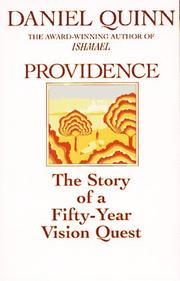
Daniel Quinn · 1994

A writer's fifty-year path from Trappist monk to a forgotten universal religion.

Recommended by: Mohnish Pabrai

Where it sits in the reference 0

No entry holds this book yet. It reached the reference because someone recommended it.

Topics

FictionPhilosophyBusiness novels and parablesMoral and political philosophy