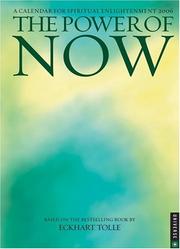
The Power of Now
Suffering comes from identifying with the mind's chatter; freedom from living now.
Summary
Tolle argues that psychological suffering comes from identification with the mind's continuous commentary, and that the mind constructs a false self from memories of the past and projections of the future. His prescription is to place attention on present experience, which he holds interrupts the identification and dissolves the suffering that depends on it.
His central distinctions are between clock time, which is practical and required for functioning, and psychological time, which is the mental habit of living in past and future; between pain, which is a present event, and what he calls the pain-body, an accumulated residue of past pain that seeks to reproduce the conditions that feed it; and between the observing awareness and the mental activity being observed.
The practical instruction is to notice thinking as it occurs, which he holds creates a gap between awareness and thought, and to place attention on physical sensation, particularly what he calls the inner body, as a means of holding that gap open. He also argues for accepting the present as it is, on the grounds that resistance to what has already happened produces the suffering rather than the event. The book is written as a question and answer dialogue and is repetitive by design.
It contains no evidence and Tolle makes no attempt to provide any. The metaphysical claims about consciousness and being are asserted. His account of his own sudden transformation at twenty-nine is unverifiable and functions as the book's authority. Readers with clinical mental health conditions should note that the book presents attention practice as sufficient for conditions that require treatment. The observation that suffering attaches to thinking about events rather than to events is consistent with cognitive therapy, which is where its practical value sits.
Key takeaways 8
- Psychological suffering comes from identification with the mind's commentary rather than from the events the commentary is about.
- The mind constructs a sense of self from memories and projections, and that constructed self requires continuous thought to sustain itself.
- Clock time is necessary for practical functioning while psychological time, meaning the habit of living in past and future, produces the distress.
- Noticing a thought as it occurs establishes a separation between awareness and thinking, which is the mechanism Tolle proposes.
- Attention to physical sensation holds the separation open, because the body is only ever in the present.
- Resistance to what has already occurred produces the suffering, so acceptance of the present situation removes it without changing the situation.
- Accumulated past pain operates as a pattern that seeks to reproduce the conditions that generated it, which Tolle calls the pain-body.
- The book asserts its claims without evidence and presents attention practice as sufficient for conditions that require clinical treatment.
Who should read it
Readers who want a direct argument that distress attaches to thinking rather than to circumstances, accepting metaphysical claims stated without evidence.
Who recommended it 6 · 1 direct
Similar books 6
Chosen by shared topics, the entries that hold them, and the people who recommended both.

You are the awareness watching your thoughts and feelings, not those thoughts.
Recommended by: Claire Diaz-Ortiz, Daniel Gross, Mel Robbins and 2 others
Thirty-one meditations on seeing clearly as the root of love.
Recommended by: Tim Ferriss, Justin Kan, Naval Ravikant

Dialogues between a master and a student on anxiety, emotional pain and success.
“Everything by Kapil Gupta, MD. Kapil recently became a personal advisor and coach to me, and this comes from a person who doesn't believe in coaches.” — Naval Ravikant
Source: Naval's Recommended Reading — The Almanack of Naval Ravikant
Recommended by: Naval Ravikant

A spiritual guide to awakening and finding life's purpose.
Recommended by: Oprah Winfrey
A path beyond self-help and mindfulness slogans to the ultimate truths of the mind.
“Everything by Kapil Gupta, MD. Kapil recently became a personal advisor and coach to me, and this comes from a person who doesn't believe in coaches.” — Naval Ravikant
Source: Naval's Recommended Reading — The Almanack of Naval Ravikant
Recommended by: Naval Ravikant
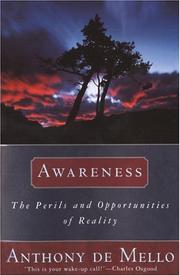
Transcribed talks that treat spirituality as waking up.
“Start with Anthony de Mello's A Way to Love or his book Awareness. They're both really good, but there's a ton of them.” — Naval Ravikant
Recommended by: Matt Mullenweg, Naval Ravikant and 3 others