
The Untethered Soul
You are the awareness watching your thoughts and feelings, not those thoughts.
Summary
Singer, who founded a medical software company while running a yoga centre, argues that a person is the awareness observing their thoughts and emotions rather than the thoughts and emotions themselves, and that recognising this separation is what removes suffering. His opening move is the observation that a person can notice the voice narrating in their head, which means they are not that voice. He treats the mental commentary as a mechanism that generates continuous noise attempting to make the world predictable and safe, and argues that most people identify with it completely.
His central practical concept concerns blocked energy. He argues that experiences a person resists become stored as what he calls samskaras, which then govern behaviour by producing avoidance of anything that touches them, and that the accumulation of these constitutes the personality most people defend. His prescription is to relax and release rather than to resist or to analyse, allowing the disturbance to pass through.
He uses the image of a thorn to argue that a person can either arrange their entire life around avoiding contact with a sensitive point or remove the sensitivity, and that the first strategy is what most people pursue. The later chapters cover death as a clarifying reference point, the surrender of preferences, and what he calls living from the seat of the self.
The book contains no research and makes claims about consciousness that are asserted. Singer's own later legal difficulties with his software company are unrelated to the content but are part of the public record. The observation that a person can watch their own mental activity, and the argument against arranging life around avoidance, are the usable parts.
Key takeaways 8
- A person is the awareness observing their thoughts rather than the thoughts, which is demonstrated by the fact that they can notice the internal voice.
- The internal commentary is a mechanism attempting to make the world predictable, and identifying with it completely is the source of most distress.
- Experiences a person resists are stored and then govern behaviour by producing avoidance of anything that touches them.
- Arranging life around avoiding a sensitive point is more costly than removing the sensitivity, though it appears easier.
- Relaxing and allowing a disturbance to pass through releases it, while resisting or analysing it stores it further.
- The personality most people defend consists substantially of accumulated avoidances rather than of anything chosen.
- Awareness of death clarifies what deserves attention and removes the weight given to the preferences that occupy daily life.
- The book asserts its claims about consciousness without evidence and offers no mechanism beyond the author's own experience.
Who should read it
Readers wanting a direct argument for observing rather than identifying with mental activity, accepting claims stated without evidence.
Who recommended it 5
Similar books 6
Chosen by shared topics, the entries that hold them, and the people who recommended both.

Suffering comes from identifying with the mind's chatter; freedom from living now.
Recommended by: Mohnish Pabrai, Iman Gadzhi, Justin Kan and 3 others

Dialogues between a master and a student on anxiety, emotional pain and success.
“Everything by Kapil Gupta, MD. Kapil recently became a personal advisor and coach to me, and this comes from a person who doesn't believe in coaches.” — Naval Ravikant
Source: Naval's Recommended Reading — The Almanack of Naval Ravikant
Recommended by: Naval Ravikant
A path beyond self-help and mindfulness slogans to the ultimate truths of the mind.
“Everything by Kapil Gupta, MD. Kapil recently became a personal advisor and coach to me, and this comes from a person who doesn't believe in coaches.” — Naval Ravikant
Source: Naval's Recommended Reading — The Almanack of Naval Ravikant
Recommended by: Naval Ravikant
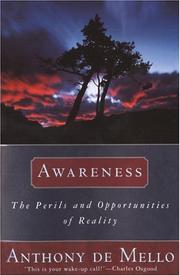
Transcribed talks that treat spirituality as waking up.
“Start with Anthony de Mello's A Way to Love or his book Awareness. They're both really good, but there's a ton of them.” — Naval Ravikant
Recommended by: Matt Mullenweg, Naval Ravikant and 3 others

Answers to life's lasting questions that reject self-help prescriptions and fixes.
“Everything by Kapil Gupta, MD. Kapil recently became a personal advisor and coach to me, and this comes from a person who doesn't believe in coaches.” — Naval Ravikant
Source: Naval's Recommended Reading — The Almanack of Naval Ravikant
Recommended by: Naval Ravikant
The claim that the universe does not exist, and what waking from that dream means.
“Everything by Jed McKenna. Jed spits raw truth. His style may be off-putting but the dedication to truth is unparalleled.” — Naval Ravikant
Source: Naval's Recommended Reading — The Almanack of Naval Ravikant
Recommended by: Naval Ravikant