The Pragmatic Programmer
A programmer's craft: when code is good enough and what to automate.
The craft baseline. Hunt and Thomas articulate the discipline that AI code generation does not replace: knowing when code is good enough, how to automate the right things, and what a working developer owes to the person reading the code next. The 20th-anniversary edition updated the examples but the reasoning has not aged.
Who recommended it 2 · 1 direct
“Classic book for computer programmers. I read it first in 2003 before I was taking book notes, so I read it again now to take notes. Great wisdom in here. Amazing to see how much of its advice was adopted as norms by Ruby on Rails.”
Similar books 6
Chosen by shared topics, the entries that hold them, and the people who recommended both.
Software's enemy is complexity, which grows through shallow modules and shortcuts.
“Programming wisdom: modular design, keep APIs simple, how to avoid complexity, etc. Great insights from experience.” — Derek Sivers
Source: Derek Sivers book notes (primary, rated list) · Rating: 8/10
Recommended by: Derek Sivers
Rules for readable code: short functions, clear names, one level of abstraction.
Recommended by: Marc Andreessen
Lessons from IBM's OS/360: why adding people to a late software project slows it.
“Arguably the only classic book in our field. If you haven't read it, shame on you.” — Jeff Atwood
Source: Recommended Reading for Developers — Coding Horror
Recommended by: Jeff Atwood, Mohnish Pabrai, Paul Graham and 4 others
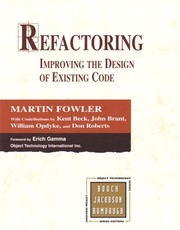
A catalogue of moves that improve existing code without changing what it does.
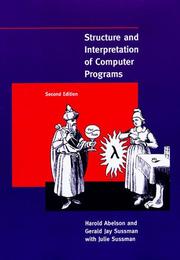
MIT's introductory computer science text, taught through Lisp and Scheme.
Recommended by: Bret Victor, Patrick Collison, Paul Graham and 1 other

How open-source software is really made and maintained, often by a few people.
Recommended by: Balaji S. Srinivasan, Delian Asparouhov