Updates

  1. Person pages list letters, writing, profiles and links as sortable tables with filters, and show each person's companies as links; Fund letters show each letter's description in its own column.
  2. Experts show a checked job title and a short description of each person; 30 more people have photographs.
  3. Every company, fund, university and publication the experts work for has a page listing the people there.
  4. Fund letters show each letter's thesis and filter by it; 225 person pages list the essays, columns and newsletter issues the person wrote.
  5. Person pages list every essay and newsletter issue a person wrote, and their own books as a table in List view.
  6. Recommends shows the five largest kinds of book and the rest under More; browse pictures load sooner.
  7. Podcasts and talks link the original episode, filter by Audio and video or Press, and list each publisher once.
  8. Pages are wider, Recommends has List and Grid, and a filter clicked again turns off.
  9. Book cards sit in a ruled grid with Open Library and Goodreads links and each book's one-line note.
  10. Funds is now Investors; each investor's styles are buttons that filter the table.
  11. Podcasts and talks on a person's page filter by year and publisher and show as a list or a grid of pictures.
  12. Quotes show only people's own words: 472 summaries written by list sites are gone.
  13. Country pages open from Browse again, and every link on the shelf lands on a page.
  14. Subject and person pages show their sections as tabs, and each book appears once on a person's page.
  15. Book cards show the quote, who said it and the source; grids show five cards to a row.
  16. On a phone, a menu holds the sections, search, Updates, Feedback and dark mode.
  17. Feedback takes a screenshot of the page with no browser prompt, opens a screenshot full size when you click it, and clears itself once sent.
  18. Book cards are centred, search names the topic each book sits in, and any text cut short shows whole on hover.
  19. Search groups its results by kind: people, companies, geographies, subjects, topics, books, funds, fund letters and papers.
  20. The Books table lists who recommended each book by name, and the browser tab names the section you are in.
  21. Feedback can take a screenshot of the page, or one you paste or choose, and opens in the corner beside Updates.
  22. Each rail button reopens its section where you left it, and Browse, Table and People show on every book and subject page.
  23. Filters grey out choices that hold nothing instead of hiding them, and Books › People filters by authors or recommenders.
  24. Feedback takes a subject line and up to three screenshots.
  25. Biographies are grouped by the person they are about: 41 new pages, from Abraham Lincoln to Lee Kuan Yew.
  26. Sport splits into 23 sports, and Religion into one topic per faith.
  27. Book lists show as cards: the cover, one recommendation quote and every recommender by name.
  28. Seventeen subjects that had two or three pages under different names now have one page each.
  29. Every page lists its Experts as authors and recommenders, with a link to them on the Experts tab.
  30. Economics, Financial history, Financial panics and Accounting are subjects of their own, with one page per financial crisis.
  31. Book, person and subject pages open inside the app, so the tabs stay in view.
  32. 996 more book covers, and photographs or logos for 227 more people and companies.
  33. Books › Browse shows every subject as cards, and the rail holds Fund letters, Papers, Experts, Books and Funds.
  34. Every topic over 150 books splits into narrower topics, each with a page of its own.

Send feedback

What is it?
Screenshots, up to 3 (optional)
or paste one with Ctrl+V

We use your email only to reply to you.

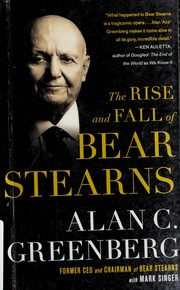
The Rise and Fall of Bear Stearns

The Rise and Fall of Bear Stearns

Alan C. Greenberg, Mark Singer
2010
T3 213 pages · about 3h 33m to read Open Librarygoodreads

Memoir by the firm's longtime chairman 'Ace' Greenberg.

Summary

Alan Greenberg, known as Ace, joined Bear Stearns in 1949, became chief executive in 1978 and chairman in 1985, and remained at the firm through its 2008 collapse. He wrote this memoir with Mark Singer shortly afterward.

The memoir covers his own career from a clerical position through the risk arbitrage desk to running the firm, and it describes the culture he built: hiring people without conventional credentials, whom he called PSDs for poor, smart and a deep desire to become rich; requiring senior executives to donate a fixed percentage of income to charity; and the memoranda he circulated on cost control, which have been collected separately as Memos from the Chairman and which are the best-known thing he wrote.

On the firm's collapse, Greenberg is critical of James Cayne, who succeeded him as chief executive, and of the concentration in mortgage securities that the firm's fixed income business built. He is defensive about his own responsibility and the book has been criticised as settling scores. He also does not analyse the firm's funding structure, which is the substantive cause of its failure. Readers wanting the collapse should go to Kate Kelly or to William Cohan's House of Cards. The memoir's value is the account of the culture and of the risk management practices Greenberg imposed during his own tenure.

Key takeaways 7

  1. Greenberg hired people without conventional credentials and treated hunger and intelligence as more predictive than education.
  2. His memoranda on cost control treated small expenses as an indicator of whether the firm's discipline was intact.
  3. Greenberg required senior executives to donate a fixed percentage of income to charity as a condition of the position.
  4. He was critical of the mortgage securities concentration his successors built and of Cayne's management.
  5. Risk arbitrage taught Greenberg to size positions against the probability of the deal failing rather than against expected profit.
  6. The memoir is defensive about Greenberg's own responsibility and has been criticised as settling scores.
  7. It does not analyse the funding structure that actually destroyed the firm, which readers must find elsewhere.

Who should read it

Readers interested in the culture and cost discipline of a Wall Street firm from its long-serving chief executive, treated as a partial account of the collapse.

Similar books 6

Chosen by shared topics, the entries that hold them, and the people who recommended both.
Bryan Burrough, John Helyar · 1989

The 1988 bidding war for RJR Nabisco, the largest leveraged buyout to that date.

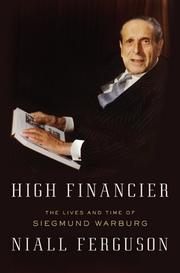
Niall Ferguson · 2010

Siegmund Warburg, who fled Germany and founded S.G. Warburg in London.

Recommended by: Mohnish Pabrai

Where it sits in the reference 2

Companies
Financial history

Topics

Company HistoriesFinancial HistoryBiography and Memoir