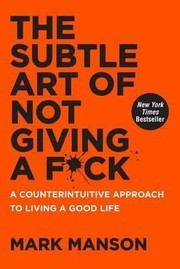
The Subtle Art of Not Giving a F*ck
Why chasing constant positive experience backfires, and why accepting the bad helps.
Summary
Manson argues against the standard positive-thinking self-help position, holding that the pursuit of constant positive experience is itself a negative experience and that accepting negative experience is a positive one. His central claim is that a person has a limited capacity to care and must choose deliberately what to spend it on rather than trying to care about everything or nothing.
His substantive positions include that problems never end and that the objective is better problems rather than fewer; that values determine which problems a person gets, so choosing bad values produces suffering regardless of success; that good values are reality-based, socially constructive and controllable while bad values are event-based, socially destructive and outside a person's control; that a person is always responsible for their response even when not at fault for the situation; that certainty is the enemy of growth and that a person should aim to be less wrong over time rather than right; and that the willingness to be rejected and to reject is what makes commitment meaningful.
He draws on Stoicism, on Buddhist ideas, on William James, on Ernest Becker's denial of death, and on his own experience.
The book contains no research and the profanity is a deliberate marketing device. The arguments are not original individually, and readers familiar with Stoicism will recognise most of them. The distinction between fault and responsibility, and the argument that values determine which problems you get, are stated more usefully here than in most sources. The tone will alienate a substantial number of readers by design.
Key takeaways 8
- A person has a limited capacity to care and must choose deliberately what to spend it on rather than trying to care about everything.
- The pursuit of constant positive experience is itself a negative experience, since it makes every ordinary difficulty a failure.
- Problems never end, so the objective is better problems rather than the absence of them.
- Values determine which problems a person gets, which means bad values produce suffering regardless of how successful the person is.
- Good values are reality-based, socially constructive and within a person's control, while bad values are none of these.
- Fault and responsibility are different, and a person is always responsible for their response even when not at fault for the situation.
- Certainty prevents improvement, so a person should aim to be less wrong over time rather than to be right.
- Commitment is meaningful only where rejection of alternatives is real, which is why refusing to choose produces nothing.
Who should read it
Readers who reject conventional self-improvement writing and want Stoic and Buddhist positions restated bluntly.
Who recommended it 4 · 1 direct
Similar books 6
Chosen by shared topics, the entries that hold them, and the people who recommended both.
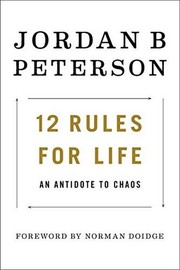
Twelve rules for living, each drawn from clinical practice, biology and myth.
“A unique thinker with strong opinions presented as indisputable fact. More surprisingly interesting ideas than almost any book I've ever read. Extremely thoughtful, but occasionally abruptly concludes with an unsupported point. It has a conservative “this is how it is” certainty. It’s a broad collection of thoughtful insights on life, mixed with a lot of Bible interpretation.” — Derek Sivers
Source: Derek Sivers book notes (primary, rated list) · Rating: 9/10
Recommended by: Derek Sivers, Guy Spier, Nat Eliason and 8 others
Twelve more rules for balancing order and chaos in modern life.
“Deep philosophy. Interesting voice. Great uncommon insights. Jungian. Brings almost any topic back to stories. Story of Pinnochio, stories in the Bible, story of your life. Stresses the importance of convention and social norms. 1st chapter had me talking about this book with friends immediately, loving it. 2nd chapter onwards, it was a tougher read. Needs a ruthless editor.” — Derek Sivers
Source: Derek Sivers book notes (primary, rated list) · Rating: 7/10
Recommended by: Derek Sivers, Naval Ravikant

A short case for self-acceptance and self-esteem as the base of a good life.
Recommended by: Nat Eliason, Naval Ravikant, Garry Tan and 1 other
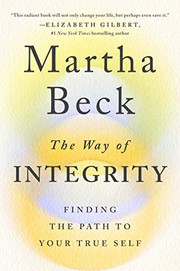
A four-stage path to integrity as the cure for psychological suffering.
Recommended by: Melinda Gates

Reframing beliefs by whether they are useful, not whether they are true.
“Derek is one of my favorite writers, and his latest book is focused on a simple idea: our beliefs are often not necessarily true, but simply useful to us. That beliefs are tools, not truths.” — Andrew Wilkinson
Source: Newsletter
Recommended by: Andrew Wilkinson
Life in Nazi concentration camps, and logotherapy: finding meaning to survive.
“What's more certain to me is that we all need a why, as Viktor Frankl told us in Man's Search for Meaning.” — David Heinemeier Hansson
Source: Universal Basic Dead End
Recommended by: David Heinemeier Hansson, David Perell and 29 others