Updates

  1. Person pages list letters, writing, profiles and links as sortable tables with filters, and show each person's companies as links; Fund letters show each letter's description in its own column.
  2. Experts show a checked job title and a short description of each person; 30 more people have photographs.
  3. Every company, fund, university and publication the experts work for has a page listing the people there.
  4. Fund letters show each letter's thesis and filter by it; 225 person pages list the essays, columns and newsletter issues the person wrote.
  5. Person pages list every essay and newsletter issue a person wrote, and their own books as a table in List view.
  6. Recommends shows the five largest kinds of book and the rest under More; browse pictures load sooner.
  7. Podcasts and talks link the original episode, filter by Audio and video or Press, and list each publisher once.
  8. Pages are wider, Recommends has List and Grid, and a filter clicked again turns off.
  9. Book cards sit in a ruled grid with Open Library and Goodreads links and each book's one-line note.
  10. Funds is now Investors; each investor's styles are buttons that filter the table.
  11. Podcasts and talks on a person's page filter by year and publisher and show as a list or a grid of pictures.
  12. Quotes show only people's own words: 472 summaries written by list sites are gone.
  13. Country pages open from Browse again, and every link on the shelf lands on a page.
  14. Subject and person pages show their sections as tabs, and each book appears once on a person's page.
  15. Book cards show the quote, who said it and the source; grids show five cards to a row.
  16. On a phone, a menu holds the sections, search, Updates, Feedback and dark mode.
  17. Feedback takes a screenshot of the page with no browser prompt, opens a screenshot full size when you click it, and clears itself once sent.
  18. Book cards are centred, search names the topic each book sits in, and any text cut short shows whole on hover.
  19. Search groups its results by kind: people, companies, geographies, subjects, topics, books, funds, fund letters and papers.
  20. The Books table lists who recommended each book by name, and the browser tab names the section you are in.
  21. Feedback can take a screenshot of the page, or one you paste or choose, and opens in the corner beside Updates.
  22. Each rail button reopens its section where you left it, and Browse, Table and People show on every book and subject page.
  23. Filters grey out choices that hold nothing instead of hiding them, and Books › People filters by authors or recommenders.
  24. Feedback takes a subject line and up to three screenshots.
  25. Biographies are grouped by the person they are about: 41 new pages, from Abraham Lincoln to Lee Kuan Yew.
  26. Sport splits into 23 sports, and Religion into one topic per faith.
  27. Book lists show as cards: the cover, one recommendation quote and every recommender by name.
  28. Seventeen subjects that had two or three pages under different names now have one page each.
  29. Every page lists its Experts as authors and recommenders, with a link to them on the Experts tab.
  30. Economics, Financial history, Financial panics and Accounting are subjects of their own, with one page per financial crisis.
  31. Book, person and subject pages open inside the app, so the tabs stay in view.
  32. 996 more book covers, and photographs or logos for 227 more people and companies.
  33. Books › Browse shows every subject as cards, and the rail holds Fund letters, Papers, Experts, Books and Funds.
  34. Every topic over 150 books splits into narrower topics, each with a page of its own.

Send feedback

What is it?
Screenshots, up to 3 (optional)
or paste one with Ctrl+V

We use your email only to reply to you.

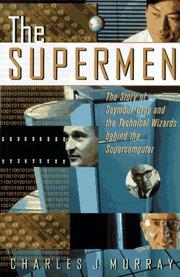
The Supermen

The Supermen

Charles J. Murray
1997
T3 232 pages · about 3h 52m to read Open Librarygoodreads

Seymour Cray and the supercomputer business he built and lost

Summary

Murray, an engineering journalist, wrote a history of American supercomputing centred on Seymour Cray. It runs from Cray's work at Engineering Research Associates and Univac in the 1950s, through the founding of Control Data Corporation and the CDC 6600 and 7600, to Cray Research and the Cray-1 and Cray-2, and finally to Cray Computer Corporation and its failure with the gallium arsenide Cray-3.

The technical argument concerns design philosophy. Cray built machines by minimising the distance signals travelled, which drove the physical layout of his computers, including the cylindrical shape of the Cray-1 that shortened wire lengths. He used relatively simple processor designs at extremely high clock speeds rather than complex architectures, and he pushed cooling technology hard, eventually immersing the Cray-2 in fluorocarbon liquid. Murray also documents Cray's working method: small teams, isolation from corporate management, refusal to use the previous machine's design, and starting each project from a blank sheet.

The business argument is about the limits of that method. Cray Research prospered while single-processor speed determined supercomputer performance. When massively parallel machines built from commodity microprocessors became competitive in the late 1980s, the economics changed, and Cray's approach could not match them on cost. Cray Computer Corporation went bankrupt in 1995 and Cray died in a car accident the following year.

The book is a good technical and personal history but it is not analytical about the industry, and it ends before the cluster architectures that now dominate high-performance computing. Readers wanting the market history should supplement it.

Key takeaways 7

  1. Cray's design method treated signal propagation distance as the binding constraint, which determined the physical shape of his machines.
  2. Simple processors running at very high clock speeds beat complex architectures for the scientific workloads of the period.
  3. Cooling capacity, not logic design, repeatedly became the limiting factor in supercomputer performance.
  4. Cray refused to build on his previous design, starting each machine from scratch, which produced leaps and also repeated risk.
  5. Small isolated engineering teams operating away from corporate oversight produced the CDC 6600 and the Cray-1.
  6. Massively parallel machines built from commodity microprocessors ended the economic viability of custom high-speed processors.
  7. Betting the Cray-3 on unproven gallium arsenide semiconductors destroyed the company when the technology did not mature.

Who should read it

Technologists and investors in hardware who want a case study of a designer whose method produced a decade of dominance and then failed against commodity economics.

Who recommended it 1

Sam Altmanreported

Similar books 6

Chosen by shared topics, the entries that hold them, and the people who recommended both.
Joel N. Shurkin · 2006

Shockley and the accidental seeding of Silicon Valley.

Recommended by: Bill Gates
Chris Miller · 2022

How chips became the key to economic and military power, made in a few chokepoints.

Recommended by: Andrew Wilkinson
Michael Riordan, Lillian Hoddeson · 1997

How the Bell Labs team of Shockley, Bardeen and Brattain invented the transistor.

Recommended by: Patrick Collison
George Gilder · 1989

Portraits of the scientists, engineers and founders behind new technology.
T. R. Reid · 1984

How Kilby and Noyce each invented the integrated circuit in 1958 and 1959.

Recommended by: Patrick Collison
Leslie Berlin · 2005

Robert Noyce, Fairchild Semiconductor and the founding of Intel.

Where it sits in the reference 2

Business themes
Industries

Topics

Technology and ComputingCompany HistoriesHistory of computing and semiconductors