Updates

  1. Person pages list letters, writing, profiles and links as sortable tables with filters, and show each person's companies as links; Fund letters show each letter's description in its own column.
  2. Experts show a checked job title and a short description of each person; 30 more people have photographs.
  3. Every company, fund, university and publication the experts work for has a page listing the people there.
  4. Fund letters show each letter's thesis and filter by it; 225 person pages list the essays, columns and newsletter issues the person wrote.
  5. Person pages list every essay and newsletter issue a person wrote, and their own books as a table in List view.
  6. Recommends shows the five largest kinds of book and the rest under More; browse pictures load sooner.
  7. Podcasts and talks link the original episode, filter by Audio and video or Press, and list each publisher once.
  8. Pages are wider, Recommends has List and Grid, and a filter clicked again turns off.
  9. Book cards sit in a ruled grid with Open Library and Goodreads links and each book's one-line note.
  10. Funds is now Investors; each investor's styles are buttons that filter the table.
  11. Podcasts and talks on a person's page filter by year and publisher and show as a list or a grid of pictures.
  12. Quotes show only people's own words: 472 summaries written by list sites are gone.
  13. Country pages open from Browse again, and every link on the shelf lands on a page.
  14. Subject and person pages show their sections as tabs, and each book appears once on a person's page.
  15. Book cards show the quote, who said it and the source; grids show five cards to a row.
  16. On a phone, a menu holds the sections, search, Updates, Feedback and dark mode.
  17. Feedback takes a screenshot of the page with no browser prompt, opens a screenshot full size when you click it, and clears itself once sent.
  18. Book cards are centred, search names the topic each book sits in, and any text cut short shows whole on hover.
  19. Search groups its results by kind: people, companies, geographies, subjects, topics, books, funds, fund letters and papers.
  20. The Books table lists who recommended each book by name, and the browser tab names the section you are in.
  21. Feedback can take a screenshot of the page, or one you paste or choose, and opens in the corner beside Updates.
  22. Each rail button reopens its section where you left it, and Browse, Table and People show on every book and subject page.
  23. Filters grey out choices that hold nothing instead of hiding them, and Books › People filters by authors or recommenders.
  24. Feedback takes a subject line and up to three screenshots.
  25. Biographies are grouped by the person they are about: 41 new pages, from Abraham Lincoln to Lee Kuan Yew.
  26. Sport splits into 23 sports, and Religion into one topic per faith.
  27. Book lists show as cards: the cover, one recommendation quote and every recommender by name.
  28. Seventeen subjects that had two or three pages under different names now have one page each.
  29. Every page lists its Experts as authors and recommenders, with a link to them on the Experts tab.
  30. Economics, Financial history, Financial panics and Accounting are subjects of their own, with one page per financial crisis.
  31. Book, person and subject pages open inside the app, so the tabs stay in view.
  32. 996 more book covers, and photographs or logos for 227 more people and companies.
  33. Books › Browse shows every subject as cards, and the rail holds Fund letters, Papers, Experts, Books and Funds.
  34. Every topic over 150 books splits into narrower topics, each with a page of its own.

Send feedback

What is it?
Screenshots, up to 3 (optional)
or paste one with Ctrl+V

We use your email only to reply to you.

True Greed: What Really Happened in the Batt

True Greed: What Really Happened in the Battle for RJR Nabisco

Hope Lampert
1990
T3 258 pages · about 4h 18m to read Open Librarygoodreads

The rival account, published months after Barbarians.

Summary

The reference has not verified this book in detail; the summary states only what the title, author and subject establish.

Hope Lampert wrote this account of the RJR Nabisco leveraged buyout of 1988, published the same year as Bryan Burrough and John Helyar's Barbarians at the Gate and covering the same events.

The transaction remains the largest leveraged buyout of its era. Ross Johnson, RJR Nabisco's chief executive, proposed a management buyout at seventy-five dollars a share with Shearson Lehman Hutton, which triggered an auction. Kohlberg Kravis Roberts bid against him, a third group formed around First Boston, and the board's special committee ran a process that concluded with KKR winning at roughly a hundred and nine dollars a share, or about twenty-five billion dollars.

Lampert covers the personalities, the management group's proposed terms which would have given the executives an extraordinary share of the equity, the board's response, the investment banking fees, and the financing structure. Burrough and Helyar's account is more detailed and better known, and became the standard version. Lampert's is shorter and reaches similar conclusions. The reference has not verified this book's specific contents beyond the events it covers. Readers wanting the definitive narrative should go to Barbarians at the Gate; readers wanting the analytical treatment of what leveraged buyouts do should go elsewhere entirely.

Key takeaways 6

  1. The management buyout proposal triggered an auction that raised the price by roughly forty-five per cent above the initial bid.
  2. Management's proposed equity terms would have given a small group of executives an extraordinary share of the resulting company.
  3. A board that receives a management buyout proposal faces a conflict that only an independent process can resolve.
  4. Investment banking fees on the transaction were enormous and were paid regardless of which bidder won.
  5. The winning bid at roughly a hundred and nine dollars a share reflected auction dynamics rather than an independent valuation.
  6. Burrough and Helyar's account of the same events is more detailed and became the standard version.

Who should read it

Readers of the RJR Nabisco transaction who want an alternative contemporaneous account, though the better-known version is more complete.

Similar books 6

Chosen by shared topics, the entries that hold them, and the people who recommended both.
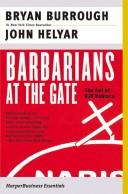
Bryan Burrough, John Helyar · 1989

The 1988 bidding war for RJR Nabisco, the largest leveraged buyout to that date.

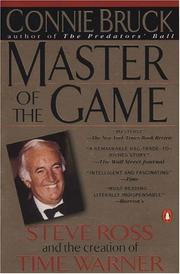
Connie Bruck · 1994

Steve Ross's path from funeral homes and parking lots to the Time Warner merger.

William D. Cohan · 2011

Goldman Sachs from Marcus Goldman to the 2008 crisis, from internal documents.

Recommended by: Mohnish Pabrai

Where it sits in the reference 2

Companies
Financial history

Topics

Company HistoriesFinancial History