Updates

  1. Person pages list letters, writing, profiles and links as sortable tables with filters, and show each person's companies as links; Fund letters show each letter's description in its own column.
  2. Experts show a checked job title and a short description of each person; 30 more people have photographs.
  3. Every company, fund, university and publication the experts work for has a page listing the people there.
  4. Fund letters show each letter's thesis and filter by it; 225 person pages list the essays, columns and newsletter issues the person wrote.
  5. Person pages list every essay and newsletter issue a person wrote, and their own books as a table in List view.
  6. Recommends shows the five largest kinds of book and the rest under More; browse pictures load sooner.
  7. Podcasts and talks link the original episode, filter by Audio and video or Press, and list each publisher once.
  8. Pages are wider, Recommends has List and Grid, and a filter clicked again turns off.
  9. Book cards sit in a ruled grid with Open Library and Goodreads links and each book's one-line note.
  10. Funds is now Investors; each investor's styles are buttons that filter the table.
  11. Podcasts and talks on a person's page filter by year and publisher and show as a list or a grid of pictures.
  12. Quotes show only people's own words: 472 summaries written by list sites are gone.
  13. Country pages open from Browse again, and every link on the shelf lands on a page.
  14. Subject and person pages show their sections as tabs, and each book appears once on a person's page.
  15. Book cards show the quote, who said it and the source; grids show five cards to a row.
  16. On a phone, a menu holds the sections, search, Updates, Feedback and dark mode.
  17. Feedback takes a screenshot of the page with no browser prompt, opens a screenshot full size when you click it, and clears itself once sent.
  18. Book cards are centred, search names the topic each book sits in, and any text cut short shows whole on hover.
  19. Search groups its results by kind: people, companies, geographies, subjects, topics, books, funds, fund letters and papers.
  20. The Books table lists who recommended each book by name, and the browser tab names the section you are in.
  21. Feedback can take a screenshot of the page, or one you paste or choose, and opens in the corner beside Updates.
  22. Each rail button reopens its section where you left it, and Browse, Table and People show on every book and subject page.
  23. Filters grey out choices that hold nothing instead of hiding them, and Books › People filters by authors or recommenders.
  24. Feedback takes a subject line and up to three screenshots.
  25. Biographies are grouped by the person they are about: 41 new pages, from Abraham Lincoln to Lee Kuan Yew.
  26. Sport splits into 23 sports, and Religion into one topic per faith.
  27. Book lists show as cards: the cover, one recommendation quote and every recommender by name.
  28. Seventeen subjects that had two or three pages under different names now have one page each.
  29. Every page lists its Experts as authors and recommenders, with a link to them on the Experts tab.
  30. Economics, Financial history, Financial panics and Accounting are subjects of their own, with one page per financial crisis.
  31. Book, person and subject pages open inside the app, so the tabs stay in view.
  32. 996 more book covers, and photographs or logos for 227 more people and companies.
  33. Books › Browse shows every subject as cards, and the rail holds Fund letters, Papers, Experts, Books and Funds.
  34. Every topic over 150 books splits into narrower topics, each with a page of its own.

Send feedback

What is it?
Screenshots, up to 3 (optional)
or paste one with Ctrl+V

We use your email only to reply to you.

Unreasonable Hospitality

Unreasonable Hospitality

Will Guidara
T3 no Open Library recordgoodreads

Summary

Guidara ran Eleven Madison Park with the chef Daniel Humm, and he wrote about the management and service practices that took the restaurant from a large brasserie to the top of the World's 50 Best Restaurants list in 2017.

His central distinction separates service from hospitality. Service is the technical delivery of the product, meaning correct food, correct timing, correct execution. Hospitality is how the delivery makes the guest feel, and it is produced by attention, by noticing, and by acting on what you notice. Guidara argues that most businesses invest almost everything in service and almost nothing in hospitality, and that hospitality is where differentiation and pricing power come from in a crowded category.

The operational content is specific. He created a role he called the dream weaver whose only job was to act on information the staff gathered about guests. He allocated a discretionary budget for unscripted gestures. He instituted daily line-ups where the team reviewed what they knew about the evening's guests. He argues for hiring on character and training on skill, for giving front-line staff authority to spend money without approval, and for what he calls the one per cent, meaning the small share of effort spent on the unexpected element that guests remember.

The book is a memoir with management lessons attached, and the evidence is his own experience. The obvious limits are economic: these practices were funded by very high average spend per guest in a restaurant designed to be exceptional. Guidara asserts the principles transfer to other businesses without demonstrating it. The restaurant's later shift to an entirely plant-based menu and the partnership's dissolution are outside the book's scope.

Key takeaways 7

  1. Service is the technical delivery of a product and hospitality is how that delivery makes someone feel, and they require different investments.
  2. Front-line staff should have authority to spend money on guests without seeking approval.
  3. Gathering specific information about a customer before they arrive is what makes personalised gestures possible.
  4. Hire for character and emotional attentiveness, then train the technical skills, because the reverse does not work.
  5. A dedicated role whose only responsibility is acting on customer information produces results that a shared responsibility does not.
  6. The small unscripted gesture, not the core product, is what customers describe afterward.
  7. Excellence requires deciding what you are unwilling to compromise on and then making every other decision serve it.

Who should read it

Founders and operators in customer-facing businesses who want concrete practices for turning satisfied customers into ones who talk about you.

Who recommended it 1 · 1 direct

Similar books 6

Chosen by shared topics, the entries that hold them, and the people who recommended both.
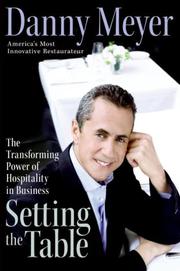
Danny Meyer · 2006

Enlightened hospitality: put employees first, then guests, community and investors.

Ray Kroc, Robert Anderson · 1977

A milkshake-machine salesman finds the McDonald brothers and builds the franchise.

Recommended by: Mohnish Pabrai

John F. Love · 1986

McDonald's to the mid-1980s, from the brothers' stand to Kroc's franchise system.

Recommended by: Mohnish Pabrai

Howard Schultz, Dori Jones Yang · 1997

Insider account: Schultz on building the company to 1997.

Recommended by: Mohnish Pabrai

Leigh Gallagher · 2017

Airbnb from three air mattresses in 2007 to a global lodging business.

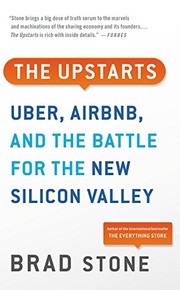
Brad Stone · 2017

How Uber and Airbnb built businesses in regulated markets by acting first.

Recommended by: Sean Ellis

Where it sits in the reference 2

Industries
Industries

Topics

Entrepreneurship and StartupsScaling and Leading a Startup