Updates

  1. Person pages list letters, writing, profiles and links as sortable tables with filters, and show each person's companies as links; Fund letters show each letter's description in its own column.
  2. Experts show a checked job title and a short description of each person; 30 more people have photographs.
  3. Every company, fund, university and publication the experts work for has a page listing the people there.
  4. Fund letters show each letter's thesis and filter by it; 225 person pages list the essays, columns and newsletter issues the person wrote.
  5. Person pages list every essay and newsletter issue a person wrote, and their own books as a table in List view.
  6. Recommends shows the five largest kinds of book and the rest under More; browse pictures load sooner.
  7. Podcasts and talks link the original episode, filter by Audio and video or Press, and list each publisher once.
  8. Pages are wider, Recommends has List and Grid, and a filter clicked again turns off.
  9. Book cards sit in a ruled grid with Open Library and Goodreads links and each book's one-line note.
  10. Funds is now Investors; each investor's styles are buttons that filter the table.
  11. Podcasts and talks on a person's page filter by year and publisher and show as a list or a grid of pictures.
  12. Quotes show only people's own words: 472 summaries written by list sites are gone.
  13. Country pages open from Browse again, and every link on the shelf lands on a page.
  14. Subject and person pages show their sections as tabs, and each book appears once on a person's page.
  15. Book cards show the quote, who said it and the source; grids show five cards to a row.
  16. On a phone, a menu holds the sections, search, Updates, Feedback and dark mode.
  17. Feedback takes a screenshot of the page with no browser prompt, opens a screenshot full size when you click it, and clears itself once sent.
  18. Book cards are centred, search names the topic each book sits in, and any text cut short shows whole on hover.
  19. Search groups its results by kind: people, companies, geographies, subjects, topics, books, funds, fund letters and papers.
  20. The Books table lists who recommended each book by name, and the browser tab names the section you are in.
  21. Feedback can take a screenshot of the page, or one you paste or choose, and opens in the corner beside Updates.
  22. Each rail button reopens its section where you left it, and Browse, Table and People show on every book and subject page.
  23. Filters grey out choices that hold nothing instead of hiding them, and Books › People filters by authors or recommenders.
  24. Feedback takes a subject line and up to three screenshots.
  25. Biographies are grouped by the person they are about: 41 new pages, from Abraham Lincoln to Lee Kuan Yew.
  26. Sport splits into 23 sports, and Religion into one topic per faith.
  27. Book lists show as cards: the cover, one recommendation quote and every recommender by name.
  28. Seventeen subjects that had two or three pages under different names now have one page each.
  29. Every page lists its Experts as authors and recommenders, with a link to them on the Experts tab.
  30. Economics, Financial history, Financial panics and Accounting are subjects of their own, with one page per financial crisis.
  31. Book, person and subject pages open inside the app, so the tabs stay in view.
  32. 996 more book covers, and photographs or logos for 227 more people and companies.
  33. Books › Browse shows every subject as cards, and the rail holds Fund letters, Papers, Experts, Books and Funds.
  34. Every topic over 150 books splits into narrower topics, each with a page of its own.

Send feedback

What is it?
Screenshots, up to 3 (optional)
or paste one with Ctrl+V

We use your email only to reply to you.

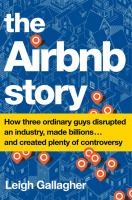
The Airbnb Story

The Airbnb Story

Leigh Gallagher
2017
T2 257 pages · about 4h 17m to read Open Librarygoodreads

The standard company history, with founder access.

Summary

Gallagher, a Fortune editor, covers Airbnb from the 2007 air mattresses through roughly 2016, with access to the founders and to the company.

The founding material covers the design conference weekend that produced the first booking, the years of failing to grow, the cereal box financing during the 2008 election, the Y Combinator period and Paul Graham's instruction to visit users in New York personally, and the specific interventions that produced growth, most notably professional photography of listings which the founders initially did themselves.

The trust problem is the book's most useful analytical thread. Gallagher documents how the company built the systems that made strangers willing to sleep in each other's homes, including two-sided reviews, verified identity, secure payment held until after check-in, and the host guarantee introduced after a widely reported incident in which a host's home was ransacked. She treats trust infrastructure as the actual product.

The regulatory material covers New York, San Francisco, Barcelona and other cities, the hotel industry's response, and the housing supply argument that became the substantive objection. Gallagher had cooperation from the company and the tone is favourable. The book was published in 2017 and predates the regulatory settlements, the pandemic collapse and recovery, the public offering and the current position on housing. The founding narrative is the standard account and the trust infrastructure analysis is the part that transfers to other marketplaces.

Key takeaways 8

  1. The company failed to grow for years, and the founders financed it by selling novelty cereal boxes during the 2008 election.
  2. Professional photography of listings was the specific intervention that made supply credible to buyers, and the founders did it themselves initially.
  3. Visiting users in person to understand why the product was not working produced the insights that remote analysis had not.
  4. Trust infrastructure including two-sided reviews, verified identity and payment held until after check-in is the actual product in a stranger marketplace.
  5. The host guarantee was introduced after a widely reported incident, which shows that trust systems are built in response to failures rather than in anticipation.
  6. Regulatory conflict was concentrated in cities where the housing supply argument had political weight rather than where hotel lobbying was strongest.
  7. Marketplaces where both sides are individuals require different trust mechanisms from those where one side is a business.
  8. Gallagher had company cooperation and the book predates the regulatory settlements, the pandemic and the public offering.

Who should read it

Founders building marketplaces between individuals who want the trust infrastructure analysis and the founding narrative.

Who recommended it 3

Brian Cheskyreported
Reid Hoffmanreported
Tony Hsiehreported

Similar books 6

Chosen by shared topics, the entries that hold them, and the people who recommended both.
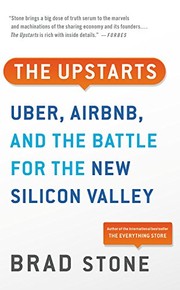
Brad Stone · 2017

How Uber and Airbnb built businesses in regulated markets by acting first.

Recommended by: Sean Ellis
John Carreyrou · 2018

How Theranos reached a $9 billion value with blood tests that never worked.

Where it sits in the reference 2

Companies
Industries

Topics

Company HistoriesEntrepreneurship and StartupsFounder Profiles and Startup Stories