Artificial Intelligence

The current dominant capital-allocation story, spanning technical capability, economic displacement and control risk.

73 books · 3 people behind it · 2 reading lists

Start here

  1. Prediction MachinesAjay Agrawal, Joshua Gans, Avi Goldfarb, 2018
  2. The Alignment ProblemBrian Christian, 2020
  3. SuperintelligenceNick Bostrom, 2014

The people behind it 3

Each person holds a book in this entry or names it in their own tags.

Founders 1

Reid Hoffman1 book here

Academics 1

TC
Tyler Cowen1 book here

Journalists 1

TC
Tyler Cowen1 book here

Reading list — Essential AI safety and alignment reading list · Superbook

10 books, in the order the list argues for

The canonical entry point is Bostrom's Superintelligence, which laid out the formal case for existential risk from advanced AI and established the vocabulary — orthogonality thesis, instrumental convergence, value alignment — that subsequent work either builds on or argues against. Reading it first matters not because every claim holds up, but because nearly every later book is in dialogue with it. From there the li

Sources: Stuart Russell — Human Compatible companion site · Brian Christian — The Alignment Problem author page · Toby Ord — The Precipice (Oxford Future of Humanity Institute) · Eliezer Yudkowsky — Rationality: From AI to Zombies (free PDF)

Reading list — The best books on Artificial Intelligence · Superbook

14 books, in the order the list argues for

The books here are arranged to build understanding in layers. Start with the history — Cade Metz's Genius Makers puts faces and rivalries on what otherwise reads as an abstract technological leap. From there, the theoretical works by Stuart Russell and Nick Bostrom provide the analytical vocabulary for thinking about what capable AI systems actually are and what aligning them with human values requires. The middle o

Sources: Stuart Russell — Human Compatible (book and lectures) · Brian Christian — The Alignment Problem author interviews · Cade Metz — Genius Makers author page · Kate Crawford — Atlas of AI

Books 73

Stuart Russell · 2019 · Control reframed as uncertainty about human objectives.
Brian Christian · 2020 · The best survey of alignment as practised, not just theorised.
Pedro Domingos · 2015 · The five tribes of machine learning explained for non-specialists
Ajay Agrawal, Joshua Gans, Avi Goldfarb · 2018 · AI framed as a fall in the cost of prediction; the standard economics treatment.
Cade Metz · 2021 · The deep-learning researchers and the talent auctions.
Stephen Witt · 2024 · Nvidia's bet on GPUs as the substrate of deep learning.
Karen Hao · 2025 · Critical history of OpenAI's mission drift and resource extraction.
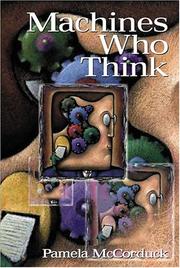
Pamela McCorduck · 1979 · The first hype cycle recorded as it happened.
Daniel Crevier · 1993 · Written after the second AI winter; the corrective to every cycle of enthusiasm.
Tyler Cowen · 2013 · Cowen on labour polarisation as machines take the middle
Lawrence D. Burns, Christopher Shulgan · 2018 · Autonomy from the incumbent and Waymo side.
Alex Davies · 2021 · The self-driving contest Tesla bet its valuation on.
Mustafa Suleyman, Michael Bhaskar · 2023 · Insider view from a DeepMind co-founder on containment.
Gary Rivlin · 2025 · The founder scene around OpenAI, reported from inside the funding rounds.
Kate Crawford · Crawford traces AI systems back to their physical infrastructure — lithium mines, data center labor, military contracts, energy grids. Corrects the tendency to treat AI as purely informational. The book does not try to balance these costs against benefits, which is its limitation as well as its point.
Marco Iansiti, Karim Lakhani · Iansiti and Lakhani examined AI-native firms — Ant Financial, Ocado, Amazon — and documented how AI changes firm architecture, not just processes. The shift from traditional operating models to AI-driven ones turns out to restructure competitive dynamics in ways that standard strategy frameworks miss.
Yuval Noah Harari · Harari's concern — that humans may cede decision-making to opaque systems through preference rather than coercion — reframes the alignment problem as a cultural and political challenge, not only a technical one. Less rigorous than Bostrom or Russell, but more widely read, making it a useful lens for understanding public discourse.
Stuart Russell · Russell, co-author of the standard AI textbook, argues the field has been building toward the wrong objective function. His alternative — systems that remain uncertain about human preferences rather than maximizing a fixed specification — is the most technically coherent reform proposal to come from inside mainstream AI research.
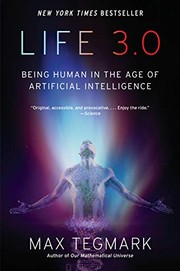
Max Tegmark · Tegmark surveys the full range of AI futures, from utopian to catastrophic, without foreclosing any of them. More useful as a map of the possibility space than as a prediction. The Asilomar AI Principles process he helped organize grew partly out of the conversations this book generated among researchers.
Ajay Agrawal, Joshua Gans, Avi Goldfarb · Agrawal, Gans, and Goldfarb apply economic logic to AI's real contribution: cheap prediction. The framework — AI as prediction machine that changes the relative value of judgment and data — is more useful for understanding where AI creates and destroys value than any amount of case studies.
Eliezer Yudkowsky · Yudkowsky's collected LessWrong essays, free online and in compiled book form, develop the epistemic foundations that underpin his AI doom arguments. The reasoning about cognitive biases, Bayesian updating, and decision theory is independently useful; the AI safety arguments that follow are the most influential non-peer-reviewed work in the field.
Nick Bostrom · The book that put AI existential risk on the intellectual map. Bostrom's case — that a sufficiently capable optimizer pursuing any fixed goal could instrumentally acquire resources and resist shutdown — remains the most formal statement of the core argument. Still the primary reference for the safety field even where researchers disagree with its conclusions.
Shoshana Zuboff · Zuboff's argument — that behavioral prediction markets constitute a new economic logic, not just a business model — is sprawling and sometimes polemical. But no other book comes close to explaining why data extraction feels qualitatively different from earlier forms of capitalism.
Toby Ord · Ord, a philosopher at Oxford's Future of Humanity Institute, places AI risk within a broader taxonomy of existential threats and attempts probability estimates for each. His calibrated approach — acknowledging uncertainty while still arguing for prioritization — offers a useful epistemological model for evaluating AI timeline and risk claims.
Erik Brynjolfsson, Andrew McAfee · Brynjolfsson and McAfee provide the economic context: AI as a general-purpose technology that decouples productivity from employment. The alignment problem doesn't exist in a vacuum — it plays out in economies where AI is already restructuring labor markets in ways that are hard to reverse.
Ray Kurzweil · Kurzweil's optimistic counterpoint to the safety literature. His law of accelerating returns and the vision of intelligence explosion as fundamentally benign is the premise that alignment researchers are most directly arguing against. Reading it gives the other side of the debate its strongest formulation.
Cathy O'Neil · Cathy O'Neil catalogues algorithmic systems deployed in hiring, lending, policing, and education that reinforce rather than correct existing inequities. The book's value is empirical: these are real systems with documented effects, not speculative risks.
Steve Grand · 2000 · Artificial life and emergence; complexity built from very simple rules
David G. Stork, Richard O. Duda, Peter E. Hart · 2001
Christopher Steiner · 2012 · Popular account of algorithms taking over trading and other trades.
Tom Chivers · 2019 · The rationalist milieu behind OpenAI's founders and its board fight.
Ajay Agrawal, Joshua Gans, Avi Goldfarb · 2022
Reid Hoffman · 2023 · Subtitled 'Amplifying Our Humanity Through AI'; co-written with GPT-4