EH
Economic history and long-run growth
Histories of how economies grew rich over centuries, from the Dutch Republic and the Industrial Revolution to American growth and the long-run gains in human welfare.
24 books on Economic history and long-run growth, 1 of them tier 1, recommended by 31 people including Mohnish Pabrai and Bill Gates.
24 books · 35 experts
Start here
- The First Modern EconomyJan de Vries, Ad van der Woude, 1997
- Empire of CottonSven Beckert, 2014
- Capitalism in AmericaAlan Greenspan, Adrian Wooldridge, 2018
- Enlightenment NowSteven Pinker
- Factfulness: Ten Reasons We're Wrong About the WorldHans Rosling
The best books on Economic history and long-run growth 24
Jan de Vries, Ad van der Woude · 1997
The definitive economic history of the Dutch Republic, 1500-1815.
Sven Beckert · 2014
One commodity chain as the whole story of industrial capitalism.

Alan Greenspan, Adrian Wooldridge · 2018
A former Fed chairman's economic history of creative destruction.

Steven Pinker · 2018
Steven Pinker's 500-page empirical survey of progress across 15 dimensions: health, wealth, equality, safety, knowledge, quality of life. Explicitly frames market economies and Enlightenment liberalism as the institutional sources of that progress. Has been criticized for cherry-picking metrics and underweighting catastrophic risks; the data itself is worth engaging with regardless.
“Pinker's data-driven case for human progress appears in Naval's recommendations as a corrective to pessimism and as a demonstration of how empirical thinking can cut through ideological noise. Naval has paired it with Sapiens as a pair of reality-calibrating books.”Naval Ravikant
Hans Rosling · 2018
Hans Rosling was a global health professor, not an economist, which gives his data-driven case for human progress particular credibility. He shows, in meticulous detail, that almost every quantitative measure of human welfare has improved dramatically over the past century. He attributes this to global trade and economic development without being a polemicist.

Matt Ridley · 2010
Matt Ridley's evolutionary argument that exchange and specialization are the deep engine of human progress — older than capitalism, older than agriculture. His data on long-run improvement in living standards is well-sourced; his dismissiveness toward environmental risks is the book's main weakness and worth holding separately from its core claim.
“I really highly, highly recommend picking up Genome, The Red Queen, Origins of Virtue, The Rational Optimist, and The Evolution of Everything.”Naval Ravikant

David Ames Wells · 1889
Recommended byPatrick Collison

Douglass C. 94 North, Robert Paul Thomas · 1973
Recommended byMohnish Pabrai


Nancy F. Koehn · 1990
Recommended byMohnish Pabrai
Thomas K. McCraw · 1998
National business systems compared through the firms that defined them.
Recommended byMohnish Pabrai

David S. Landes · 1998
Why some economies grew rich; culture and institutions across five centuries
“In Li Lu's capitalism/economics section on why some nations prosper.”Li Lu

William J. Bernstein · 2004


Recommended byPatrick Collison

Recommended byEmmett Shear

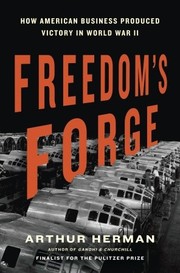
Arthur Herman · 2012
American industrial mobilisation in the 1940s; the precedent everyone reaches for.
“One of the best books I've read, it's a great story of industrial production and heroes.”Christopher Bloomstran


Recommended byMohnish Pabrai


Recommended byRyan Peterson
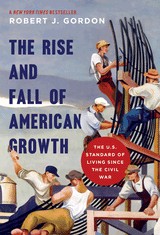
Robert J. Gordon · 2016
The productivity case for why the post-1970 US grows slower than the myth.
“This is a heavyweight (literally) masterpiece... It's a data-rich textbook as well as a phenomenal read.”Christopher Bloomstran
Experts 35
The people who wrote this page's books, and the people who recommend them.
Authors 4
 Vaclav Smilwrote 3 books here
 Matt Ridleywrote 1 book here
WJ
William J. Bernsteinwrote 1 book here Alan Greenspanwrote 1 book here
Recommenders 31
MP
Mohnish Pabrairecommends 8 books here Bill Gatesrecommends 6 books here
 Patrick Collisonrecommends 6 books here
 Paul Grahamrecommends 2 books here
 Alfred Linrecommends 2 books here
AW
Andrew Wilkinsonrecommends 2 books hereCB
Christopher Bloomstranrecommends 2 books hereDP
Daniel Petrerecommends 2 books here Mark Zuckerbergrecommends 2 books here
 Naval Ravikantrecommends 2 books here
 Charlie Mungerrecommends 1 book here
 Howard Marksrecommends 1 book here
Show all 31
 Marc Andreessenrecommends 1 book here
MM
Michael Mauboussinrecommends 1 book hereLL
Li Lurecommends 1 book hereMH
Morgan Houselrecommends 1 book hereTG
Thomas Gaynerrecommends 1 book hereAP
Anthony Pomplianorecommends 1 book here Emmett Shearrecommends 1 book here
FM
Frank Martinrecommends 1 book here Jamie Dimonrecommends 1 book here
JA
John Arnoldrecommends 1 book here Melinda Gatesrecommends 1 book here
NE
Nat Eliasonrecommends 1 book hereRP
Raoul Palrecommends 1 book hereRP
Ryan Petersonrecommends 1 book here Satya Nadellarecommends 1 book here
TM
Terrance McArthurrecommends 1 book hereBI
The Barefoot Investorrecommends 1 book hereRW
The Rational Walkrecommends 1 book here Trevor Ncuberecommends 1 book here
Related
More economics: ← Development economics and emerging markets · Economic theory, firms and competition → · All economics