HO
History of computing and semiconductors
This niche holds histories of the computer, the transistor and the chip industry, from Bell Labs, ARPA and Xerox PARC to IBM, Intel, Nvidia and the making of Silicon Valley.
52 books on History of computing and semiconductors, 2 of them tier 1, recommended by 26 people including Patrick Collison and Mohnish Pabrai.
52 books · 29 experts
Start here
- The Soul of a New MachineTracy Kidder, 1981
- Dealers of LightningMichael A. Hiltzik, 1999
- HackersSteven Levy, 1984
- The ChipT. R. Reid, 1984
- Fumbling the futureDouglas K. Smith, Robert C. Alexander, 1988
The best books on History of computing and semiconductors 52
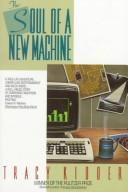
Tracy Kidder · 1981
Pulitzer-winning account of building a minicomputer against the clock
“Must-read for anyone in a product development or a startup environment.”Mohnish Pabrai
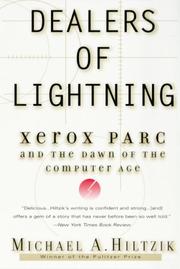
Michael A. Hiltzik · 1999
The definitive history of PARC and the dawn of the computer age.

“Steven Levy's 1984 history of the first hacker generation shaped Andreessen's self-conception of what software builders are. He has recommended it as the founding myth of the culture he operates inside — the origin story of why information wants to be free and why the best builders ignore institutional authority.”Marc Andreessen
T2 The Chip
T. R. Reid · 1984
Origins of the integrated circuit and the industry structure it created.
Recommended byPatrick Collison

Douglas K. Smith, Robert C. Alexander · 1988
How Xerox invented the personal computer and then ignored it.
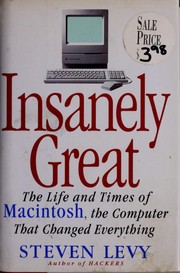
Steven Levy · 1994
The making of the Macintosh, written close to the events.
Katie Hafner, Matthew Lyon · 1996
ARPA computing research, the funding culture PARC was staffed from.
“He recommends it for its focus on the early pioneers (1950s-1980s) who built the modern internet.”Chris Dixon
T2 Crystal Fire
Michael Riordan, Lillian Hoddeson · 1997
The transistor at Bell Labs and the birth of the information age.
Recommended byPatrick Collison
M. Mitchell Waldrop · 2001
Licklider and the ARPA lineage that staffed and shaped PARC.
“Waldrop's biography of Licklider is a recurring Andreessen recommendation for understanding the ARPA-funded origin of interactive computing and the internet. It shows how visionary government research patronage — distinct from industrial policy — can seed genuinely transformative platforms decades later.”Marc Andreessen

Leslie Berlin · 2005
Robert Noyce, Fairchild and the founding of Intel.
Walter Isaacson · 2014
Collaboration, not lone genius, as the engine of the digital era.
“Gates reviewed Walter Isaacson's history of computing pioneers on GatesNotes and noted the accuracy of the portraits of people he knew personally. He praised the book's central argument—that collaboration, not lone genius, built the digital age—as a correction to the mythology that surrounds the field.”Bill Gates
Michael S. Malone · 2014
Noyce, Moore and Grove as a single founding partnership.

Jimmy Soni, Rob Goodman · 2017
Claude Shannon and the invention of information theory

T2 Chip War
Chris Miller · 2022
Intel's rise and manufacturing decline inside the global chip contest.
Recommended byAndrew Wilkinson
Howard Rheingold · 1985
Contemporary account of the personal-computing idea PARC realised.

Emerson W. Pugh · 1995
Technical and organisational history through the System/360 era.

T3 The Supermen
Charles J. Murray · 1997
Seymour Cray and the supercomputer business he built and lost
Recommended bySam Altman

Craig Addison · 2001
Early statement of the argument that chip supply deters invasion.
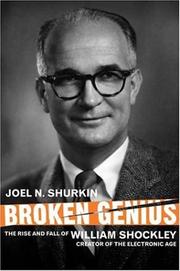
Joel N. Shurkin · 2006
Shockley and the accidental seeding of Silicon Valley.
Recommended byBill Gates

Clair Brown, Greg Linden · 2009
Academic account of the industry's shift to contract manufacturing.

T3 Moore's Law
Arnold Thackray, David C. Brock, Rachel Jones · 2015
Authorised biography of Gordon Moore and his forecast.
Adam Fisher · 2018
Oral history; Thiel and the PayPal cohort speak in their own words.

Recommended byPatrick Collison
Recommended byPatrick Collison


Roszak, Theodore · 1986
Recommended byPatrick Collison

T4 Blue Magic
James Chposky, Ted Leonsis · 1988
How the IBM PC was built outside the normal organisation.


Dennis Elliott Shasha · 1995
Recommended byPatrick Collison

T4 The Closed World: Computers and the Politics of Discourse in Cold War America (Inside Technology)
Paul N. Edwards · 1996
Recommended byPatrick Collison

Thierry Bardini · 2000
Recommended byPatrick Collison
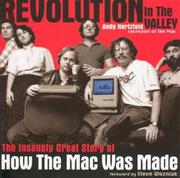

Recommended byPatrick Collison
Recommended byPatrick Collison
“Gleick's history of how humans learned to store and transmit information — from African drums to Claude Shannon's theorems — is the kind of deep-time framing Andreessen gravitates toward. He has cited it as essential for understanding why software is categorically more powerful than prior general-purpose technologies.”Marc Andreessen
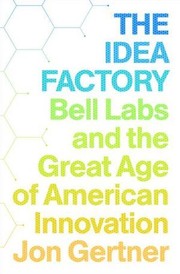
Jon Gertner · 2012
Bell Labs, and what a regulated network monopoly could afford to fund.
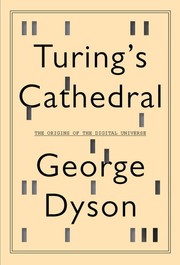
Belinda Barnet · 2013
Recommended byPatrick Collison

Shane M. Greenstein · 2015
Recommended byPatrick Collison

Benjamin Peters · 2016
Recommended byPatrick Collison

Recommended bySatya Nadella

Recommended byPatrick Collison

Recommended byPatrick Collison
unverified
Recommended byPatrick Collison

Experts 29
The people who wrote this page's books, and the people who recommend them.
Authors 3


Recommenders 26
 Patrick Collisonrecommends 31 books here
MP
Mohnish Pabrairecommends 5 books here Marc Andreessenrecommends 4 books here
 Keith Raboisrecommends 4 books here
 Paul Grahamrecommends 3 books here
AA
Austen Allredrecommends 3 books here Sam Altmanrecommends 3 books here
 Stewart Brandrecommends 3 books here
KK
Kevin Kellyrecommends 2 books here Bill Gatesrecommends 2 books here
 Mark Zuckerbergrecommends 2 books here
 Satya Nadellarecommends 2 books here
Show all 26
JC
Jim Collinsrecommends 1 book here Warren Buffettrecommends 1 book here
 Brad Feldrecommends 1 book here
 Aileen Leerecommends 1 book here
AW
Andrew Wilkinsonrecommends 1 book here Bret Victorrecommends 1 book here
 Bryan Johnsonrecommends 1 book here
 Chris Dixonrecommends 1 book here
CF
Chris Fussellrecommends 1 book here Ev Williamsrecommends 1 book here
FW
Fred Wilsonrecommends 1 book hereJO
Jim O'Shaughnessyrecommends 1 book here Ron Conwayrecommends 1 book here
 Vinod Khoslarecommends 1 book here
Related
More technology: ← Crypto and financial technology · Invention, engineering and energy → · All technology