ST
Science, Technology and Medicine
Holds histories of scientific discovery, mathematics, invention, computing, aviation, space flight, epidemics and medicine.
130 books on Science, Technology and Medicine, 7 of them tier 1, recommended by 49 people including Patrick Collison and Bill Gates.
130 books · 56 experts
Start here
- The Path Between the SeasDavid McCullough, 1977
- Networks of PowerThomas P. Hughes, 1983
- The Making of the Atomic BombRichard Rhodes, 1986
- Dealers of LightningMichael A. Hiltzik, 1999
- Creating the Twentieth CenturyVaclav Smil, 2004
The best books on Science, Technology and Medicine 130
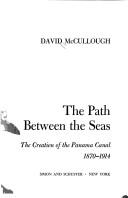
David McCullough · 1977
The Panama Canal: chokepoint economics and what building one costs.

Thomas P. Hughes · 1983
The classic history of electrification as a system business.
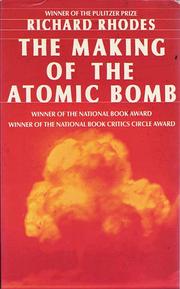
Richard Rhodes · 1986
The origin of the industry and its physics, told definitively.
“Rhodes's Pulitzer-winning account of the Manhattan Project shows how theoretical physics, industrial engineering, and wartime administration had to be integrated under extreme time pressure. Musk has pointed to it as a model for how a small team with clear goals can accomplish things governments and large institutions cannot.”Elon Musk
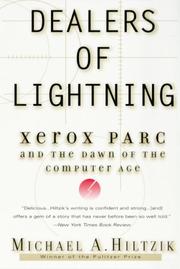
Michael A. Hiltzik · 1999
The definitive history of PARC and the dawn of the computer age.

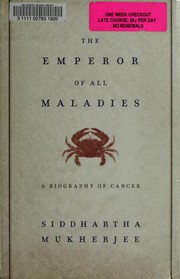
Siddhartha Mukherjee · 2010
Cancer and the science-to-drug pipeline; Pulitzer winner.
Thomas S. Kuhn · 1957
Kuhn on how one model replaced another and why it took so long
“Kuhn, The Copernican Revolution”Paul Graham

Horace Freeland Judson · 1969
The definitive history of molecular biology's founding discoveries
Recommended byNaval Ravikant

William H. McNeill · 1976
Disease as a driver of history, trade and population

Robert Conot · 1979
First biography to work the Edison papers; unsparing on the finances.

“Steven Levy's 1984 history of the first hacker generation shaped Andreessen's self-conception of what software builders are. He has recommended it as the founding myth of the culture he operates inside — the origin story of why information wants to be free and why the best builders ignore institutional authority.”Marc Andreessen
T2 The Chip
T. R. Reid · 1984
Origins of the integrated circuit and the industry structure it created.
Recommended byPatrick Collison
Steven Levy · 1994
The making of the Macintosh, written close to the events.
Katie Hafner, Matthew Lyon · 1996
ARPA computing research, the funding culture PARC was staffed from.
“He recommends it for its focus on the early pioneers (1950s-1980s) who built the modern internet.”Chris Dixon
T2 Crystal Fire
Michael Riordan, Lillian Hoddeson · 1997
The transistor at Bell Labs and the birth of the information age.
Recommended byPatrick Collison
Tim Wu · 2010
How communications industries consolidate; frames cable's regulatory position.
Ernest Freeberg · 2013
What electric light did to American life; the market Edison created.
Walter Isaacson · 2014
Collaboration, not lone genius, as the engine of the digital era.
“Gates reviewed Walter Isaacson's history of computing pioneers on GatesNotes and noted the accuracy of the portraits of people he knew personally. He praised the book's central argument—that collaboration, not lone genius, built the digital age—as a correction to the mythology that surrounds the field.”Bill Gates
Stephen Witt · 2015
How the MP3 destroyed recorded-music revenue and set up the streaming rebuild.
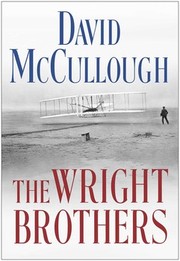
David McCullough · 2015
Two bicycle makers solving flight through iteration and self-funding
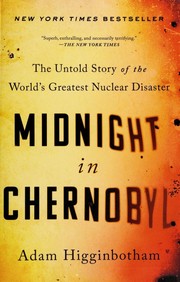
Adam Higginbotham · 2019
The event that set the industry back a generation.
Recommended byCasey Neistat

Matt Ridley · 2020
Innovation as gradual recombination rather than invention.
“It's a must-read for entrepreneurs and government officials who want to either be innovative themselves or foster innovation.”Naval Ravikant

T2 Chip War
Chris Miller · 2022
Intel's rise and manufacturing decline inside the global chip contest.
Recommended byAndrew Wilkinson
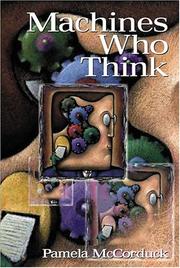
Pamela McCorduck · 1979
The first hype cycle recorded as it happened.

E. Richard Brown · 1979
How the philanthropy reshaped American medicine; the money after the oil.
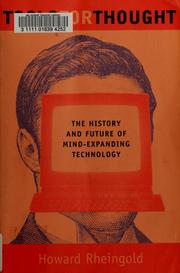
Howard Rheingold · 1985
Contemporary account of the personal-computing idea PARC realised.

David E. Nye · 1990
How a general-purpose technology diffused through everyday commercial life.
Daniel Crevier · 1993
Written after the second AI winter; the corrective to every cycle of enthusiasm.

James Franklin · 2001
How evidence and probability were reasoned about before formal statistics
Recommended byNassim Nicholas Taleb
Jill Jonnes · 2003
The current war: Edison against Westinghouse and Tesla.
“One of my favorite history books," on the electrification rivalry of Edison, Tesla, and Westinghouse.”Chris Dixon
Recommended byChris Dixon
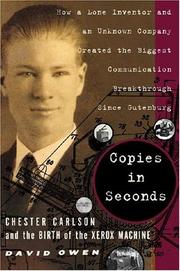
David Owen · 2004
Chester Carlson and xerography, the invention that funded PARC.

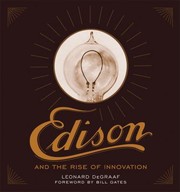
Leonard DeGraaf · 2013
By the Edison archivist; illustrated, and best on the laboratory as business.

James Mahaffey · 2014
What actually went wrong, and how much of the fear is proportionate.

Julian Guthrie · 2016
The Ansari X Prize and the origin of commercial human spaceflight.
Adam Fisher · 2018
Oral history; Thiel and the PayPal cohort speak in their own words.
Recommended byPatrick Collison


Recommended byNick Szabo

Recommended byPatrick Collison


Stéphane Groueff · 1967
Recommended byPatrick Collison

“Wolfe's portrait of the Mercury astronauts and the competitive culture of early NASA is on Musk's list partly for its romanticization of risk-taking and partly as a study in what drove individuals to do things with extremely high probability of death. He has referenced the astronaut ethos when discussing how SpaceX recruits.”Elon Musk
Recommended byPatrick Collison

Recommended byPatrick Collison
Recommended byNick Szabo

Roszak, Theodore · 1986
Recommended byPatrick Collison

Recommended byPatrick Collison


T4 The Closed World: Computers and the Politics of Discourse in Cold War America (Inside Technology)
Paul N. Edwards · 1996
Recommended byPatrick Collison
Simon Singh · 1997
Recommended byAndrew Chen

Thierry Bardini · 2000
Recommended byPatrick Collison

Thomas J. Kelly · 2001
Recommended byPatrick Collison

Recommended byPaul Graham
Recommended byAntonio García Martínez



Recommended byPatrick Collison

Recommended byPatrick Collison
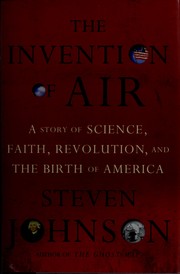
Steven Johnson · 2006
Recommended byMohnish Pabrai
Istvan Hargittai · 2006
Recommended byMohnish Pabrai

Recommended byPatrick Collison

Recommended byBill Gates
Hart Matthews · 2008
Recommended byPatrick Collison
Recommended byAndrew Wilkinson

Recommended byNaval Ravikant

Bill Bryson · 2010
Recommended byMohnish Pabrai

Henry Schlesinger · 2010
Recommended byMohnish Pabrai

Michael Belfiore · 2010
Recommended byPatrick Collison


Recommended bySophie Bakalar
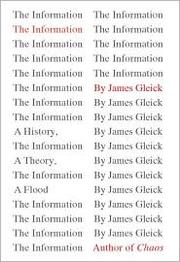
“Gleick's history of how humans learned to store and transmit information — from African drums to Claude Shannon's theorems — is the kind of deep-time framing Andreessen gravitates toward. He has cited it as essential for understanding why software is categorically more powerful than prior general-purpose technologies.”Marc Andreessen
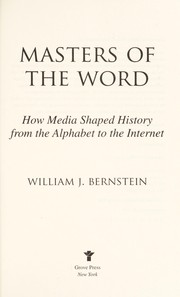
Recommended byNick Szabo
Belinda Barnet · 2013
Recommended byPatrick Collison

Recommended byPatrick Collison
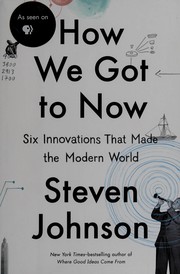


Shane M. Greenstein · 2015
Recommended byPatrick Collison

Recommended byStewart Brand
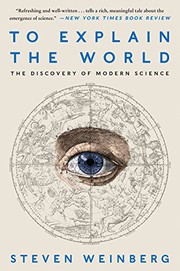
Recommended byPaul Graham

Recommended byBrad Feld

Benjamin Peters · 2016
Recommended byPatrick Collison
Recommended byPatrick Collison

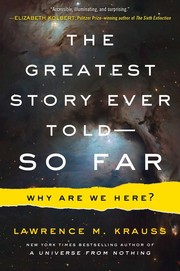
Recommended byEric Weinstein

Julie A. Cohn · 2017
Institutional history of interconnection and who controls it.


Recommended byEric Weinstein
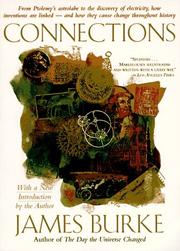

Recommended byPatrick Collison


Recommended byPatrick Collison

“Richard Holmes's account of the Romantic-era scientific revolution — Banks, Davy, Herschel, Shelley — when science was still entangled with poetry and natural philosophy. Collison sees this as one of history's underappreciated acceleration episodes.”Patrick Collison
unverified
Recommended byPatrick Collison
Recommended byPatrick Collison
unverified
Recommended byPatrick Collison

Experts 56
The people who wrote this page's books, and the people who recommend them.
Authors 7
 Vaclav Smilwrote 2 books here
 Steven Levywrote 2 books here
 Matt Ridleywrote 1 book here
 Walter Isaacsonwrote 1 book here
WJ
William J. Bernsteinwrote 1 book hereAF
Adam Fisherwrote 1 book herePJ
Paul Jarviswrote 1 book hereRecommenders 49
 Patrick Collisonrecommends 46 books here
 Bill Gatesrecommends 17 books here
MP
Mohnish Pabrairecommends 13 books here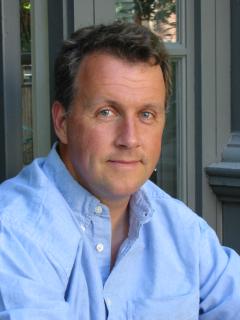 Paul Grahamrecommends 8 books here
NS
Nick Szaborecommends 6 books hereAA
Austen Allredrecommends 5 books hereBS
Balaji S. Srinivasanrecommends 5 books here Stewart Brandrecommends 5 books here
 Marc Andreessenrecommends 4 books here
 Chris Dixonrecommends 4 books here
AC
Andrew Chenrecommends 3 books here Eric Weinsteinrecommends 3 books here
Show all 49
 Keith Raboisrecommends 3 books here
 Naval Ravikantrecommends 3 books here
 Sam Altmanrecommends 3 books here
MH
Morgan Houselrecommends 2 books hereAW
Andrew Wilkinsonrecommends 2 books here Bryan Johnsonrecommends 2 books here
 Elon Muskrecommends 2 books here
 Richard Bransonrecommends 2 books here
SB
Sophie Bakalarrecommends 2 books here Nassim Nicholas Talebrecommends 1 book here
 Peter Thielrecommends 1 book here
 Brad Feldrecommends 1 book here
KK
Kevin Kellyrecommends 1 book here Reid Hoffmanrecommends 1 book here
 Tyler Cowenrecommends 1 book here
 Guy Spierrecommends 1 book here
 Aileen Leerecommends 1 book here
 Alfred Linrecommends 1 book here
AA
Ali Abdaalrecommends 1 book hereAG
Antonio García Martínezrecommends 1 book here Bob Igerrecommends 1 book here
 Bret Victorrecommends 1 book here
BA
Brian Armstrongrecommends 1 book here Casey Neistatrecommends 1 book here
 Chamath Palihapitiyarecommends 1 book here
CF
Chris Fussellrecommends 1 book hereDP
Daniel Petrerecommends 1 book hereEC
Ed Cookerecommends 1 book here Ev Williamsrecommends 1 book here
 James Cameronrecommends 1 book here
JH
Jordan Hughesrecommends 1 book hereLR
Laura R Walkerrecommends 1 book here Mark Zuckerbergrecommends 1 book here
 Matt Mullenwegrecommends 1 book here
PO
Patrick O'Shaughnessyrecommends 1 book here Peter Attiarecommends 1 book here
 Vinod Khoslarecommends 1 book here
Related
More general history: ← Modern Europe and Russia · World and Big History → · All general history