Updates

  1. Person pages list letters, writing, profiles and links as sortable tables with filters, and show each person's companies as links; Fund letters show each letter's description in its own column.
  2. Experts show a checked job title and a short description of each person; 30 more people have photographs.
  3. Every company, fund, university and publication the experts work for has a page listing the people there.
  4. Fund letters show each letter's thesis and filter by it; 225 person pages list the essays, columns and newsletter issues the person wrote.
  5. Person pages list every essay and newsletter issue a person wrote, and their own books as a table in List view.
  6. Recommends shows the five largest kinds of book and the rest under More; browse pictures load sooner.
  7. Podcasts and talks link the original episode, filter by Audio and video or Press, and list each publisher once.
  8. Pages are wider, Recommends has List and Grid, and a filter clicked again turns off.
  9. Book cards sit in a ruled grid with Open Library and Goodreads links and each book's one-line note.
  10. Funds is now Investors; each investor's styles are buttons that filter the table.
  11. Podcasts and talks on a person's page filter by year and publisher and show as a list or a grid of pictures.
  12. Quotes show only people's own words: 472 summaries written by list sites are gone.
  13. Country pages open from Browse again, and every link on the shelf lands on a page.
  14. Subject and person pages show their sections as tabs, and each book appears once on a person's page.
  15. Book cards show the quote, who said it and the source; grids show five cards to a row.
  16. On a phone, a menu holds the sections, search, Updates, Feedback and dark mode.
  17. Feedback takes a screenshot of the page with no browser prompt, opens a screenshot full size when you click it, and clears itself once sent.
  18. Book cards are centred, search names the topic each book sits in, and any text cut short shows whole on hover.
  19. Search groups its results by kind: people, companies, geographies, subjects, topics, books, funds, fund letters and papers.
  20. The Books table lists who recommended each book by name, and the browser tab names the section you are in.
  21. Feedback can take a screenshot of the page, or one you paste or choose, and opens in the corner beside Updates.
  22. Each rail button reopens its section where you left it, and Browse, Table and People show on every book and subject page.
  23. Filters grey out choices that hold nothing instead of hiding them, and Books › People filters by authors or recommenders.
  24. Feedback takes a subject line and up to three screenshots.
  25. Biographies are grouped by the person they are about: 41 new pages, from Abraham Lincoln to Lee Kuan Yew.
  26. Sport splits into 23 sports, and Religion into one topic per faith.
  27. Book lists show as cards: the cover, one recommendation quote and every recommender by name.
  28. Seventeen subjects that had two or three pages under different names now have one page each.
  29. Every page lists its Experts as authors and recommenders, with a link to them on the Experts tab.
  30. Economics, Financial history, Financial panics and Accounting are subjects of their own, with one page per financial crisis.
  31. Book, person and subject pages open inside the app, so the tabs stay in view.
  32. 996 more book covers, and photographs or logos for 227 more people and companies.
  33. Books › Browse shows every subject as cards, and the rail holds Fund letters, Papers, Experts, Books and Funds.
  34. Every topic over 150 books splits into narrower topics, each with a page of its own.

Send feedback

What is it?
Screenshots, up to 3 (optional)
or paste one with Ctrl+V

We use your email only to reply to you.

3-D Negotiation

3-D Negotiation

David A. Lax, James K. Sebenius
2006
T2 294 pages · about 4h 54m to read Open Librarygoodreads

Adds setup and deal design to tactics; the dealmaker's version.

Summary

Lax and Sebenius, both from the Harvard negotiation tradition, argue that most negotiation advice concerns only what happens at the table, and that the more consequential work happens before anyone sits down.

Their three dimensions are stated as distinct kinds of work. Tactics is the first dimension, meaning what happens in the room: interpersonal skill, persuasion, reading the other side, managing the process. Deal design is the second, meaning the substance of the agreement: finding trades across differences in valuation, forecasts, risk tolerance and time preference; structuring contingent payments where the parties disagree about the future; and constructing terms that create value rather than only dividing it. Setup is the third and the one they consider most neglected: deciding which parties should be involved and which should not, in what sequence to approach them, what the alternatives to agreement are for each side and how those can be changed, and what the basic scope and framing of the negotiation should be.

Their practical argument is that a negotiator who arrives at a table with the wrong parties, in the wrong sequence, with a weak alternative and a badly framed scope, cannot recover through skill. Conversely, a well-constructed setup can make agreement nearly automatic. They discuss backward mapping from the target agreement to the sequence of commitments required to reach it, and the deliberate improvement of one's own alternatives before negotiating.

The cases are drawn from corporate transactions, from international diplomacy and from litigation.

The framework is a useful extension of the Getting to Yes tradition rather than a departure from it, and the third dimension is where the original contribution sits. The evidence is case-based and the book is aimed at practitioners rather than researchers.

Key takeaways 7

  1. Most negotiation outcomes are determined by setup decisions made before anyone sits down at a table.
  2. Choosing which parties to involve and in what sequence changes the outcome more than tactical skill does.
  3. A negotiator's alternative to agreement can be deliberately improved before negotiating, which changes the terms available.
  4. Differences in valuation, forecasts, risk tolerance and time preference are the raw material of value creation, not obstacles to it.
  5. Contingent payment structures let parties who disagree about the future both act on their own beliefs rather than compromising.
  6. Backward mapping from the target agreement identifies the sequence of commitments required to reach it.
  7. Excluding a party who would block agreement is a legitimate and often decisive setup move.

Who should read it

Founders and executives negotiating transactions, partnerships or financings who need the work that happens before the meeting.

Similar books 6

Chosen by shared topics, the entries that hold them, and the people who recommended both.

Hamilton Helmer · 2016

Seven sources of lasting advantage, each a benefit plus a barrier to rivals.

W. Chan Kim, Renee Mauborgne · 2005

How to create new market space instead of fighting rivals over existing demand.

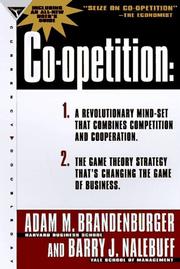
Adam M. Brandenburger, Barry J. Nalebuff · 1996

Game theory applied to business, which is cooperative and competitive at once.

Recommended by: Mohnish Pabrai

Gary Hamel, C. K. Prahalad · 1994

How firms lead future industries by seeing tomorrow's chances and building skills.

Recommended by: Mohnish Pabrai

Shona L. Brown, Kathleen M. Eisenhardt · 1998

Strategy as constant reshaping of advantage in fast, unpredictable markets.

Recommended by: Mohnish Pabrai

Where it sits in the reference 3

Business themes
Business themes
Business themes

Topics

Negotiation and PersuasionBusiness and Management