
Awaken the Giant Within
Change behaviour by changing what you link with pain and pleasure.
Summary
Robbins presents a system for changing behaviour, emotion and circumstances built around the argument that people are driven by the association of pain and pleasure with specific actions, and that changing those associations changes behaviour more reliably than willpower does.
His central technique is what he calls neuro-associative conditioning, a six-step process: decide what you want and what prevents it, get leverage by associating enormous immediate pain with not changing and pleasure with changing, interrupt the existing pattern, create an alternative pattern, condition the new pattern through repetition, and test it.
Other components include the argument that beliefs are decisions rather than facts and can be changed deliberately; that questions direct attention and therefore determine what a person notices, so habitual questions shape experience; that the vocabulary a person uses changes the intensity of what they feel; that physical state including posture and breathing determines emotional state and can be changed directly; and that values and rules should be examined explicitly, since most people hold rules that make satisfaction nearly impossible without knowing it.
He covers goal setting, time management framed as life management, financial habits, and relationships. The book contains no research and Robbins has no relevant credentials. The neurolinguistic programming background of several techniques has no empirical support. The book is long, repetitive and heavily self-promoting, with references to seminars throughout. The physical state and habitual question techniques have some support in the wider psychology literature. Readers should treat it as a set of practices to test rather than as a validated method.
Key takeaways 8
- Behaviour is driven by the associations a person holds between actions and pain or pleasure, and changing those associations changes behaviour more reliably than effort does.
- Beliefs are decisions rather than facts, and they can be examined and replaced deliberately.
- The questions a person habitually asks direct their attention and therefore determine what they notice and how they feel.
- Physical state including posture, breathing and movement changes emotional state directly and can be used deliberately.
- The words a person uses to describe an experience change the intensity of what they feel about it.
- Most people hold unexamined rules that make satisfaction nearly impossible, and stating those rules explicitly reveals the problem.
- A pattern must be interrupted before a replacement can be installed, since the existing response runs automatically.
- The book has no research base and several techniques derive from neurolinguistic programming, which lacks empirical support.
Who should read it
Readers who want a system for changing entrenched behaviour patterns and can extract the practices without accepting the framework's claims.
Who recommended it 5 · 3 direct
“This 1992 book changed everything about my life. It's my Bible. Most of my beliefs come from it.”
Similar books 6
Chosen by shared topics, the entries that hold them, and the people who recommended both.
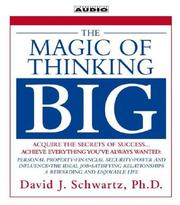
The size of your thinking sets the size of your results, and how to think bigger.
“A classic self-help book. Exactly what you'd expect. But very good.” — Derek Sivers
Source: Derek Sivers book notes (primary, rated list) · Rating: 7/10
Recommended by: Ali Abdaal, Derek Sivers, Mohnish Pabrai and 3 others
Why to stop trying to be positive all the time and accept life's problems instead.
“The opposite of every other book. Don’t try. Give up. Be wrong. Lower your standards. Stop believing in yourself. Follow the pain. And oh yeah, kill yourself. Each point is profoundly true, useful, and more powerful than the usual positivity. Succinct but surprisingly deep, I read it in one night, then read it again a month later.” — Derek Sivers
Source: Derek Sivers book notes (primary, rated list) · Rating: 9/10
Recommended by: Derek Sivers, Nat Eliason
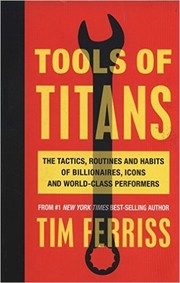
Routines, tools and advice from over 200 podcast guests on health, wealth and wisdom.
“A very useful collection of notes from hundreds of hours of Tim's podcast interviews. It's definitely a mix of thoughts and advice from a mix of people. A real collage. The first quarter of the book, full of milligram measurements of things you could be ingesting, almost made me quit, but the 2nd half of the book had some great ideas.” — Derek Sivers
Source: Derek Sivers book notes (primary, rated list) · Rating: 5/10
Recommended by: Balaji S. Srinivasan, Derek Sivers and 7 others
How to get what you want and enjoy peace of mind, from the author's later work.
“His first book, “Think and Grow Rich”, was a huge influence on me as a teenager. I recently heard he wrote a major update to it shortly before he died, that some say is much better. I guess my tastes have changed because though this book has good intentions, and might have made a big impact on me long ago, now I found it almost unreadably vague and had to stop. The order in which we read books really does make a big difference.” — Derek Sivers
Source: Derek Sivers book notes (primary, rated list) · Rating: 1/10
Recommended by: Derek Sivers, The Barefoot Investor

Twelve practices for bringing creativity into work and personal life.
“Leadership coach and famous orchestra conductor collaborate on a book about relationships, art, personal development, children, and practice. Somewhat scattered but had some really interesting ideas.” — Derek Sivers
Source: Derek Sivers book notes (primary, rated list) · Rating: 6/10
Recommended by: Derek Sivers, Patrick Collison
Thirteen principles of getting rich, claimed to come from studying 500 wealthy men.
Recommended by: Jim Clayton, Mohnish Pabrai, Tom Bilyeu and 7 others