Updates

  1. Fund letters lists 118 more letters, each with its own page: 44 weekly commentaries by Jeremy Siegel from 2026, 31 issues of Van Tharp's newsletter from 2018, 23 Pabrai Investment Funds letters from 2021 to Q3 2026, 13 Efficient Frontier essays by William Bernstein, Oakmark's three 3Q 2026 commentaries, two Lindsell Train reports, a John Hussman comment and Third Point's Q3 2026 letter.
  2. 2,027 more books carry a one-line description in the Books table and on their pages; 7,067 of 7,715 have one, every tier 1, 2 and 3 book among them.
  3. Fund letters lists 187 more letters from 19 firms, among them Permanent Equity, Social Capital, Lux Capital, Square Peg, Bestinver, Cobas, Sequoia Fund, Marketfield and EquityCompass; each shows on its investor's page and has a page of its own.
  4. 2,928 more books carry a one-line description in the Books table and on their pages, so every tier 1, 2 and 3 book has one; 5,040 in all.
  5. Every publication on Newsletters has its own page: its writing, its writers, its staff and who recommends it. Investor pages have a Management tab; a company's Experts tab now leaves out its own people, who list under Management. Tabs on a phone move sideways only.
  6. Every fund letter and research paper has its own page: the thesis, the PDF, the companies and books it names, and for 176 letters and 24 papers so far a summary, key insights and quotes with their page.
  7. 99 books that no page listed now sit under their topics in Books, among them Caste, American Prometheus and Pale Blue Dot.
  8. Newsletters lists every newspaper, magazine, investment newsletter, journal and blog the reference holds, 442 in all, with the people who write there. The search box keeps your last 20 searches. You can create an account.
  9. 283 books that fund managers recommend in their letters are on the shelf, each with the letter's own words and page; investor pages have a Recommends tab.
  10. Person, company, investor and show pages link their own accounts on X, Threads, Instagram, LinkedIn, YouTube and Substack: 275 people, 552 companies and organisations, 88 investors and 478 shows.
  11. 716 more book recommendations name their source: the person's own reading list, letter, blog post, speech or interview, or an article that reports it. 232 of them quote the person's own words about the book, on the book card and on the book's page.
  12. Every US-listed company has a page with its SEC filings. Company pages list their experts and their management, past and present. Fund managers sit under Investors. Each show has a page of its episodes, and an episode page names its guests and hosts. Biographies lists groups, then people. Breadcrumbs show where a page sits.
  13. Media lists every podcast episode, video, interview and talk, over 10,000, by person, company, publisher and event; each filter searches its own choices. Books opens on its table, then Browse, then Authors and Recommenders. A filter's count no longer covers its arrow.
  14. A book that no company, country or subject page lists shows its topics under Where it sits in the reference. On a phone, a page's tabs scroll sideways only. Descriptions read the same on every page. See them in the Experts tab lists every expert the page names.
  15. Every podcast episode, video and interview has its own page with a video or audio player and a link to the source. Investor pages show each company's sector and market cap; firms such as Berkshire Hathaway have one page that holds their letters and their company tabs. Letters tabs filter by company and search the theses. Companies filter by Public, Private and Defunct and link each company's website.
  16. Every tab, view and search has its own address, such as /books/table/asset or /letters/companies, so Back works and a link opens the same place. Page addresses no longer end in .html. Fund letters, Investors, Companies and Papers load about a fifth of the data they did.
  17. Fund letters has a Companies tab: every company the letters name, with its market cap, sector, country, and how many letters and investors name it. Investor pages link each investor's website. Lists in table cells end with “… and N more” at every width.
  18. 1,120 more book summaries; descriptions for 373 papers; pages for 137 more companies, each with the fund letters that discuss it; 215 official photographs; search has its own page.
  19. 411 more books have a summary; person pages list 930 more of the books they wrote; 147 people show their official photograph.
  20. Every investor has a page with its letters and the companies they discuss; company pages list the investors whose letters name them.
  21. A Companies section at the top of the rail lists every company the books, experts and fund letters name.
  22. Person pages list letters, writing, profiles and links as sortable tables with filters, and show each person's companies as links; Fund letters show each letter's description in its own column.
  23. Experts show a checked job title and a short description of each person; 30 more people have photographs.
  24. Every company, fund, university and publication the experts work for has a page listing the people there.
  25. Fund letters show each letter's thesis and filter by it; 225 person pages list the essays, columns and newsletter issues the person wrote.
  26. Person pages list every essay and newsletter issue a person wrote, and their own books as a table in List view.
  27. Recommends shows the five largest kinds of book and the rest under More; browse pictures load sooner.
  28. Podcasts and talks link the original episode, filter by Audio and video or Press, and list each publisher once.
  29. Pages are wider, Recommends has List and Grid, and a filter clicked again turns off.
  30. Book cards sit in a ruled grid with Open Library and Goodreads links and each book's one-line note.
  31. Funds is now Investors; each investor's styles are buttons that filter the table.
  32. Podcasts and talks on a person's page filter by year and publisher and show as a list or a grid of pictures.
  33. Quotes show only people's own words: 472 summaries written by list sites are gone.
  34. Country pages open from Browse again, and every link on the shelf lands on a page.
  35. Subject and person pages show their sections as tabs, and each book appears once on a person's page.
  36. Book cards show the quote, who said it and the source; grids show five cards to a row.
  37. On a phone, a menu holds the sections, search, Updates, Feedback and dark mode.
  38. Feedback takes a screenshot of the page with no browser prompt, opens a screenshot full size when you click it, and clears itself once sent.
  39. Book cards are centred, search names the topic each book sits in, and any text cut short shows whole on hover.
  40. Search groups its results by kind: people, companies, geographies, subjects, topics, books, funds, fund letters and papers.
  41. The Books table lists who recommended each book by name, and the browser tab names the section you are in.
  42. Feedback can take a screenshot of the page, or one you paste or choose, and opens in the corner beside Updates.
  43. Each rail button reopens its section where you left it, and Browse, Table and People show on every book and subject page.
  44. Filters grey out choices that hold nothing instead of hiding them, and Books › People filters by authors or recommenders.
  45. Feedback takes a subject line and up to three screenshots.
  46. Biographies are grouped by the person they are about: 41 new pages, from Abraham Lincoln to Lee Kuan Yew.
  47. Sport splits into 23 sports, and Religion into one topic per faith.
  48. Book lists show as cards: the cover, one recommendation quote and every recommender by name.
  49. Seventeen subjects that had two or three pages under different names now have one page each.
  50. Every page lists its Experts as authors and recommenders, with a link to them on the Experts tab.
  51. Economics, Financial history, Financial panics and Accounting are subjects of their own, with one page per financial crisis.
  52. Book, person and subject pages open inside the app, so the tabs stay in view.
  53. 996 more book covers, and photographs or logos for 227 more people and companies.
  54. Books › Browse shows every subject as cards, and the rail holds Fund letters, Papers, Experts, Books and Funds.
  55. Every topic over 150 books splits into narrower topics, each with a page of its own.

Send feedback

What is it?
Screenshots, up to 3 (optional)
or paste one with Ctrl+V

We use your email only to reply to you.

Tools of Titans

Tools of Titans

Routines, tools and advice from over 200 podcast guests on health, wealth and wisdom.

Tim Ferriss
2016
704 pages · about 11h 44m to read Open Librarygoodreads

Summary

Ferriss compiled this from more than two hundred podcast interviews, organised into three sections covering health, wealth and wisdom. Each entry profiles a subject with their routines, tools, recommended books, and answers to questions Ferriss asks repeatedly across interviews.

The recurring questions produce the book's comparative value, since the same questions asked of many high performers reveal both convergence and disagreement. They include what purchase under one hundred dollars has most improved your life, what advice would you give your younger self, what do you believe that most people would disagree with, and what does the first hour of your day look like.

The health section covers training protocols, fasting, cold exposure, sleep, and a range of supplement regimens, much of it from people with commercial interests in what they recommend. The wealth section covers investing, negotiation, marketing and business building. The wisdom section covers Stoicism, meditation, psychedelics, failure and habit. The format is deliberately non-linear and Ferriss instructs readers to skip.

The main problem is evidential. The subjects are selected for success and asked what they do, which produces survivorship bias throughout, and the health protocols in particular are anecdote rather than evidence. Several recommendations, especially in supplements and in fasting, are stated with more confidence than the research supports. The book is long and much of it is transcription. Its value is as a reference of practices to test individually rather than as a set of validated methods, and Ferriss says as much in the introduction.

Key takeaways 8

  1. Asking the same questions of many high performers reveals which practices converge and which are idiosyncratic, which is more informative than any single profile.
  2. Most of the subjects follow a structured morning routine, though the specific content varies enormously and the consistency matters more than the components.
  3. Nearly all of them treat physical training and sleep as inputs to cognitive performance rather than as separate concerns.
  4. Many describe deliberately defining their fears in writing as a decision tool, which Ferriss calls fear-setting and treats as more useful than goal-setting.
  5. Several subjects state that the ability to decline opportunities is the constraint on performance rather than the ability to find them.
  6. The subjects disagree substantially on diet, training and productivity method, which undermines any claim that a single protocol produces the results.
  7. The health protocols in the book are anecdotal, and several are stated with more confidence than the underlying research supports.
  8. The subjects are selected for success, which means the practices described cannot be distinguished from practices that unsuccessful people also follow.

Who should read it

Readers who want a reference of practices to test individually, treating the whole as anecdote rather than as evidence.

Who recommended it 8 · 3 direct

Kevin Rosereported

“I'm reading Tools of Titans, Tim Ferriss' book of what he learned from a lot of great performers.”

Tony Robbinsreported

Similar books 6

Chosen by shared topics, the entries that hold them, and the people who recommended both.
David Schwartz · 1959

The size of your thinking sets the size of your results, and how to think bigger.

“The first is The Magic of Thinking Big by David Schwartz. This book was first recommended to me by Stephen Key, an ultra successful inventor who has made millions of dollars licensing products to companies like Disney, Nestle, Coca-Cola.” — Tim Ferriss

Source: The Tim Ferriss Show Transcripts: Books I’ve Loved — Tim’s Four Must-Read Books (#400)

Recommended by: Ali Abdaal, Mohnish Pabrai, Nat Eliason and 2 others
James Clear · 2016

Build habits by making them obvious, attractive, easy and satisfying.

“Last October, my friend James Clear published the breakout hit book, Atomic Habits. As we both discovered in the months that followed, we have many readers in common.” — Cal Newport

Source: The Atomic Minimalist: My Conversation with James Clear

Recommended by: Ali Abdaal, Balaji S. Srinivasan and 21 others

Anthony Robbins · 1991

Change behaviour by changing what you link with pain and pleasure.

“This 1992 book changed everything about my life. It's my Bible. Most of my beliefs come from it.” — Derek Sivers

Source: Book notes by Derek Sivers

Recommended by: Derek Sivers, Guy Spier, Nat Eliason and 2 others

Mark Manson · 2016

Why to stop trying to be positive all the time and accept life's problems instead.

Recommended by: Nat Eliason
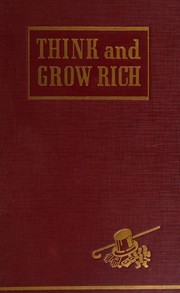
Napoleon Hill · 1937

Thirteen principles of getting rich, claimed to come from studying 500 wealthy men.

Tony Robbins · 1986

Methods for mastering personal and professional life by using the power of the mind.

“I'm biased because in high school, I read Unlimited Power by Tony, which had an impact. I then, when I got out of college and I had my first job and I was commuting in my piece of shit minivan, the green machine, which was just a complete disaster of a car but I was trapped on 101 in the Bay Area, for people who know, just bumper-to-bumper in rush hour, to and from Mountain View to San Jose to work, and I would listen to this used set.” — Tim Ferriss

Source: The Tim Ferriss Show Transcripts: Random Show - Fasting, Biohacking, and Tony Robbins (#333)

Recommended by: Tim Ferriss, Tony Robbins

Where it sits in the reference 4

Productivity and HabitsPsychology and BehaviourHabits, motivation and self-improvementMotivation and success mindset