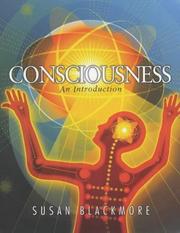
Consciousness: An Introduction
A textbook introduction to consciousness studies, worked from the ground up.
Summary
Blackmore's textbook introduces consciousness studies by asking readers to set aside their assumptions and work through the problem from the ground up. It covers the main theories and evidence from neuroscience, psychology, philosophy and quantum theories, and opens by explaining why the term consciousness has no agreed definition and why the problem is so hard. The fourth edition of 2024, written with Emily Troscianko, adds panpsychism, illusionism, predictive processing, adversarial collaboration, psychedelics and AI.
Its eighteen chapters run in order: the problem itself; what it is like to be something; the grand illusion; neuroscience and the correlates of consciousness; the theatre of the mind; the unity of consciousness; attention; conscious and unconscious processing; agency and free will; evolution and animal minds; the function of consciousness; the evolution of machines; altered states; reality and imagination; dreaming; theories of the self as ego or bundle; first-person methods; and waking up. Blackmore wrote the first two editions alone, in 2003 and 2010. A companion website holds exercises, videos and further reading, and the book is written for students of psychology, neuroscience and philosophy.
Key takeaways 4
- Consciousness has no agreed definition, which is the first obstacle to studying it.
- The search for neural correlates of consciousness is only one of several approaches, alongside philosophy and first-person methods.
- Our sense of a rich, unified stream of experience may be a grand illusion.
- Attention, free will, dreams and altered states each test theories of what consciousness is for.
Who should read it
Students of psychology, neuroscience and philosophy who need one textbook that maps the whole field of consciousness studies.
Who recommended it 1
Similar books 6
Chosen by shared topics, the entries that hold them, and the people who recommended both.
How consciousness and the senses evolved, and the history of the mind.
Recommended by: Mohnish Pabrai, Nassim Nicholas Taleb
Why matter is conscious at all, where consciousness resides, and free will.
“The second, which is also a fairly fairly new book, is called Conscious: A Brief Guide to the Fundamental Mystery of the Mind. It's by Annaka Harris, and this is what they call the hard problem.” — Matt Mullenweg
Recommended by: Matt Mullenweg
The case for replacing mind-body dualism with theories from neuroscience.
Recommended by: Mohnish Pabrai
How evolution produced minds and consciousness, from bacteria to human culture.
“Another of my favorites this year.” — Vinod Khosla
Source: 2017 Book Recommendations — Vinod Khosla, Medium
Recommended by: Ray Dalio, Vinod Khosla, Esther Dyson
Metaphor as a basic mechanism of thought that shapes how people understand the world.
“Going to go a little esoteric for this next one and talk about a book, which is a little more academic, which is by an author named George Lakoff and it's called Metaphors We Live By. There's definitely a writing theme here.” — Matt Mullenweg
Recommended by: David Perell, Matt Mullenweg, Nat Eliason and 2 others
An argument that consciousness is not algorithmic and rests on quantum mechanics.
Recommended by: Patrick Collison