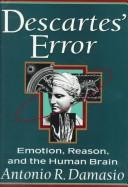
Descartes' Error: Emotion, Reason, and the Human Brain
A neurologist's case that emotion and feeling are part of reason.
Summary
Damasio, a neurologist, argues that the traditional view of rationality is wrong: emotion and feeling are part of reason, and their absence breaks rationality down. He starts from Phineas Gage, the nineteenth-century man whose behaviour changed after brain damage, and from a modern reconstruction of Gage's injured brain, then moves to his own patients with brain damage, studied in his laboratory, whose reasoning failed when their emotional responses were lost.
From these cases he builds a testable hypothesis about the role of emotions in rational behaviour. He also offers an account of what emotions and feelings are: a direct sensing of the body's own states, which links the body and its survival-oriented regulation to consciousness. His conclusion is that human beings are equipped from the start with a drive to make choices, which the social mind uses to build rational behaviour. The book appeared in 1994.
Key takeaways 4
- Reason depends on emotion, and damage to emotional processing impairs decision-making.
- Phineas Gage's case showed that brain injury can change behaviour and judgment while leaving intellect intact.
- Feelings are the brain's sensing of the body's own states.
- Separating mind from body, as Descartes did, misdescribes how decisions are made.
Who should read it
Readers interested in decision-making who want the neurological evidence that emotion is part of good judgment.
Who recommended it 2 · 2 direct
“Antonio R. Damasio, Descartes’ Error: Emotion, Reason and the Human Brain (New York: Avon Books, 1994), 3-10”
Similar books 6
Chosen by shared topics, the entries that hold them, and the people who recommended both.
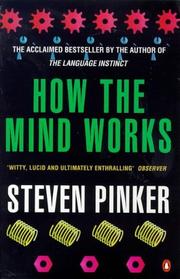
The mind's functions and quirks explained by evolution.
“Wilson was great, "How the Mind Works" Steven Pinker. I love "The Operator" about David Geffen and I like reading biology - sorry, biographies.” — Josh Wolfe
Source: Transcript: Josh Wolfe
Recommended by: Josh Wolfe, Michael Mauboussin and 2 others
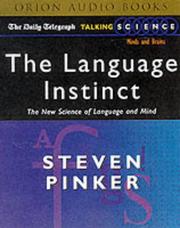
Language as a human instinct, and what science knows of grammar and learning.
“He gave me this book called The Language Instinct, written by Steven Pinker... And Pinker proves his point pretty well.” — Charlie Munger
Source: Poor Charlie's Almanack, Talk Two: A Lesson on Elementary, Worldly Wisdom
Recommended by: Charlie Munger, Michael Mauboussin and 3 others
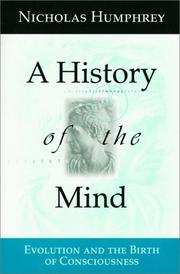
How consciousness and the senses evolved, and the history of the mind.
Recommended by: Mohnish Pabrai, Nassim Nicholas Taleb
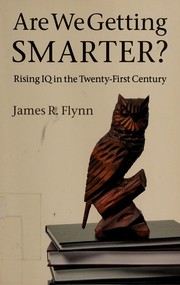
Why IQ scores have risen from one generation to the next, the Flynn effect.
Recommended by: Mohnish Pabrai
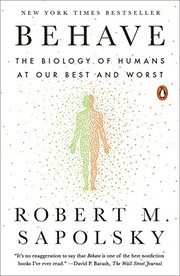
Explains an action by tracing its causes back from neurons to hormones to evolution.
“…books I've recommended, highlighted to death, or forced on friends.” — Andrew Wilkinson
Source: Andrew Wilkinson's Bookshelf, neverenough.com
Recommended by: Andrew Wilkinson, Vinod Khosla, Bill Gates and 5 others
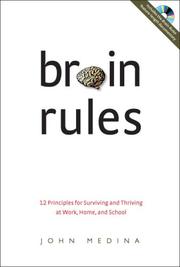
What brain science says about learning, sleep, stress, memory and multitasking.
“New scientific insights into why our brains work this way, and how to use what we now know to learn or work better.” — Derek Sivers
Source: Derek Sivers book notes (primary, rated list) · Rating: 8/10
Recommended by: Derek Sivers, Mohnish Pabrai, Nat Eliason and 2 others
Where it sits in the reference 3
As an Amazon Associate I earn from qualifying purchases.