
Dividends Don't Lie
Dividend yield as a valuation gauge; the original of the school.
Summary
Weiss founded the Investment Quality Trends newsletter in 1966 and wrote this with Janet Lowe to set out the dividend yield method she used.
The method rests on one observation: a company's dividend yield oscillates within a historical range, and the boundaries of that range identify undervaluation and overvaluation more reliably than earnings-based measures. Weiss argued that earnings are subject to accounting discretion while dividends are cash actually paid, so a yield-based valuation rests on a harder number. For each qualifying stock she plotted the price levels corresponding to the historically high yield and the historically low yield, and treated the first as a buy area and the second as a sell area.
The qualification criteria matter as much as the method. She restricted the approach to companies she called blue chips, requiring a record of dividend increases, an investment-grade credit rating, no dividend reduction over a long period, at least five million shares outstanding, institutional ownership, and earnings improvement in a majority of recent years. The method does not apply to companies without a long dividend history, which is its main constraint.
The approach worked well over the period Weiss documented, which was dominated by mature dividend-paying industrials and utilities. Its applicability has narrowed substantially. Companies now return capital through repurchases as well as dividends, which breaks the historical yield comparison; the largest companies by market value pay small or no dividends; and payout ratios have shifted, so a company's own dividend history is a less stable benchmark. The underlying idea, that a company's own valuation history provides a better reference than cross-sectional comparison, remains defensible and can be applied with total shareholder yield instead.
Key takeaways 7
- A company's dividend yield oscillates within a historical range whose boundaries identify undervaluation and overvaluation.
- Dividends are cash actually paid and are therefore less subject to accounting discretion than reported earnings.
- The method applies only to companies with long uninterrupted dividend records, which excludes most of the market.
- A stock's own valuation history is a more useful reference point than comparison against other companies.
- Requiring a record of dividend increases and investment-grade credit screens out most companies before valuation is considered.
- Selling when the yield reaches its historical low removes the judgement about when a position has run its course.
- The rise of share repurchases as a return-of-capital method breaks the historical comparability of dividend yield over long periods.
Who should read it
Income-oriented investors in mature dividend-paying companies who want an explicit and mechanical buy and sell discipline.
About Janet Lowe
American financial journalist and biographer of Charlie Munger, Benjamin Graham, Warren Buffett and Bill Miller.
Damn Right! is the standard full-length life of Charlie Munger, built from interviews with Munger, his family and his partners, and the Graham volumes put writings and lectures that had gone out of print back in circulation. The books supply the biographical record behind quotations that circulate everywhere else without sources.
Similar books 6
Chosen by shared topics, the entries that hold them, and the people who recommended both.

Recommended by: Mohnish Pabrai

Recommended by: Mohnish Pabrai

Graham's method restated for beginners
“My bias is value investing, and I highly recommend Janet Lowe's Value Investing Made Easy as a primer.” — Michael Burry
Source: Silicon Investor 'Value Investing' thread, msg 1569363 (June 10, 1997) — archived
Recommended by: Michael Burry, Mohnish Pabrai

Recommended by: Mohnish Pabrai
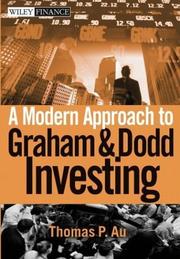
Updates Graham and Dodd's valuation method for modern financial statements
Recommended by: Mohnish Pabrai
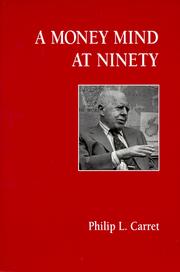
A fund manager of sixty years on investing, business and a long life.
Recommended by: Mohnish Pabrai
Where it sits in the reference 3
Topics