
Value Investing Made Easy
Graham's method restated for beginners
Summary
Lowe, who wrote several books about Benjamin Graham including a biography and an edited collection of his writing, presents Graham's investment method in simplified form for readers who find Security Analysis and The Intelligent Investor too demanding.
The content is Graham's: the distinction between investment and speculation, the margin of safety, the market as a manic-depressive business partner whose quotations you may accept or ignore, net current asset value as a floor, the defensive and enterprising investor categories with their different criteria, and the specific quantitative screens Graham published for earnings stability, dividend record, balance sheet strength and price relative to earnings and book value. Lowe also covers Graham's own record, his teaching, and his late-career position that the market had become efficient enough that the detailed analysis he had taught was no longer worth doing for most securities.
The reference has not verified the specific screen thresholds and worked examples as presented in this edition. The book's role is as a simplification, and readers who can manage the original should read The Intelligent Investor instead, which is not difficult and which contains Graham's own reasoning rather than a summary of it. Lowe's contribution is accessibility and her knowledge of Graham's biography, not new analysis. The 1996 publication also means the market data and examples are from a period whose valuations and accounting differ substantially from the present.
Key takeaways 7
- An investment operation promises safety of principal and an adequate return, and anything that does not meet both conditions is speculation.
- The margin of safety, meaning the gap between the price paid and the conservatively estimated value, is the central concept of the method.
- Market quotations should be treated as offers a business partner makes daily, which the investor may accept or ignore rather than treat as information about value.
- Defensive and enterprising investors need different criteria, and most people should apply the defensive rules because the enterprising approach requires work they will not do.
- Quantitative screens on earnings stability, dividend history, balance sheet strength and price relative to earnings and assets can be applied without judgement about business prospects.
- Diversification across securities meeting the criteria is necessary because any individual valuation may be wrong.
- Graham himself concluded late in life that detailed individual security analysis had become unrewarding for most stocks as the market became better analysed.
Who should read it
Beginning investors who want Graham's method simplified, though most readers would be better served by The Intelligent Investor directly.
About Janet Lowe
American financial journalist and biographer of Charlie Munger, Benjamin Graham, Warren Buffett and Bill Miller.
Damn Right! is the standard full-length life of Charlie Munger, built from interviews with Munger, his family and his partners, and the Graham volumes put writings and lectures that had gone out of print back in circulation. The books supply the biographical record behind quotations that circulate everywhere else without sources.
Who recommended it 2 · 2 direct
“My bias is value investing, and I highly recommend Janet Lowe's Value Investing Made Easy as a primer.”
Similar books 6
Chosen by shared topics, the entries that hold them, and the people who recommended both.

Recommended by: Mohnish Pabrai

Recommended by: Mohnish Pabrai

Recommended by: Mohnish Pabrai

Dividend yield as a valuation gauge; the original of the school.
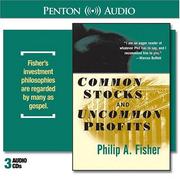
Buy a few outstanding growth companies, research them by scuttlebutt, and hold.
“The late Philip Fisher wrote several books that are very good [including] Common Stocks and Uncommon Profits.” — Arnold Van Den Berg
Source: Van Den Berg on Fisher's books
Recommended by: Arnold Van Den Berg, Bill Stewart and 10 others
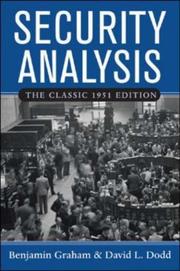
How to read financial statements sceptically and value bonds and stocks.
“I've spent more time with all of the editions of Benjamin Graham and David Dodd's Security Analysis than with any other book” — Christopher Bloomstran
Source: Semper Augustus 2024 Letter to Clients, 'Books and Tunes for Walking', p. 95
Recommended by: Christopher Bloomstran, Howard Marks and 11 others
Where it sits in the reference 2
Topics