Updates

  1. Person pages list letters, writing, profiles and links as sortable tables with filters, and show each person's companies as links; Fund letters show each letter's description in its own column.
  2. Experts show a checked job title and a short description of each person; 30 more people have photographs.
  3. Every company, fund, university and publication the experts work for has a page listing the people there.
  4. Fund letters show each letter's thesis and filter by it; 225 person pages list the essays, columns and newsletter issues the person wrote.
  5. Person pages list every essay and newsletter issue a person wrote, and their own books as a table in List view.
  6. Recommends shows the five largest kinds of book and the rest under More; browse pictures load sooner.
  7. Podcasts and talks link the original episode, filter by Audio and video or Press, and list each publisher once.
  8. Pages are wider, Recommends has List and Grid, and a filter clicked again turns off.
  9. Book cards sit in a ruled grid with Open Library and Goodreads links and each book's one-line note.
  10. Funds is now Investors; each investor's styles are buttons that filter the table.
  11. Podcasts and talks on a person's page filter by year and publisher and show as a list or a grid of pictures.
  12. Quotes show only people's own words: 472 summaries written by list sites are gone.
  13. Country pages open from Browse again, and every link on the shelf lands on a page.
  14. Subject and person pages show their sections as tabs, and each book appears once on a person's page.
  15. Book cards show the quote, who said it and the source; grids show five cards to a row.
  16. On a phone, a menu holds the sections, search, Updates, Feedback and dark mode.
  17. Feedback takes a screenshot of the page with no browser prompt, opens a screenshot full size when you click it, and clears itself once sent.
  18. Book cards are centred, search names the topic each book sits in, and any text cut short shows whole on hover.
  19. Search groups its results by kind: people, companies, geographies, subjects, topics, books, funds, fund letters and papers.
  20. The Books table lists who recommended each book by name, and the browser tab names the section you are in.
  21. Feedback can take a screenshot of the page, or one you paste or choose, and opens in the corner beside Updates.
  22. Each rail button reopens its section where you left it, and Browse, Table and People show on every book and subject page.
  23. Filters grey out choices that hold nothing instead of hiding them, and Books › People filters by authors or recommenders.
  24. Feedback takes a subject line and up to three screenshots.
  25. Biographies are grouped by the person they are about: 41 new pages, from Abraham Lincoln to Lee Kuan Yew.
  26. Sport splits into 23 sports, and Religion into one topic per faith.
  27. Book lists show as cards: the cover, one recommendation quote and every recommender by name.
  28. Seventeen subjects that had two or three pages under different names now have one page each.
  29. Every page lists its Experts as authors and recommenders, with a link to them on the Experts tab.
  30. Economics, Financial history, Financial panics and Accounting are subjects of their own, with one page per financial crisis.
  31. Book, person and subject pages open inside the app, so the tabs stay in view.
  32. 996 more book covers, and photographs or logos for 227 more people and companies.
  33. Books › Browse shows every subject as cards, and the rail holds Fund letters, Papers, Experts, Books and Funds.
  34. Every topic over 150 books splits into narrower topics, each with a page of its own.

Send feedback

What is it?
Screenshots, up to 3 (optional)
or paste one with Ctrl+V

We use your email only to reply to you.

Heads in Beds: A Reckless Memoir of Hotels,

Heads in Beds: A Reckless Memoir of Hotels, Hustles, and So-Called Hospitality

Jacob Tomsky
2012
T4 247 pages · about 4h 7m to read Open Librarygoodreads

Summary

Tomsky worked in hotels for over a decade, starting as a valet in New Orleans and working through housekeeping management to front desk in New York, and wrote this memoir of how the business operates from the staff side.

The operational content is genuinely informative. He explains the economics of room pricing and how the front desk has discretion that the published rate does not reveal, the mechanics of upgrades and who receives them, how minibar and incidental charges are applied and disputed, what happens to items left in rooms, the labour structure of housekeeping and the way rooms are allocated and timed, and the relationship between hotel staff and the third-party booking channels that reduce the property's margin and its ability to serve the guest.

His practical advice for guests, which is the reason the book circulates, includes tipping the front desk at check-in rather than on departure because the discretion is exercised at that moment, booking directly rather than through aggregators because the property has no incentive to accommodate a booking it earned nothing on, and treating housekeeping and front desk staff as people with discretion rather than as a service function.

The book is a memoir with a strong voice and considerable score-settling, and the reference has not verified its specific claims. It is not a management book and does not analyse the industry. Its value is the view from inside a service operation of how discretion is actually exercised, which is transferable to any business where frontline staff decide who gets accommodated.

Key takeaways 7

  1. Front desk staff have substantial discretion over rooms, rates and charges that the published policies do not reveal.
  2. Tipping at check-in rather than departure changes outcomes, because the discretion is exercised at the moment of arrival.
  3. Booking through a third-party aggregator reduces the property's margin and its incentive to accommodate the guest.
  4. Housekeeping labour is allocated by room count and timed, which determines what can actually be done in each room regardless of standards.
  5. Frontline staff in any service business decide who receives accommodation, and management policies determine only the boundaries of that discretion.
  6. Disputed incidental charges are frequently removed on request, because the cost of the dispute exceeds the charge.
  7. The reference has not verified the specific claims in this memoir.

Who should read it

Operators in hospitality and service businesses interested in how frontline discretion actually works, and travellers wanting the practical knowledge.

Who recommended it 1 · 1 direct

Similar books 6

Chosen by shared topics, the entries that hold them, and the people who recommended both.
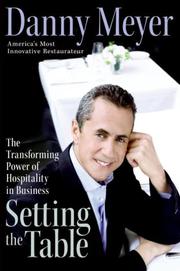
Danny Meyer · 2006

Enlightened hospitality: put employees first, then guests, community and investors.

Jack Welch, John A. Byrne · 2001

Running General Electric from 1981 to 2001, as told on retiring.

David Packard · 1995

Recommended by: Mohnish Pabrai

Richard S. Tedlow · 2006

Full-scale biography by a Harvard business historian.

Where it sits in the reference 3

Business themes
Industries
Business themes

Topics

Biography and MemoirBusiness and ManagementPersonal and Spiritual Memoirs