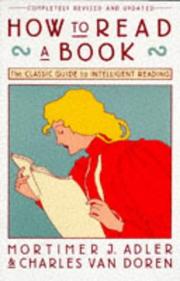
How to Read a Book
A method for reading hard books for understanding, not just information.
Summary
Adler and Van Doren present a method for reading demanding books, arguing that most educated people can read for information and cannot read for understanding, and that the two are different activities requiring different techniques.
They identify four levels. Elementary reading is the decoding taught in school. Inspectional reading is systematic skimming, in which a reader examines the title page, preface, table of contents, index and key passages within a fixed time to determine what the book is, what it argues and whether it is worth full attention. Analytical reading is the thorough reading of a single book, which they break into fifteen rules covering classifying the book, stating its unity in a sentence, outlining its parts, identifying the author's problems, coming to terms with the author's key words, grasping the propositions and arguments, determining what the author solved and failed to solve, and only then criticising. Syntopical reading is reading many books on a subject to construct an understanding that no single book provides, which requires establishing a neutral terminology since different authors use different words for the same concepts.
Their most useful discipline is the rule that a reader must be able to state the author's argument in their own words before agreeing or disagreeing, and that saying you do not understand is a legitimate response distinct from disagreement.
The book is from 1940, revised in 1972, and the tone is prescriptive. The reading list appended is dated and heavily Western. It is longer than its method requires. The inspectional reading technique and the requirement to state an argument before criticising it are the two elements that transfer immediately.
Key takeaways 8
- Reading for information and reading for understanding are different activities, and most educated people can do only the first.
- Systematic skimming, conducted within a fixed time and following a defined sequence, establishes what a book is and whether it deserves full attention.
- A reader should be able to state a book's argument in their own words before agreeing or disagreeing with it.
- Saying you do not understand is a legitimate response and is distinct from disagreement, which most readers conflate.
- A reader must come to terms with an author's key words, since disagreements frequently turn out to be different uses of the same term.
- Criticism should identify whether the author is uninformed, misinformed, illogical or incomplete, which are different faults requiring different responses.
- Reading many books on a subject requires constructing a neutral terminology, since authors use different words for the same concepts.
- A book worth reading analytically should be read three times, once for structure, once for content and once for criticism.
Who should read it
Anyone who reads demanding material regularly and wants a method for triage and for genuine comprehension rather than accumulation.
Who recommended it 6 · 2 direct
“Light? No. Serious. Very serious and scholarly. Advises to read books that are above your current ability. A very specific methodology is given. Read books twice, ask questions while reading, answer those questions, then summarize and criticize afterwards. The point is to grow up to the level of the author.”
Similar books 6
Chosen by shared topics, the entries that hold them, and the people who recommended both.
A fact for each day of the year, from a radio network's librarian.
Recommended by: Mohnish Pabrai, Alfred Lin
A practical guide to every stage of an interview, from getting it to writing it up.
Recommended by: Mohnish Pabrai
Numbered rules of English usage and composition, with examples, under 100 pages.
“This book is legendary, but I learned so much more from “On Writing Well” by William Zinsser. That said, this book is very tiny, so maybe read it in an hour before reading “On Writing Well”, since that author references this book a few times.” — Derek Sivers
Source: Derek Sivers book notes (primary, rated list) · Rating: 2/10
Recommended by: Derek Sivers, Kara Swisher, Nat Eliason and 4 others
292 great speeches from nearly every era and nation, from Pericles to Mandela.
Recommended by: Mohnish Pabrai
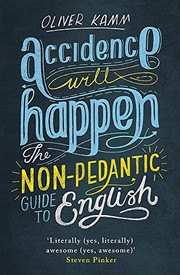
A non-pedantic guide to English usage, from split infinitives to final prepositions.
Recommended by: Patrick Collison
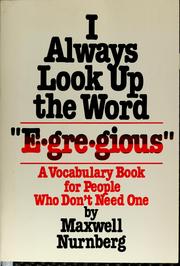
A guide to building vocabulary with words from the press.
Recommended by: Eric Weinstein