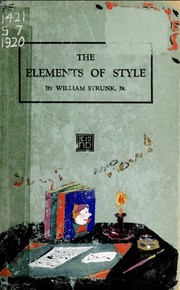
The Elements of Style
Numbered rules of English usage and composition, with examples, under 100 pages.
Summary
Strunk wrote the original for his Cornell students in 1918 and E. B. White, who had been one of them, revised and expanded it in 1959. It is under a hundred pages and consists of numbered rules with examples. The sections cover elementary rules of usage, principles of composition, matters of form, commonly misused words and expressions, and White's chapter on style. The most cited instructions include omit needless words, use the active voice, put statements in positive form, use definite and concrete language, keep related words together, and place the emphatic words of a sentence at the end.
White's final chapter argues that style cannot be taught directly, that it emerges from the writer rather than being applied to the writing, and that a writer should place themselves in the background and write in a way that comes naturally.
The book has been criticised seriously by linguists. Geoffrey Pullum's essay identifies rules that are factually wrong about English grammar, including the treatment of the passive voice where several of Strunk's own examples are not passive, and argues that the prescriptions have made generations of writers anxious about constructions that are perfectly standard. The usage section reflects mid-century American preferences presented as rules.
It remains useful as a discipline rather than as a description of English. The instruction to remove unnecessary words and to prefer concrete language improves nearly all writing. The rules should be treated as defaults to depart from deliberately rather than as grammar.
Key takeaways 8
- Omitting needless words is the single instruction that improves most writing, and it requires deciding what each word is doing.
- The active voice identifies who performed an action, which the passive conceals, and this usually makes the sentence shorter as well.
- Statements should be put in positive form, since telling a reader what is not the case leaves them without information.
- Definite and concrete language is understood and remembered while abstraction is not.
- The emphatic position in a sentence is the end, so the most important word should be placed there.
- Related words should be kept together, since separation forces the reader to reassemble the meaning.
- Style emerges from the writer rather than being applied to the writing, which is White's argument in the final chapter.
- Linguists have identified rules in the book that are factually wrong about English, including several of its passive voice examples.
Who should read it
Anyone who writes professionally and wants a very short set of defaults, treated as discipline rather than as grammar.
Who recommended it 7 · 4 direct
“This book is legendary, but I learned so much more from “On Writing Well” by William Zinsser. That said, this book is very tiny, so maybe read it in an hour before reading “On Writing Well”, since that author references this book a few times.”
“Strunk and White's The Elements of Style. I reread it every year.”
Similar books 6
Chosen by shared topics, the entries that hold them, and the people who recommended both.
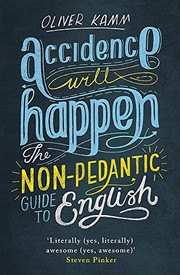
A non-pedantic guide to English usage, from split infinitives to final prepositions.
Recommended by: Patrick Collison
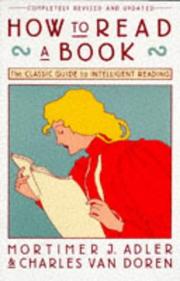
A method for reading hard books for understanding, not just information.
“Light? No. Serious. Very serious and scholarly. Advises to read books that are above your current ability. A very specific methodology is given. Read books twice, ask questions while reading, answer those questions, then summarize and criticize afterwards. The point is to grow up to the level of the author.” — Derek Sivers
Source: Derek Sivers book notes (primary, rated list) · Rating: 7/10
Recommended by: Derek Sivers, Mohnish Pabrai, Alex and Books and 3 others
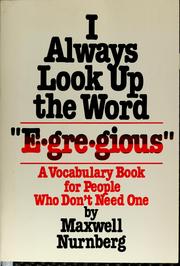
A guide to building vocabulary with words from the press.
Recommended by: Eric Weinstein
A practical guide to every stage of an interview, from getting it to writing it up.
Recommended by: Mohnish Pabrai
292 great speeches from nearly every era and nation, from Pericles to Mandela.
Recommended by: Mohnish Pabrai