In Praise of Shadows
An essay on Japanese aesthetics through light and shadow, from buildings to food.
Summary
The reference has not verified this book in detail; the summary states only what the title, author and subject establish.
Tanizaki writes about Japanese aesthetics through the lens of light and shadow. His observations range over customs and traditions, people, historical places and buildings, materials and craft techniques, and food, including unusual recipes.
The essay was first published in Japan in 1933. The 1977 English translation carries a foreword by the architect Charles Moore, who writes that it helps readers look into their own way of inhabiting the world as it describes the traditional Japanese way. The source read in this pass does not set out the essay's argument in detail.
Key takeaways 3
- Tanizaki reads Japanese customs, buildings and food through the contrast of light and shadow.
- Everyday things, from buildings to food, carry aesthetic values.
- Architects have taken the essay as a guide to how people inhabit spaces.
Who should read it
Readers interested in design, architecture and Japanese culture who want a short classic essay on aesthetics.
Who recommended it 2 · 1 direct
“But it's something you could read in an afternoon really easily. It's called In Praise of Shadows.”
Similar books 6
Chosen by shared topics, the entries that hold them, and the people who recommended both.
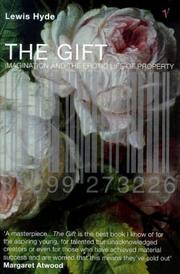
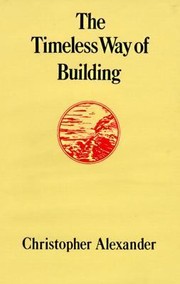
Why today's theory of architecture is bankrupt, and a way of building that lasts.
Recommended by: Daniel Burka, David Perell
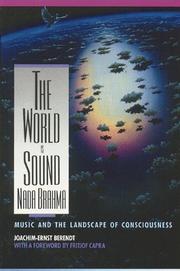
A journey through the world's musical traditions and the idea that all is sound.
“It's called, The World is Sound or Nada Brahma.” — Matt Mullenweg
Recommended by: Matt Mullenweg
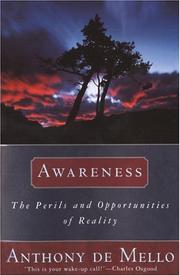
Transcribed talks that treat spirituality as waking up.
“Start with Anthony de Mello's A Way to Love or his book Awareness. They're both really good, but there's a ton of them.” — Naval Ravikant
Recommended by: Matt Mullenweg, Naval Ravikant and 3 others
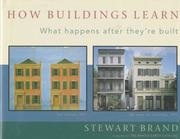
Buildings as processes that change after they are built, and how to design for it.
“Through Stewart Brand's work, beginning with How Buildings Learn (one of my favorite books) and his work with the Long Now Foundation, I learned to look at time differently, and technology differently, and to think about how time is cooked into everything we do today, especially as regards the ephemeral nature of all the time spent on computers and in online media.” — Caterina Fake
Source: The Anthrobscene – Caterina.net
Recommended by: Caterina Fake, Derek Sivers, Kevin Kelly and 4 others
Eighty-one short chapters on the Tao, the founding text of Taoism.
“This existence-tissue is the central concern of Lao Tzu's Tao Te Ching (sixth century B.C.E.) - the seminal work in Taoism, the spiritual branch of Chinese philosophy that eventually evolved into Ch'an Buddhism.” — Maria Popova
Source: Awakened Cosmos: Poetry as Spiritual Practice
Recommended by: Maria Popova, Nat Eliason, David Perell and 6 others