
Lateral Thinking
A textbook of creative thinking.
Who recommended it 2 · 2 direct
“I haven't read it in decades, but Edward de Bono, Six Thinking Hats, he also had, I believe, a book called Lateral Thinking, which I found helpful.”
Similar books 6
Chosen by shared topics, the entries that hold them, and the people who recommended both.
A method of parallel thinking that lets groups think together in coordinated steps.
Recommended by: Tim Ferriss
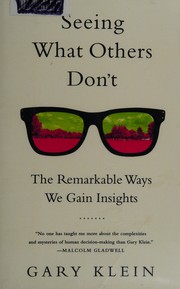
When, why and how insights form, and what blocks them.
“I really wanted to like this book, but couldn't stomach the writing style. Instead of presenting his conclusions, you have to slog forever through his tales of how he went about his research, and how he felt about each step along the way to writing this book. I couldn't finish it.” — Derek Sivers
Source: Derek Sivers book notes (primary, rated list) · Rating: 0/10
Recommended by: Derek Sivers, Mohnish Pabrai

Principles of observation, inference and avoiding error, from the Holmes stories.
Recommended by: Mohnish Pabrai, Patrick O'Shaughnessy and 1 other
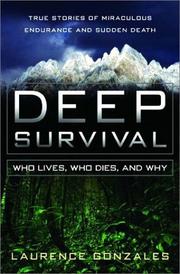
Why some people survive disasters that kill others in the same circumstances.
“Endnotes Laurence Gonzales, Deep Survival: Who Lives, Who Dies, and Why (New York: W.W. Norton & Company, 2003), 119” — Michael Mauboussin
Source: Celebrating the Summit: Making an Informed Decision After a Large Price Gain, page 25
Recommended by: Michael Mauboussin, Patrick O'Shaughnessy
Munger's and Buffett's ideas on avoiding error, as a dialogue built from their words.
Antifragility, the opposite of fragility, in things that gain from disorder.
Recommended by: Patrick Collison