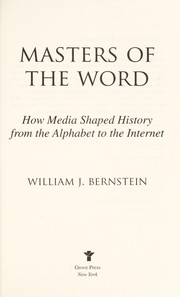
Masters of the Word
How each new technology of communication, from writing on, changed who held power.
Summary
William Bernstein, author of A Splendid Exchange, traces how each new technology of communication, and the question of who had access to it, changed who held power. Writing began in Mesopotamia, spread to Sumer and Egypt, and let rulers extend their control over wide territories, which gave rise to the first empires. Phoenician traders carried their alphabet to Greece, where the first spread of literacy came with drama and democracy; in Rome literacy played a part in the fall of the Republic.
Medieval scriptoria and Bibles in the vernacular fed religious dissent, and cheaper paper together with Gutenberg's press set off the Reformation. The Industrial Revolution brought the telegraph and the steam-driven press, moving information faster and to larger audiences. Radio and television, Bernstein argues, were easier for the powerful to exploit, as Germany, the Soviet Union and Rwanda, where radio incited genocide, all show. Carbon copies in Russian samizdat, photocopying in the Pentagon Papers, the internet, social media and mobile phones in the Arab Spring then widened access again. He tells each step through stories and anecdotes.
Key takeaways 4
- Bernstein links each shift in communication technology to a shift in political power.
- Writing let early rulers govern wide territories and build the first empires.
- The printing press and cheap paper helped set off the Reformation.
- Broadcast media concentrated power, while copiers and the internet spread it again.
Who should read it
Readers who want a long history of media and power from cuneiform to social networks.
About William J. Bernstein
Neurologist turned investment theorist; principal, Efficient Frontier Advisors; author and financial historian
Serious, widely cited writing on asset allocation plus economic histories that outlived their news cycle, though he has no public money-management record.
Who recommended it 2 · 1 direct
Similar books 6
Chosen by shared topics, the entries that hold them, and the people who recommended both.

Long-distance trade from Mesopotamia and the spice routes to modern globalisation.
Recommended by: Patrick Collison, Mohnish Pabrai, Nick Szabo

What happens when technology moves faster than governments can write rules.
Recommended by: Mohnish Pabrai

The people and work of DARPA, from the Internet and GPS to driverless cars.
Recommended by: Patrick Collison
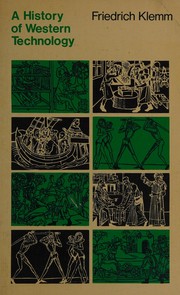
A history of Western technology and its place in civilisation.
Recommended by: Nick Szabo

How glass changed how people see themselves and the world.
Recommended by: Nick Szabo
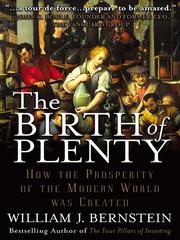
The four institutions modern growth needed, from property rights to capital markets.
“This is morally and ethically unacceptable,” the essay concluded, “but also a corruption of capitalism itself.” 3 For a marvelous exposition of this great era—as well as a compelling and delightful experience—I urge you to read William Bernstein’s fine new book, The Birth of Plenty. 3” — John C. Bogle
Source: Creating Sound Governance: The Shareholder’s Perspective, page 3
Recommended by: John C. Bogle, Mohnish Pabrai, Morgan Housel