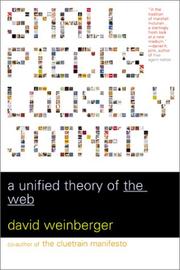
Small Pieces Loosely Joined
How the Web changes basic ideas of space, time, the self and knowledge.
Summary
David Weinberger argues that the World Wide Web changes not only social institutions but basic concepts: space, time, the self, knowledge and reality. He compares his project to Marshall McLuhan's study of broadcast media. The Web would matter if it only connected people on a global scale, but he claims it does more.
Unlike the telephone or the fax, the Web is a permanent public space that gains value each time someone posts a page, answers on a discussion board or replies to a mailing list. More of shared life takes place in this second world, which intersects the physical one in ways Weinberger says are only beginning to be understood. The book is social commentary organised around these concepts, published in 2002.
Key takeaways 4
- The Web accumulates value with every page, post and reply added to it.
- Its permanence and openness make it a public space, unlike the phone or fax.
- Online life changes how people think about space, time, identity and knowledge.
- A loosely joined network of small parts can hold more than any central institution.
Who should read it
Readers interested in early thinking about the internet's social effects, and in why open networks gather value.
Who recommended it 1
Similar books 6
Chosen by shared topics, the entries that hold them, and the people who recommended both.

Why the internet has fallen short of its early promise, and how to change its design.
Recommended by: Ryan Holiday, Ev Williams
How a culture hands its judgement to machines, statistics and technical experts.
“Another one by him is called Technopoly, which also is about how when culture surrenders to technology.” — Tristan Harris
Source: The Tim Ferriss Show Transcripts: Tristan Harris — Fighting Skynet and Firewalling Attention (#387)
Recommended by: Patrick Collison, Tristan Harris
The founder of cybernetics on machines that free people from drudgery, and the risks.
Recommended by: Patrick Collison
An essay arguing that technology solves humanity's problems and must be sped up.
How humanity and technology together keep widening the opportunities open to people.
“Fascinating historical and philosophical perspective on technology, where it's come from, where it's going.” — Derek Sivers
Source: Derek Sivers book notes (primary, rated list) · Rating: 8/10
Recommended by: Derek Sivers, Patrick Collison and 2 others
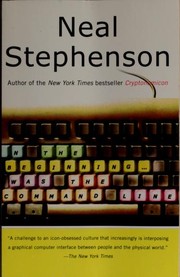
An essay on operating systems and the cultures of Microsoft, Apple and free software.
“Last week I read In the Beginning…Was the Command Line. For the second time. This time I read it on my Kindle, which was fitting.” — Brad Feld
Source: Book: In the Beginning…Was the Command Line — Feld Thoughts
Recommended by: Brad Feld, Ev Williams