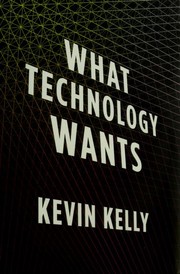
What Technology Wants
How humanity and technology together keep widening the opportunities open to people.
Summary
Kelly, the former editor of Wired, names the globalised, interconnected system of technology the technium and argues that the processes creating it resemble those of biological evolution. The opening sections develop that analogy and claim that the technium, like life, tends toward self-organising complexity.
Kelly then takes up the technium's critics. He examines the anti-technology writing of the Unabomber, while admitting unease at taking a murderer's arguments seriously, and visits the Amish, whom outsiders see as rejecting technology. From conversations with Amish people he draws rules for adopting tools, and suggests that secular society could benefit from their habit of treating tools as servants of self and community rather than as masters. He ends with an optimistic view of how humanity and technology together open up more opportunities and can give lives more meaning.
Key takeaways 4
- Kelly treats technology as one interconnected system, the technium, that evolves like life.
- The technium tends toward self-organising complexity.
- The Amish choose tools deliberately, judging each by whether it serves self and community.
- Kelly concludes that technology on balance widens human opportunity.
Who should read it
Readers who want a long-range theory of where technology is heading and how to choose which tools to adopt.
About Kevin Kelly
Founding executive editor of Wired and earlier editor of the Whole Earth Review; writes on technology and its long-run direction.
Out of Control described decentralised and emergent systems - swarms, networks, co-evolution, systems that improve without a controller - in 1994, well before platform and marketplace businesses were built on those properties. The Inevitable names twelve ongoing technological shifts, including the move from ownership to access and from products to continuously updated services, which is the frame a large share of software and marketplace theses now assume.
Who recommended it 4 · 3 direct
“Fascinating historical and philosophical perspective on technology, where it's come from, where it's going.”
Similar books 6
Chosen by shared topics, the entries that hold them, and the people who recommended both.
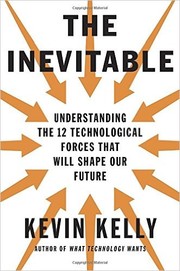
The technology trends that will reshape daily life over the next thirty years.
“What are today's technologies inevitably going to lead to? Great predictions. Half of it was super-inspiring, painting a vision of the future that made me want to jump on it. Half felt like “well, duh, obviously!” maybe because I'm already deep in it.” — Derek Sivers
Source: Derek Sivers book notes (primary, rated list) · Rating: 7/10
Recommended by: Derek Sivers, Nat Eliason, Patrick Collison and 2 others
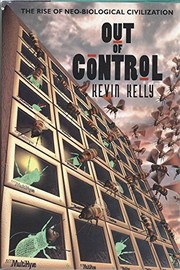
How machines and economies grow so complex that they behave like living systems.
“Had we read Kevin Kelly’s new book, Out of Control: The Rise of Neo- Biological Civilization, we would have realized that complex adaptive systems like the market need a long time to adjust to certain kinds of new information and they will do so in ways impossible to specify in advance.” — Bill Miller
Source: 1994 Q2 Market Commentary
Recommended by: Bill Miller, Cynthia Johnson and 3 others
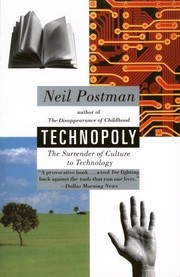
How a culture hands its judgement to machines, statistics and technical experts.
“Another one by him is called Technopoly, which also is about how when culture surrenders to technology.” — Tristan Harris
Source: The Tim Ferriss Show Transcripts: Tristan Harris — Fighting Skynet and Firewalling Attention (#387)
Recommended by: Patrick Collison, Tristan Harris
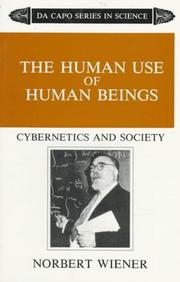
The founder of cybernetics on machines that free people from drudgery, and the risks.
Recommended by: Patrick Collison
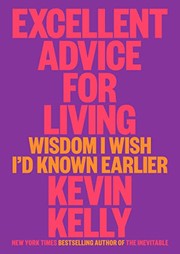
Short pieces of advice on living, goals, generosity, careers, family and money.
“Tiny sentences with deep wisdom unelaborated. Up to you to extract, reflect, and apply.” — Derek Sivers
Source: Derek Sivers book notes (primary, rated list) · Rating: 6/10
Recommended by: Andrew Wilkinson, Derek Sivers and 1 other
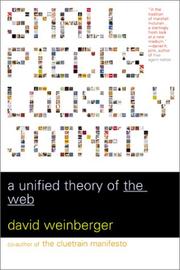
How the Web changes basic ideas of space, time, the self and knowledge.
Recommended by: Ev Williams