
Updates

  1. Person pages list letters, writing, profiles and links as sortable tables with filters, and show each person's companies as links; Fund letters show each letter's description in its own column.
  2. Experts show a checked job title and a short description of each person; 30 more people have photographs.
  3. Every company, fund, university and publication the experts work for has a page listing the people there.
  4. Fund letters show each letter's thesis and filter by it; 225 person pages list the essays, columns and newsletter issues the person wrote.
  5. Person pages list every essay and newsletter issue a person wrote, and their own books as a table in List view.
  6. Recommends shows the five largest kinds of book and the rest under More; browse pictures load sooner.
  7. Podcasts and talks link the original episode, filter by Audio and video or Press, and list each publisher once.
  8. Pages are wider, Recommends has List and Grid, and a filter clicked again turns off.
  9. Book cards sit in a ruled grid with Open Library and Goodreads links and each book's one-line note.
  10. Funds is now Investors; each investor's styles are buttons that filter the table.
  11. Podcasts and talks on a person's page filter by year and publisher and show as a list or a grid of pictures.
  12. Quotes show only people's own words: 472 summaries written by list sites are gone.
  13. Country pages open from Browse again, and every link on the shelf lands on a page.
  14. Subject and person pages show their sections as tabs, and each book appears once on a person's page.
  15. Book cards show the quote, who said it and the source; grids show five cards to a row.
  16. On a phone, a menu holds the sections, search, Updates, Feedback and dark mode.
  17. Feedback takes a screenshot of the page with no browser prompt, opens a screenshot full size when you click it, and clears itself once sent.
  18. Book cards are centred, search names the topic each book sits in, and any text cut short shows whole on hover.
  19. Search groups its results by kind: people, companies, geographies, subjects, topics, books, funds, fund letters and papers.
  20. The Books table lists who recommended each book by name, and the browser tab names the section you are in.
  21. Feedback can take a screenshot of the page, or one you paste or choose, and opens in the corner beside Updates.
  22. Each rail button reopens its section where you left it, and Browse, Table and People show on every book and subject page.
  23. Filters grey out choices that hold nothing instead of hiding them, and Books › People filters by authors or recommenders.
  24. Feedback takes a subject line and up to three screenshots.
  25. Biographies are grouped by the person they are about: 41 new pages, from Abraham Lincoln to Lee Kuan Yew.
  26. Sport splits into 23 sports, and Religion into one topic per faith.
  27. Book lists show as cards: the cover, one recommendation quote and every recommender by name.
  28. Seventeen subjects that had two or three pages under different names now have one page each.
  29. Every page lists its Experts as authors and recommenders, with a link to them on the Experts tab.
  30. Economics, Financial history, Financial panics and Accounting are subjects of their own, with one page per financial crisis.
  31. Book, person and subject pages open inside the app, so the tabs stay in view.
  32. 996 more book covers, and photographs or logos for 227 more people and companies.
  33. Books › Browse shows every subject as cards, and the rail holds Fund letters, Papers, Experts, Books and Funds.
  34. Every topic over 150 books splits into narrower topics, each with a page of its own.

Send feedback

What is it?
Screenshots, up to 3 (optional)
or paste one with Ctrl+V

We use your email only to reply to you.

So Good They Can't Ignore You

So Good They Can't Ignore You

Cal Newport
2012
T3 272 pages · about 4h 32m to read Open Librarygoodreads

Career capital before passion; building rare and valuable skills

Summary

Newport argues against the advice to follow your passion, holding that it is bad advice supported by no evidence and that it produces chronic job dissatisfaction by setting an expectation careers cannot meet. He takes the title from Steve Martin's answer about how to succeed.

His alternative is what he calls the craftsman mindset. Instead of asking what the world can offer you, ask what you can offer the world, and build rare and valuable skills that can be traded for the things that make work satisfying. He calls this career capital, and argues that autonomy, impact, creativity and mission all have to be purchased with it.

He supports the argument with self-determination theory, which identifies autonomy, competence and relatedness as the requirements for intrinsic motivation, and notes that passion for a subject is generally a consequence of becoming good at it rather than a precondition. He applies Ericsson's deliberate practice to knowledge work, arguing that most professionals plateau because they stop stretching once they reach adequacy.

He gives two control traps: seeking autonomy before you have the capital to support it, which fails, and being blocked by an employer once you have enough capital that they will resist losing you, which he says is the signal that the autonomy is worth pursuing. He also argues that a compelling mission requires being at the frontier of a field, which itself requires the capital. The evidence is case studies plus secondary research, and the passion argument is stated more strongly than the literature supports. The career capital framing and the two control traps are the parts readers apply.

Key takeaways 8

  1. Following your passion is bad advice, because passion for work generally follows from becoming good at it rather than preceding it.
  2. Rare and valuable skills are the currency that buys autonomy, impact and creative control, and none of those can be obtained without them.
  3. The craftsman mindset asks what you can offer rather than what the work offers you, which is what produces the skills that eventually make work satisfying.
  4. Deliberate practice applies to knowledge work, and most professionals plateau because they stop stretching once they reach adequacy.
  5. Seeking autonomy before having enough career capital to support it produces failure rather than freedom.
  6. Resistance from an employer when you request autonomy is the signal that you have enough capital to make the request worth pursuing.
  7. A compelling mission requires operating at the frontier of a field, which is itself only reachable through accumulated capital.
  8. Job satisfaction follows from control, competence and connection rather than from having found the correct occupation.

Who should read it

Early and mid-career professionals dissatisfied with their work who need an alternative to searching for the right field.

Who recommended it 5 · 1 direct

Kevin Kellyreported
Reid Hoffmanreported

Similar books 6

Chosen by shared topics, the entries that hold them, and the people who recommended both.

David Epstein · 2019

Early specialisation works only where rules are stable; elsewhere breadth wins.

Josh Kaufman · 2013

How to learn a new skill fast: break it down, practise well, remove barriers.

Recommended by: Nat Eliason, Justin Kan

Ken Robinson, Lou Aronica · 2013

Recommended by: Tony Hsieh

Peter Bevelin · 2007

Builds out Munger's latticework idea from primary sources.

“…books I've recommended, highlighted to death, or forced on friends.” — Andrew Wilkinson

Source: Andrew Wilkinson's Bookshelf, neverenough.com

Recommended by: Andrew Wilkinson, Nat Eliason and 8 others
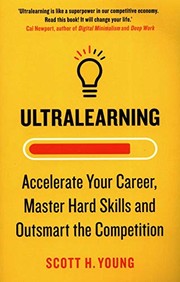
Scott H. Young · 2019

Recommended by: Cal Newport

Where it sits in the reference 1

Mental models

Topics

Productivity and HabitsEducation and LearningCareers, learning, creative work and simple living