Strategic Risk Management: Designing Portfolios and Managing Risk
Summary
Campbell Harvey, Sandy Rattray and Otto Van Hemert, combining academic and Man Group practitioner perspectives, examine what actually protects a portfolio during equity drawdowns. Their method is empirical: test candidate defensive strategies against the historical record of equity crises.
The candidates they test include holding government bonds, gold, put options, credit protection, and quality equity factors, alongside dynamic strategies including time series momentum and trend following. Their findings distinguish between passive and active protection. Passive hedges such as long put options work reliably but cost so much in premium over time that the drag exceeds the benefit for most investors. Government bonds worked during the crises of the past forty years because of a specific correlation regime that may not persist and did not hold before the late 1990s. Trend following performed well across most equity crises because crises develop over months rather than instantaneously, which gives a trend system time to reverse position.
They also examine defensive equity approaches, the behaviour of the quality factor, and the construction of portfolios that combine several protective elements. The book is honest about the limitations: any strategy that protected in past crises was selected on that basis, and the sample of genuine crises is small. It is written for institutional investors and assumes familiarity with portfolio construction. The material on why bonds may not diversify equities in an inflationary regime became directly relevant shortly after publication.
Key takeaways 7
- Long put option protection works reliably and costs more in premium over time than the protection is worth to most investors.
- Government bonds diversified equities over the past forty years because of a correlation regime that did not hold earlier and may not persist.
- Trend following protected in most equity crises because crises develop over months, which gives a trend system time to reverse.
- The number of genuine equity crises in the historical record is small, so any strategy selected for past performance is selected on few observations.
- Quality and defensive equity factors reduce drawdowns without the premium cost of options, at the price of lower returns in rising markets.
- Combining several protective approaches works better than any single one, because each fails in different conditions.
- The authors argue that investors should decide what they are protecting against before selecting a hedge, since different crises require different protection.
Who should read it
Institutional investors and allocators deciding how to protect a portfolio against equity drawdowns, who want the historical evidence on what has and has not worked.
About Campbell R. Harvey
Professor of Finance, Fuqua School of Business, Duke University; Research Associate, NBER; former editor of The Journal of Finance (2006-2012); Partner and Senior Advisor, Research Affiliates
The multiple-testing work with Liu and Zhu reset the evidentiary bar for the entire factor literature, and the Graham-Harvey CFO survey is a primary source for corporate finance practice.
Fuqua School of Business, Duke University, NBER, Research Affiliates, The Journal of Finance
Similar books 6
Chosen by shared topics, the entries that hold them, and the people who recommended both.
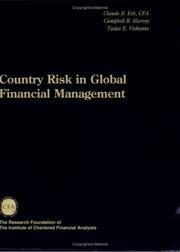
Research Foundation of the CFA Institute monograph.
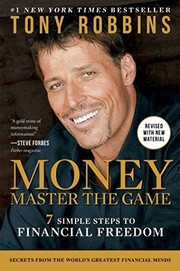
Interviews with 50 investors, from Dalio to Bogle, turned into money advice.
“…books I've recommended, highlighted to death, or forced on friends.” — Andrew Wilkinson
Source: Andrew Wilkinson's Bookshelf, neverenough.com
Recommended by: Andrew Wilkinson, Nat Eliason, Ray Dalio and 1 other
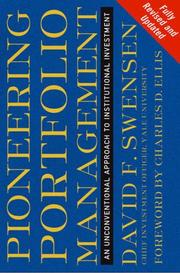
How the Yale endowment invests, and how institutions can build portfolios like it.
“As David Swensen wrote in his excellent book, "Pioneering Portfolio Management” — Howard Marks
Source: Oaktree memo 'Risk'
Recommended by: Howard Marks, Marc Andreessen and 2 others
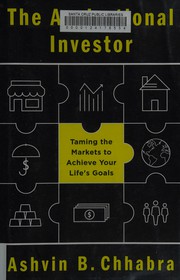
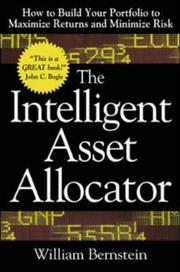
Modern portfolio theory for individual investors, explained without heavy maths.
Recommended by: The Barefoot Investor
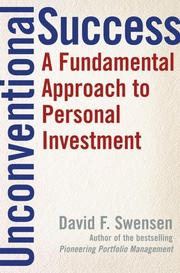
Subtitled A Fundamental Approach to Personal Investment.
“Be sure to also pick up a copy of his book for individual investors— Unconventional Success” — Marc Andreessen
Source: The truth about venture capitalists (Part 3), blog.pmarca.com
Recommended by: Marc Andreessen, Mohnish Pabrai
Where it sits in the reference 2
Topics