Updates

  1. Person pages list letters, writing, profiles and links as sortable tables with filters, and show each person's companies as links; Fund letters show each letter's description in its own column.
  2. Experts show a checked job title and a short description of each person; 30 more people have photographs.
  3. Every company, fund, university and publication the experts work for has a page listing the people there.
  4. Fund letters show each letter's thesis and filter by it; 225 person pages list the essays, columns and newsletter issues the person wrote.
  5. Person pages list every essay and newsletter issue a person wrote, and their own books as a table in List view.
  6. Recommends shows the five largest kinds of book and the rest under More; browse pictures load sooner.
  7. Podcasts and talks link the original episode, filter by Audio and video or Press, and list each publisher once.
  8. Pages are wider, Recommends has List and Grid, and a filter clicked again turns off.
  9. Book cards sit in a ruled grid with Open Library and Goodreads links and each book's one-line note.
  10. Funds is now Investors; each investor's styles are buttons that filter the table.
  11. Podcasts and talks on a person's page filter by year and publisher and show as a list or a grid of pictures.
  12. Quotes show only people's own words: 472 summaries written by list sites are gone.
  13. Country pages open from Browse again, and every link on the shelf lands on a page.
  14. Subject and person pages show their sections as tabs, and each book appears once on a person's page.
  15. Book cards show the quote, who said it and the source; grids show five cards to a row.
  16. On a phone, a menu holds the sections, search, Updates, Feedback and dark mode.
  17. Feedback takes a screenshot of the page with no browser prompt, opens a screenshot full size when you click it, and clears itself once sent.
  18. Book cards are centred, search names the topic each book sits in, and any text cut short shows whole on hover.
  19. Search groups its results by kind: people, companies, geographies, subjects, topics, books, funds, fund letters and papers.
  20. The Books table lists who recommended each book by name, and the browser tab names the section you are in.
  21. Feedback can take a screenshot of the page, or one you paste or choose, and opens in the corner beside Updates.
  22. Each rail button reopens its section where you left it, and Browse, Table and People show on every book and subject page.
  23. Filters grey out choices that hold nothing instead of hiding them, and Books › People filters by authors or recommenders.
  24. Feedback takes a subject line and up to three screenshots.
  25. Biographies are grouped by the person they are about: 41 new pages, from Abraham Lincoln to Lee Kuan Yew.
  26. Sport splits into 23 sports, and Religion into one topic per faith.
  27. Book lists show as cards: the cover, one recommendation quote and every recommender by name.
  28. Seventeen subjects that had two or three pages under different names now have one page each.
  29. Every page lists its Experts as authors and recommenders, with a link to them on the Experts tab.
  30. Economics, Financial history, Financial panics and Accounting are subjects of their own, with one page per financial crisis.
  31. Book, person and subject pages open inside the app, so the tabs stay in view.
  32. 996 more book covers, and photographs or logos for 227 more people and companies.
  33. Books › Browse shows every subject as cards, and the rail holds Fund letters, Papers, Experts, Books and Funds.
  34. Every topic over 150 books splits into narrower topics, each with a page of its own.

Send feedback

What is it?
Screenshots, up to 3 (optional)
or paste one with Ctrl+V

We use your email only to reply to you.

The Art of Profitability

The Art of Profitability

Adrian Slywotzky
2002
T2 239 pages · about 3h 59m to read Open Librarygoodreads

Twenty-three profit models including installed base and switchboard.

Summary

Slywotzky presents twenty-three profit models as a series of conversations between a teacher and a young analyst, one model per weekly session. The models include customer solution profit, pyramid profit, multi-component profit, switchboard profit, time profit, blockbuster profit, profit multiplier, entrepreneurial profit, specialist profit, installed base profit, de facto standard profit, brand profit, specialty product profit, local leadership profit, transaction scale profit, value chain position profit, cycle profit, after-sale profit, new product profit, relative market share profit, experience curve profit, low-cost business design profit, and digital profit.

Each model describes a specific mechanism by which a business converts activity into profit, with a real company as the illustration. The pyramid model, for example, describes using a low-price entry product as a firewall that denies competitors a foothold while the profit comes from the top of the range. The multi-component model describes selling the same product through channels with radically different economics, such as supermarket versus restaurant. The switchboard model describes intermediating many buyers and many sellers so that value accrues to the connector.

The dialogue format makes the book quick to read and it functions as a catalogue for diagnosing where profit sits in a business or an industry. It is prescriptive without being rigorous: there is no data testing which models produce durable returns, the categories overlap, and the examples are from the late 1990s. For founders and investors the useful exercise is to work through the list against a specific company and ask which mechanism actually generates the margin, which is a question many business plans never answer explicitly.

Key takeaways 7

  1. Profit arises from a specific identifiable mechanism, and a manager who cannot name which of a small number of mechanisms applies to their business does not understand it.
  2. Market share and profitability are not the same objective, and pursuing share frequently destroys the mechanism that generated profit.
  3. The pyramid model works by using a deliberately low-margin entry product to deny competitors a base from which to attack the profitable top of the range.
  4. Selling an identical product through channels with different price sensitivity can generate more profit than any product improvement.
  5. Installed base profit means the initial sale is priced to build the base and the profit comes entirely from consumables, service or upgrades.
  6. Profit models have life cycles, so a mechanism that works in one phase of an industry stops working in the next.
  7. Where a firm sits in the value chain determines its profitability more than how well it executes, and the profitable position moves over time.

Who should read it

Founders and investors who want a catalogue of profit mechanisms to test against a specific business model and identify where margin actually comes from.

Who recommended it 1 · 1 direct

Similar books 6

Chosen by shared topics, the entries that hold them, and the people who recommended both.
Adrian J. Slywotzky · 1999

How value migrates between business designs in an industry.
Bruce Greenwald, Judd Kahn · 2005

Barriers to entry as the only durable source of a toll.

Recommended by: Mohnish Pabrai, Li Lu
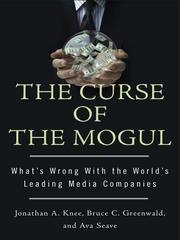
Bruce Greenwald, Jonathan A. Knee, Ava Seave · 2009

Why most media companies destroy shareholder value: few have barriers to entry.

Recommended by: Keith Rabois

W. Chan Kim, Renee Mauborgne · 2005

How to create new market space instead of fighting rivals over existing demand.

Adam M. Brandenburger, Barry J. Nalebuff · 1996

Game theory applied to business, which is cooperative and competitive at once.

Recommended by: Mohnish Pabrai
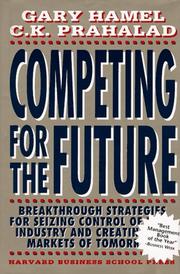
Gary Hamel, C. K. Prahalad · 1994

How firms lead future industries by seeing tomorrow's chances and building skills.

Recommended by: Mohnish Pabrai

Where it sits in the reference 5

Business models
Business models
Business models
Business themes
Business themes

Topics

Business and ManagementInvesting