Updates

  1. Person pages list letters, writing, profiles and links as sortable tables with filters, and show each person's companies as links; Fund letters show each letter's description in its own column.
  2. Experts show a checked job title and a short description of each person; 30 more people have photographs.
  3. Every company, fund, university and publication the experts work for has a page listing the people there.
  4. Fund letters show each letter's thesis and filter by it; 225 person pages list the essays, columns and newsletter issues the person wrote.
  5. Person pages list every essay and newsletter issue a person wrote, and their own books as a table in List view.
  6. Recommends shows the five largest kinds of book and the rest under More; browse pictures load sooner.
  7. Podcasts and talks link the original episode, filter by Audio and video or Press, and list each publisher once.
  8. Pages are wider, Recommends has List and Grid, and a filter clicked again turns off.
  9. Book cards sit in a ruled grid with Open Library and Goodreads links and each book's one-line note.
  10. Funds is now Investors; each investor's styles are buttons that filter the table.
  11. Podcasts and talks on a person's page filter by year and publisher and show as a list or a grid of pictures.
  12. Quotes show only people's own words: 472 summaries written by list sites are gone.
  13. Country pages open from Browse again, and every link on the shelf lands on a page.
  14. Subject and person pages show their sections as tabs, and each book appears once on a person's page.
  15. Book cards show the quote, who said it and the source; grids show five cards to a row.
  16. On a phone, a menu holds the sections, search, Updates, Feedback and dark mode.
  17. Feedback takes a screenshot of the page with no browser prompt, opens a screenshot full size when you click it, and clears itself once sent.
  18. Book cards are centred, search names the topic each book sits in, and any text cut short shows whole on hover.
  19. Search groups its results by kind: people, companies, geographies, subjects, topics, books, funds, fund letters and papers.
  20. The Books table lists who recommended each book by name, and the browser tab names the section you are in.
  21. Feedback can take a screenshot of the page, or one you paste or choose, and opens in the corner beside Updates.
  22. Each rail button reopens its section where you left it, and Browse, Table and People show on every book and subject page.
  23. Filters grey out choices that hold nothing instead of hiding them, and Books › People filters by authors or recommenders.
  24. Feedback takes a subject line and up to three screenshots.
  25. Biographies are grouped by the person they are about: 41 new pages, from Abraham Lincoln to Lee Kuan Yew.
  26. Sport splits into 23 sports, and Religion into one topic per faith.
  27. Book lists show as cards: the cover, one recommendation quote and every recommender by name.
  28. Seventeen subjects that had two or three pages under different names now have one page each.
  29. Every page lists its Experts as authors and recommenders, with a link to them on the Experts tab.
  30. Economics, Financial history, Financial panics and Accounting are subjects of their own, with one page per financial crisis.
  31. Book, person and subject pages open inside the app, so the tabs stay in view.
  32. 996 more book covers, and photographs or logos for 227 more people and companies.
  33. Books › Browse shows every subject as cards, and the rail holds Fund letters, Papers, Experts, Books and Funds.
  34. Every topic over 150 books splits into narrower topics, each with a page of its own.

Send feedback

What is it?
Screenshots, up to 3 (optional)
or paste one with Ctrl+V

We use your email only to reply to you.

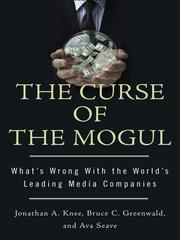
The Curse of the Mogul: What's Wrong with th

The Curse of the Mogul: What's Wrong with the World's Leading Media Companies

Bruce Greenwald, Jonathan A. Knee, Ava Seave
2009
T2 Open Librarygoodreads

Why media scale rarely earns returns; useful on conglomerate logic.

Summary

Jonathan Knee, Bruce Greenwald and Ava Seave apply competitive strategy analysis to media companies and conclude that most of them destroy shareholder value while their executives are celebrated. Greenwald's framework, which asks where barriers to entry actually come from, drives the analysis.

Their argument is that the sources of competitive advantage in media are narrow. Scale in content production does not create a barrier, because content is a hit business with no learning curve and each production is a separate project. Vertical integration between content and distribution does not create one, because content sells to whoever pays most. Brands rarely create one in media, because audiences follow programmes rather than networks. What does create advantage is local or niche market dominance with high customer switching costs and low content costs, which is why local newspapers, trade publications, financial data and cable systems earned better returns than film studios and music labels.

They then attack the strategies moguls pursue: acquisitions justified by synergy that does not materialise, global expansion into markets where local competitors have the advantage, and the pursuit of scale for its own sake. They document the value destruction with returns data across the sector. The book was published in 2009, before streaming transformed distribution economics, and some of the specific conclusions have been overtaken. The analytical framework, and particularly the argument that content scale creates no barrier, has held up well.

Key takeaways 7

  1. Scale in content production creates no barrier to entry, because each production is a separate project with no learning curve.
  2. Vertical integration between content and distribution fails to create advantage, since content sells to the highest bidder.
  3. Durable media advantage comes from local or niche dominance with high switching costs, not from global scale.
  4. Talent captures the rents from successful content, which is why studios and labels earn poor returns on hits.
  5. The authors document that media conglomerates destroyed shareholder value while their executives accumulated reputation.
  6. Acquisitions justified by synergy in media have consistently failed to produce the claimed cost or revenue benefits.
  7. Global expansion in media usually fails because local competitors hold advantages in language, relationships and regulation.

Who should read it

Investors in media and entertainment who want a rigorous competitive analysis of where advantage in the sector does and does not exist.

About Bruce Greenwald

Robert Heilbrunn Professor Emeritus of Finance and Asset Management, Columbia Business School; former director of the Heilbrunn Center for Graham and Dodd Investing

Value Investing: From Graham to Buffett and Beyond is the canonical modern restatement of the Columbia value framework, and Competition Demystified is its standard companion on barriers to entry.

Columbia Business School, Heilbrunn Center for Graham and Dodd Investing

Who recommended it 1

Keith Raboisreported

Similar books 6

Chosen by shared topics, the entries that hold them, and the people who recommended both.
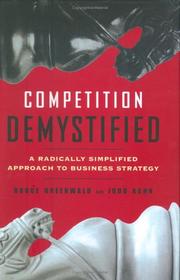
Bruce Greenwald, Judd Kahn · 2005

Barriers to entry as the only durable source of a toll.

Recommended by: Mohnish Pabrai, Li Lu

Bharat Anand · 2016

Media firms fail by fixating on content when value lies in the connections around it.
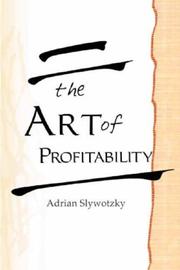
Adrian Slywotzky · 2002

Twenty-three profit models taught as weekly lessons from a mentor to an analyst.

Recommended by: Mohnish Pabrai

Hamilton Helmer · 2016

Seven sources of lasting advantage, each a benefit plus a barrier to rivals.

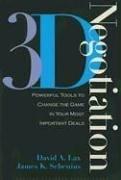
David A. Lax, James K. Sebenius · 2006

The deal is shaped before the table: set up the parties, interests and options first.

Where it sits in the reference 6

Academics
Companies
Business models
Business models
Business themes
Business themes

Topics

Business and ManagementInvestingSociology and CultureMedia and technology in society