Updates

  1. Person pages list letters, writing, profiles and links as sortable tables with filters, and show each person's companies as links; Fund letters show each letter's description in its own column.
  2. Experts show a checked job title and a short description of each person; 30 more people have photographs.
  3. Every company, fund, university and publication the experts work for has a page listing the people there.
  4. Fund letters show each letter's thesis and filter by it; 225 person pages list the essays, columns and newsletter issues the person wrote.
  5. Person pages list every essay and newsletter issue a person wrote, and their own books as a table in List view.
  6. Recommends shows the five largest kinds of book and the rest under More; browse pictures load sooner.
  7. Podcasts and talks link the original episode, filter by Audio and video or Press, and list each publisher once.
  8. Pages are wider, Recommends has List and Grid, and a filter clicked again turns off.
  9. Book cards sit in a ruled grid with Open Library and Goodreads links and each book's one-line note.
  10. Funds is now Investors; each investor's styles are buttons that filter the table.
  11. Podcasts and talks on a person's page filter by year and publisher and show as a list or a grid of pictures.
  12. Quotes show only people's own words: 472 summaries written by list sites are gone.
  13. Country pages open from Browse again, and every link on the shelf lands on a page.
  14. Subject and person pages show their sections as tabs, and each book appears once on a person's page.
  15. Book cards show the quote, who said it and the source; grids show five cards to a row.
  16. On a phone, a menu holds the sections, search, Updates, Feedback and dark mode.
  17. Feedback takes a screenshot of the page with no browser prompt, opens a screenshot full size when you click it, and clears itself once sent.
  18. Book cards are centred, search names the topic each book sits in, and any text cut short shows whole on hover.
  19. Search groups its results by kind: people, companies, geographies, subjects, topics, books, funds, fund letters and papers.
  20. The Books table lists who recommended each book by name, and the browser tab names the section you are in.
  21. Feedback can take a screenshot of the page, or one you paste or choose, and opens in the corner beside Updates.
  22. Each rail button reopens its section where you left it, and Browse, Table and People show on every book and subject page.
  23. Filters grey out choices that hold nothing instead of hiding them, and Books › People filters by authors or recommenders.
  24. Feedback takes a subject line and up to three screenshots.
  25. Biographies are grouped by the person they are about: 41 new pages, from Abraham Lincoln to Lee Kuan Yew.
  26. Sport splits into 23 sports, and Religion into one topic per faith.
  27. Book lists show as cards: the cover, one recommendation quote and every recommender by name.
  28. Seventeen subjects that had two or three pages under different names now have one page each.
  29. Every page lists its Experts as authors and recommenders, with a link to them on the Experts tab.
  30. Economics, Financial history, Financial panics and Accounting are subjects of their own, with one page per financial crisis.
  31. Book, person and subject pages open inside the app, so the tabs stay in view.
  32. 996 more book covers, and photographs or logos for 227 more people and companies.
  33. Books › Browse shows every subject as cards, and the rail holds Fund letters, Papers, Experts, Books and Funds.
  34. Every topic over 150 books splits into narrower topics, each with a page of its own.

Send feedback

What is it?
Screenshots, up to 3 (optional)
or paste one with Ctrl+V

We use your email only to reply to you.

The Forever Transaction

The Forever Transaction

Robbie Kellman Baxter
2020
T3 256 pages · about 4h 16m to read Open Librarygoodreads

Retention, pricing tiers and the mechanics of renewal.

Summary

Robbie Kellman Baxter consults on subscription and membership businesses and wrote this as a practical guide to building and running them. It follows her earlier book The Membership Economy.

Her framing distinction is between a subscription, which is a pricing mechanism, and a membership, which is a relationship the customer identifies with. She argues that businesses which treat recurring revenue as a billing arrangement fail, because the customer has no reason to stay, while those that build an ongoing relationship with a defined benefit retain customers through price increases and competitive entry.

The operational content covers the lifecycle: identifying the forever promise, meaning the durable customer problem the business solves indefinitely; designing the pricing and packaging including free trials and tiering; the launch and the transition for businesses converting from transactional models, which she treats as the hardest case because it cannibalises existing revenue; onboarding, which she argues determines retention more than anything afterward; managing churn and identifying its causes; and scaling, including the organisational changes required when revenue recognition and customer success replace sales as the operating focus. The book is practical and case-based rather than analytical, and the cases are drawn from well-known successes. Founders will find the operational checklists useful and should look elsewhere for evidence.

Key takeaways 7

  1. A subscription is a pricing mechanism while a membership is a relationship, and businesses that build only the first lose customers to price.
  2. The forever promise is the durable customer problem the business commits to solving indefinitely, and it must be identified before pricing.
  3. Onboarding determines retention more than any subsequent activity, because customers who do not reach first value never return.
  4. Converting a transactional business to subscription cannibalises existing revenue, which is why most attempts fail at the transition rather than at the design.
  5. Churn analysis must identify causes by cohort and by reason rather than reporting an aggregate rate.
  6. Subscription businesses require organisational changes, since customer success rather than sales determines revenue.
  7. Free trials work when they let the customer reach the product's actual value and fail when they only demonstrate features.

Who should read it

Founders and operators building or converting to subscription and membership models who want practical operational guidance.

Similar books 6

Chosen by shared topics, the entries that hold them, and the people who recommended both.

Madhavan Ramanujam, Georg Tacke · 2016

Set the price before you design the product, since most failures are pricing ones.

Tien Tzuo · 2018

Why firms are moving from selling units to selling ongoing subscriptions, and how.

Robbie Kellman Baxter · 2015

Membership as a relationship, not a payment plan.
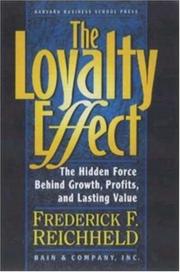
Frederick F. Reichheld, Thomas Teal · 1996

Keeping customers, employees and investors is what drives profit and growth.

“In his seminal book, The Loyalty Effect, Fred Reichheld shows that a 5 percentage point improvement in retention rate” — Michael Mauboussin

Source: The Economics of Customer Businesses (Legg Mason Capital Management)

Recommended by: Michael Mauboussin

Anita Elberse · 2013

Hit economics that explain Netflix's later spending strategy.

Hermann Simon · 2015

Price is the strongest profit lever and the least managed; how to set it well.

Recommended by: Michael Mauboussin

Where it sits in the reference 3

Business models
Business themes
Business themes

Topics

Business and ManagementSales and MarketingGrowth, pricing and channels