Updates

  1. Person pages list letters, writing, profiles and links as sortable tables with filters, and show each person's companies as links; Fund letters show each letter's description in its own column.
  2. Experts show a checked job title and a short description of each person; 30 more people have photographs.
  3. Every company, fund, university and publication the experts work for has a page listing the people there.
  4. Fund letters show each letter's thesis and filter by it; 225 person pages list the essays, columns and newsletter issues the person wrote.
  5. Person pages list every essay and newsletter issue a person wrote, and their own books as a table in List view.
  6. Recommends shows the five largest kinds of book and the rest under More; browse pictures load sooner.
  7. Podcasts and talks link the original episode, filter by Audio and video or Press, and list each publisher once.
  8. Pages are wider, Recommends has List and Grid, and a filter clicked again turns off.
  9. Book cards sit in a ruled grid with Open Library and Goodreads links and each book's one-line note.
  10. Funds is now Investors; each investor's styles are buttons that filter the table.
  11. Podcasts and talks on a person's page filter by year and publisher and show as a list or a grid of pictures.
  12. Quotes show only people's own words: 472 summaries written by list sites are gone.
  13. Country pages open from Browse again, and every link on the shelf lands on a page.
  14. Subject and person pages show their sections as tabs, and each book appears once on a person's page.
  15. Book cards show the quote, who said it and the source; grids show five cards to a row.
  16. On a phone, a menu holds the sections, search, Updates, Feedback and dark mode.
  17. Feedback takes a screenshot of the page with no browser prompt, opens a screenshot full size when you click it, and clears itself once sent.
  18. Book cards are centred, search names the topic each book sits in, and any text cut short shows whole on hover.
  19. Search groups its results by kind: people, companies, geographies, subjects, topics, books, funds, fund letters and papers.
  20. The Books table lists who recommended each book by name, and the browser tab names the section you are in.
  21. Feedback can take a screenshot of the page, or one you paste or choose, and opens in the corner beside Updates.
  22. Each rail button reopens its section where you left it, and Browse, Table and People show on every book and subject page.
  23. Filters grey out choices that hold nothing instead of hiding them, and Books › People filters by authors or recommenders.
  24. Feedback takes a subject line and up to three screenshots.
  25. Biographies are grouped by the person they are about: 41 new pages, from Abraham Lincoln to Lee Kuan Yew.
  26. Sport splits into 23 sports, and Religion into one topic per faith.
  27. Book lists show as cards: the cover, one recommendation quote and every recommender by name.
  28. Seventeen subjects that had two or three pages under different names now have one page each.
  29. Every page lists its Experts as authors and recommenders, with a link to them on the Experts tab.
  30. Economics, Financial history, Financial panics and Accounting are subjects of their own, with one page per financial crisis.
  31. Book, person and subject pages open inside the app, so the tabs stay in view.
  32. 996 more book covers, and photographs or logos for 227 more people and companies.
  33. Books › Browse shows every subject as cards, and the rail holds Fund letters, Papers, Experts, Books and Funds.
  34. Every topic over 150 books splits into narrower topics, each with a page of its own.

Send feedback

What is it?
Screenshots, up to 3 (optional)
or paste one with Ctrl+V

We use your email only to reply to you.

Subscribed

Subscribed

Tien Tzuo
2018
T2 246 pages · about 4h 6m to read Open Librarygoodreads

Zuora's founder on the shift from unit sales to subscriber accounting.

Summary

Tzuo was an early Salesforce executive and founded Zuora, which sells subscription billing software. The book argues that businesses across sectors are shifting from selling units to selling ongoing access, and sets out what that requires operationally.

The strategic claim is that the relationship rather than the transaction becomes the asset. A subscription business knows who its customers are, what they use and when they stop, which permits product development based on behaviour rather than on surveys. Tzuo argues that this changes the organisation: product teams work on continuous improvement rather than on release cycles, sales compensation must reward retention rather than only acquisition, finance must track recurring revenue and churn rather than bookings, and the whole company must organise around the customer lifecycle from acquisition through onboarding, expansion and renewal.

The financial content is the most concrete. Tzuo proposes an alternative income statement for subscription businesses: start with recurring revenue at the beginning of the period, subtract churn, add new recurring revenue, subtract the cost of servicing existing subscribers and the cost of acquiring new ones, and the resulting figure shows whether the business is growing profitably. He argues that conventional accounting makes a healthy subscription business look unprofitable because acquisition costs are expensed immediately while the revenue arrives over years.

He covers sector examples including media, software, manufacturing shifting to service contracts, transport and retail.

The book is written by a vendor of subscription infrastructure and reads as advocacy for the model. It gives little attention to where subscriptions fail, to subscription fatigue among consumers, to the businesses that converted and then reversed, or to the fact that recurring revenue quality varies enormously depending on switching costs. The metrics framework is the durable part.

Key takeaways 7

  1. In a subscription business the ongoing customer relationship rather than the transaction is the asset being built.
  2. Conventional accounting makes healthy subscription businesses look unprofitable because acquisition cost is expensed before the revenue arrives.
  3. A subscription income statement should start with recurring revenue, subtract churn, add new recurring revenue, then subtract servicing and acquisition costs.
  4. Sales compensation that rewards only new acquisition works against the retention that determines subscription value.
  5. Continuous product improvement replaces release cycles because the customer can leave at any renewal point.
  6. Usage data from subscribers replaces market research as the input to product decisions.
  7. Recurring revenue quality depends on switching costs, so equal revenue figures can represent very different businesses.

Who should read it

Operators converting a business to recurring revenue who need the metrics and organisational changes required, discounting the vendor's enthusiasm.

Similar books 6

Chosen by shared topics, the entries that hold them, and the people who recommended both.

Madhavan Ramanujam, Georg Tacke · 2016

Set the price before you design the product, since most failures are pricing ones.

Robbie Kellman Baxter · 2020

Retention, pricing tiers and the mechanics of renewal.

Robbie Kellman Baxter · 2015

Membership as a relationship, not a payment plan.
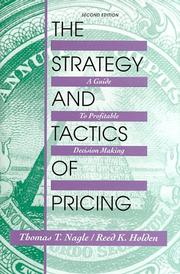
Thomas T. Nagle, Reed K. Holden · 1987

Set prices from the value customers get, not from cost or rivals' prices.

Frederick F. Reichheld, Thomas Teal · 1996

Keeping customers, employees and investors is what drives profit and growth.

“In his seminal book, The Loyalty Effect, Fred Reichheld shows that a 5 percentage point improvement in retention rate” — Michael Mauboussin

Source: The Economics of Customer Businesses (Legg Mason Capital Management)

Recommended by: Michael Mauboussin
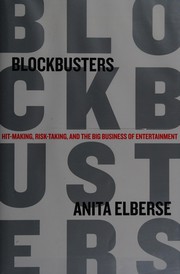
Anita Elberse · 2013

Hit economics that explain Netflix's later spending strategy.

Where it sits in the reference 4

Business models
Business models
Business themes
Business themes

Topics

Business and ManagementSales and MarketingGrowth, pricing and channels