Updates

  1. Person pages list letters, writing, profiles and links as sortable tables with filters, and show each person's companies as links; Fund letters show each letter's description in its own column.
  2. Experts show a checked job title and a short description of each person; 30 more people have photographs.
  3. Every company, fund, university and publication the experts work for has a page listing the people there.
  4. Fund letters show each letter's thesis and filter by it; 225 person pages list the essays, columns and newsletter issues the person wrote.
  5. Person pages list every essay and newsletter issue a person wrote, and their own books as a table in List view.
  6. Recommends shows the five largest kinds of book and the rest under More; browse pictures load sooner.
  7. Podcasts and talks link the original episode, filter by Audio and video or Press, and list each publisher once.
  8. Pages are wider, Recommends has List and Grid, and a filter clicked again turns off.
  9. Book cards sit in a ruled grid with Open Library and Goodreads links and each book's one-line note.
  10. Funds is now Investors; each investor's styles are buttons that filter the table.
  11. Podcasts and talks on a person's page filter by year and publisher and show as a list or a grid of pictures.
  12. Quotes show only people's own words: 472 summaries written by list sites are gone.
  13. Country pages open from Browse again, and every link on the shelf lands on a page.
  14. Subject and person pages show their sections as tabs, and each book appears once on a person's page.
  15. Book cards show the quote, who said it and the source; grids show five cards to a row.
  16. On a phone, a menu holds the sections, search, Updates, Feedback and dark mode.
  17. Feedback takes a screenshot of the page with no browser prompt, opens a screenshot full size when you click it, and clears itself once sent.
  18. Book cards are centred, search names the topic each book sits in, and any text cut short shows whole on hover.
  19. Search groups its results by kind: people, companies, geographies, subjects, topics, books, funds, fund letters and papers.
  20. The Books table lists who recommended each book by name, and the browser tab names the section you are in.
  21. Feedback can take a screenshot of the page, or one you paste or choose, and opens in the corner beside Updates.
  22. Each rail button reopens its section where you left it, and Browse, Table and People show on every book and subject page.
  23. Filters grey out choices that hold nothing instead of hiding them, and Books › People filters by authors or recommenders.
  24. Feedback takes a subject line and up to three screenshots.
  25. Biographies are grouped by the person they are about: 41 new pages, from Abraham Lincoln to Lee Kuan Yew.
  26. Sport splits into 23 sports, and Religion into one topic per faith.
  27. Book lists show as cards: the cover, one recommendation quote and every recommender by name.
  28. Seventeen subjects that had two or three pages under different names now have one page each.
  29. Every page lists its Experts as authors and recommenders, with a link to them on the Experts tab.
  30. Economics, Financial history, Financial panics and Accounting are subjects of their own, with one page per financial crisis.
  31. Book, person and subject pages open inside the app, so the tabs stay in view.
  32. 996 more book covers, and photographs or logos for 227 more people and companies.
  33. Books › Browse shows every subject as cards, and the rail holds Fund letters, Papers, Experts, Books and Funds.
  34. Every topic over 150 books splits into narrower topics, each with a page of its own.

Send feedback

What is it?
Screenshots, up to 3 (optional)
or paste one with Ctrl+V

We use your email only to reply to you.

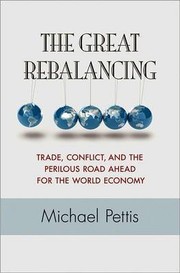
The Great Rebalancing

The Great Rebalancing

Michael Pettis
2013
T2 233 pages · about 3h 53m to read Open Librarygoodreads

Savings imbalances, capital flows and who is forced to absorb them.

Summary

Michael Pettis, who teaches finance at Peking University, argues that global trade imbalances are produced by domestic policies that suppress household consumption, and that currency values and trade policy are secondary. The argument follows from an accounting identity: a country's current account surplus equals the excess of its savings over its investment, so any explanation of the surplus must explain that gap.

His mechanism concerns the transfer of income away from households. In China, financial repression through low deposit rates, an undervalued currency, and wage growth below productivity growth transferred income from households to firms and to the state, which raised the savings rate mechanically. Germany achieved a similar result through wage restraint after 2000. The surplus countries then require deficit countries to absorb the difference, and the deficit countries must respond either with higher unemployment or with higher debt.

Pettis draws several conclusions that unsettle both sides of the usual argument. Trade surpluses reflect weak domestic demand rather than competitive strength. Deficit countries do not choose their deficits; capital inflows force the adjustment onto them. China's investment-driven growth model produced capital misallocation that must eventually be recognised, either through slower growth or through explicit losses. And rebalancing requires raising the household share of income in surplus countries, which is politically difficult because it means reducing the share going to the interests that benefit. The framework is powerful and Pettis states it more confidently than the evidence always supports. It has become one of the standard lenses for analysing Chinese growth.

Key takeaways 7

  1. A current account surplus equals the excess of savings over investment, so explaining a surplus requires explaining that gap.
  2. Financial repression, currency undervaluation and wage suppression transfer income from households to firms, which raises the savings rate mechanically.
  3. Trade surpluses reflect weak domestic consumption rather than competitive strength.
  4. Deficit countries do not choose their deficits, since capital inflows force the adjustment through either unemployment or debt.
  5. China's investment-led growth produced capital misallocation whose losses must eventually be recognised somewhere.
  6. Rebalancing requires raising the household share of national income, which reduces the share going to the interests that benefit from the current arrangement.
  7. Currency appreciation alone does not rebalance trade unless it changes the distribution of income between households and producers.

Who should read it

Macro investors who want a rigorous accounting framework for analysing trade imbalances, Chinese growth and the constraints facing deficit countries.

Similar books 6

Chosen by shared topics, the entries that hold them, and the people who recommended both.

Joseph E. Stiglitz · 2002

An attack on the IMF's one-size-fits-all policies in the crises of the 1990s.

Recommended by: Patrick Collison

Dani Rodrik · 1997

The 1997 warning that the political backlash was coming.

Recommended by: Patrick Collison

Rana Foroohar · 2022

The case for localisation after the pandemic supply shocks.

Where it sits in the reference 2

Secular themes
Economics

Topics

EconomicsPolitics and GovernmentGlobalisation, development and offshore money