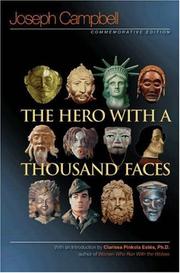
The Hero with a Thousand Faces
The one pattern of the hero's journey that runs through myths across cultures.
The monomyth; why the same story shape persuades across cultures
Summary
In a work of comparative mythology, Campbell argues that myths from many cultures share one structure, which he calls the monomyth: a hero leaves the ordinary world, enters a region of supernatural wonder, wins a decisive victory, and comes back with the power to give gifts to others. He draws on the stories of Osiris, Prometheus, the Buddha, Moses, Mohammed and Jesus, among others, and divides the journey into three parts, Departure, Initiation and Return.
Within those parts he names stages: the call to adventure, a mentor's help, the crossing of a guarded threshold, a road of trials, the ordeal, the reward, a symbolic death and rebirth, the road back and the use of the boon at home. Campbell reads the myths through Freudian ideas, Jungian archetypes and Arnold van Gennep's model of rites of passage. The Bollingen Foundation first published the book in 1949; Campbell revised it in 1968. George Lucas drew on it for Star Wars, and later reprints put Luke Skywalker on the cover.
Key takeaways 4
- Myths across many cultures follow one shared pattern of departure, initiation and return.
- The hero's journey moves through set stages, from the call to adventure to the return with a gift.
- Campbell reads myths with tools from psychoanalysis and the study of rites of passage.
- The same story shape has guided modern storytellers, George Lucas among them.
Who should read it
Readers interested in why some stories persuade across cultures, and in the pattern writers and marketers still borrow from myth.
Who recommended it 4 · 3 direct
Similar books 6
Chosen by shared topics, the entries that hold them, and the people who recommended both.
Conversations on the myths that cultures share and the stories they tell themselves.
Recommended by: Jim Collins, Nat Eliason, David Perell and 3 others
Rare, unforeseen, high-impact events drive history, explained only after the fact.
“The Black Swan U The best-known bird around today is The Black Swan, the second book from Nassim Nicolas Taleb.” — Howard Marks
Source: The Complete Collection, page 530
Recommended by: David Perell, Howard Marks, Marc Andreessen and 20 others

How today's certainties in culture and science may look once they are replaced.
“Hard to read and not emerge humbled.” — Marc Andreessen
Source: @pmarca, 'Thread: Books I've recently read and recommend'
Recommended by: Marc Andreessen, Brad Feld, Bryan Johnson and 1 other
How television turned public discourse from argument into entertainment.
“The most prescient here is Neil Postman's Amusing Ourselves to Death, originally published in 1985. It's long, but I'm going to quote the foreword in its entirety because it's worth reading a few times over:” — Matt Mullenweg
Source: Culture of Distraction
Recommended by: Keith Rabois, Matt Mullenweg, Nat Eliason and 3 others
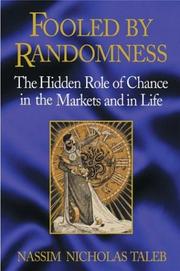
Why people mistake luck for skill, above all in markets.
“Fooled By Randomness was unquestionably the best non-fiction book I read in 2005.” — Brad Feld
Source: Book Review: Fooled By Randomness — Feld Thoughts
Recommended by: Barton Biggs, Brad Feld, Derek Sivers and 15 others

The argument that play is primary to culture and a condition of it.
Recommended by: Stewart Brand
Where it sits in the reference 1
Topics 4
As an Amazon Associate I earn from qualifying purchases.