The House of Rothschild
Summary
Ferguson wrote a two-volume history of N M Rothschild & Sons and its sister houses in Frankfurt, Paris, Vienna and Naples, covering roughly 1798 to 1999. He worked from the family's own archive, including thousands of letters the brothers wrote each other in a Hebrew-script German dialect that earlier historians could not read. The result is a business history built on partnership accounts, bond prospectuses and internal correspondence rather than on secondary legend.
The central argument is that the Rothschilds became the largest private financial institution of the nineteenth century by dominating one product: sovereign bond underwriting and distribution. Their advantages were a multinational partnership structure that let them arbitrage between five capitals, a private courier network that delivered political and price information faster than governments had it, and a family constitution that kept capital undivided by restricting partnership to male descendants and encouraging cousin marriage. Ferguson also argues they exercised real influence over war and peace by deciding which states could borrow, while rejecting the conspiratorial version of that claim.
The second volume explains the relative decline. The house stayed a partnership when rivals became joint-stock banks, largely avoided American industrial finance and the new corporate securities business, and lost ground to Morgan and the German universal banks. Ferguson treats the twentieth century, including expropriation in Austria and the postwar rebuilding, more briefly.
Critics have said Ferguson is too generous to his subjects, who granted him archive access, and that the density of bond issues and family detail buries the analysis. The financial-power thesis is also contested by historians who think he overstates how much bankers constrained states.
Key takeaways 7
- The Rothschilds' core business was underwriting and distributing government bonds, not commercial banking or industrial finance.
- A partnership spread across five European capitals let the family arbitrage price and information differences that no single-country bank could exploit.
- Private couriers and coded correspondence gave the family a speed advantage in political news that translated directly into trading profits.
- Family rules that barred daughters from partnership and encouraged cousin marriage kept the capital base intact across generations.
- The family's power over states came from controlling access to credit rather than from any coordinated political program.
- The house declined relative to rivals because it stayed an unlimited partnership and skipped American industrial securities.
- Nineteenth-century sovereign lending was concentrated in a handful of houses, so bond spreads reflected relationships as much as fundamentals.
Who should read it
Investors and operators who want a documented case study of how information advantage, capital structure and family governance sustained a financial franchise for a century, and how the same choices ended it.
About Niall Ferguson
Historian and senior fellow at the Hoover Institution, Stanford; previously taught at Oxford, Harvard and NYU Stern.
The Ascent of Money traces credit, bond markets, joint-stock equity, insurance and property finance from their origins, giving investors the institutional history behind instruments they price every day. The House of Rothschild and High Financier examine how two banking houses actually made money and managed sovereign and political risk over long periods.
Hoover Institution, Belfer Center, Harvard University, Oxford, Harvard
Who recommended it 1
Similar books 6
Chosen by shared topics, the entries that hold them, and the people who recommended both.
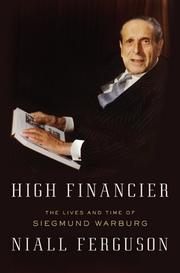
Siegmund Warburg, who fled Germany and founded S.G. Warburg in London.
Recommended by: Mohnish Pabrai

The 1988 bidding war for RJR Nabisco, the largest leveraged buyout to that date.
Recommended by: Jim Collins, Mohnish Pabrai and 1 other
Authorised 150-year corporate history
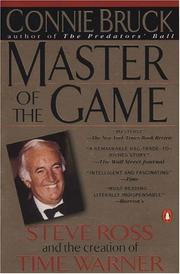
Steve Ross's path from funeral homes and parking lots to the Time Warner merger.
Recommended by: Mohnish Pabrai, Charlie Munger
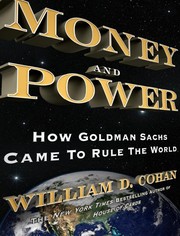
Goldman Sachs from Marcus Goldman to the 2008 crisis, from internal documents.
Recommended by: Mohnish Pabrai
Where it sits in the reference 2
Topics