The Logic of Scientific Discovery
Falsifiability as the line between science and non-science.
Summary
Popper argues that science should adopt a method based on falsifiability, because no number of experiments can prove a theory while a reproducible experiment or observation can refute one. The argument rests on a logical asymmetry: universal statements can never be derived from singular statements, but a singular statement can contradict them. A theory counts as falsified only when a reproducible effect refutes it, and falsifiability, not verification, marks the line between science and non-science.
The book is Popper's 1959 English rewriting of Logik der Forschung, published in German in 1934. In it he criticises psychologism, naturalism, inductivism and logical positivism, and in chapters three and four he discusses the objection that a hypothesis is never tested alone, which critics of naive falsificationism raise. Bryan Magee judged its criticism of logical positivism devastating, arguing that the verification principle, applied strictly, would have destroyed all of science. Its publication stimulated debate about scientific knowledge among philosophers who disagreed with it, Thomas Kuhn among them.
Key takeaways 4
- No amount of confirming evidence proves a universal theory, but one reproducible counter-example can refute it.
- A theory is scientific if it can in principle be shown false.
- Inductive reasoning from observations cannot justify scientific laws.
- Testing a theory means trying to refute it, not collecting cases that agree with it.
Who should read it
Investors and analysts who want the founding argument for testing beliefs by looking for disconfirming evidence.
Who recommended it 1
Similar books 6
Chosen by shared topics, the entries that hold them, and the people who recommended both.

Knowledge grows by bold guesses that we then try to refute, not by proof.
Recommended by: Patrick Collison

The limits of what science can know about the world.
Recommended by: Shane Parrish
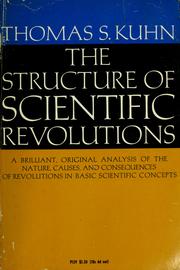
Science moves through long stretches of normal work broken by paradigm shifts.
“Thomas Kuhn laid out the best-known framework for this analysis in his seminal book,The Structure of Scientific Revolutions (1962).” — Michael Mauboussin
Source: Shift Happens: On a New Paradigm of the Markets as a Complex Adaptive System, page 2
Recommended by: Jim Collins, Michael Mauboussin, Nat Eliason and 8 others

Reality through four strands: many-worlds physics, computation, evolution, Popper.
Recommended by: Naval Ravikant, Patrick Collison and 4 others
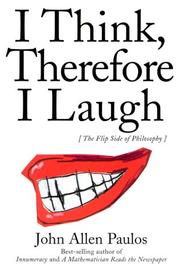
Logic and analytic philosophy explained through jokes.
Recommended by: Mohnish Pabrai, Nassim Nicholas Taleb

What makes a truth objective: what stays the same across perspectives.
Recommended by: Nassim Nicholas Taleb
Where it sits in the reference 1
Topics 4
As an Amazon Associate I earn from qualifying purchases.