Updates

  1. Person pages list letters, writing, profiles and links as sortable tables with filters, and show each person's companies as links; Fund letters show each letter's description in its own column.
  2. Experts show a checked job title and a short description of each person; 30 more people have photographs.
  3. Every company, fund, university and publication the experts work for has a page listing the people there.
  4. Fund letters show each letter's thesis and filter by it; 225 person pages list the essays, columns and newsletter issues the person wrote.
  5. Person pages list every essay and newsletter issue a person wrote, and their own books as a table in List view.
  6. Recommends shows the five largest kinds of book and the rest under More; browse pictures load sooner.
  7. Podcasts and talks link the original episode, filter by Audio and video or Press, and list each publisher once.
  8. Pages are wider, Recommends has List and Grid, and a filter clicked again turns off.
  9. Book cards sit in a ruled grid with Open Library and Goodreads links and each book's one-line note.
  10. Funds is now Investors; each investor's styles are buttons that filter the table.
  11. Podcasts and talks on a person's page filter by year and publisher and show as a list or a grid of pictures.
  12. Quotes show only people's own words: 472 summaries written by list sites are gone.
  13. Country pages open from Browse again, and every link on the shelf lands on a page.
  14. Subject and person pages show their sections as tabs, and each book appears once on a person's page.
  15. Book cards show the quote, who said it and the source; grids show five cards to a row.
  16. On a phone, a menu holds the sections, search, Updates, Feedback and dark mode.
  17. Feedback takes a screenshot of the page with no browser prompt, opens a screenshot full size when you click it, and clears itself once sent.
  18. Book cards are centred, search names the topic each book sits in, and any text cut short shows whole on hover.
  19. Search groups its results by kind: people, companies, geographies, subjects, topics, books, funds, fund letters and papers.
  20. The Books table lists who recommended each book by name, and the browser tab names the section you are in.
  21. Feedback can take a screenshot of the page, or one you paste or choose, and opens in the corner beside Updates.
  22. Each rail button reopens its section where you left it, and Browse, Table and People show on every book and subject page.
  23. Filters grey out choices that hold nothing instead of hiding them, and Books › People filters by authors or recommenders.
  24. Feedback takes a subject line and up to three screenshots.
  25. Biographies are grouped by the person they are about: 41 new pages, from Abraham Lincoln to Lee Kuan Yew.
  26. Sport splits into 23 sports, and Religion into one topic per faith.
  27. Book lists show as cards: the cover, one recommendation quote and every recommender by name.
  28. Seventeen subjects that had two or three pages under different names now have one page each.
  29. Every page lists its Experts as authors and recommenders, with a link to them on the Experts tab.
  30. Economics, Financial history, Financial panics and Accounting are subjects of their own, with one page per financial crisis.
  31. Book, person and subject pages open inside the app, so the tabs stay in view.
  32. 996 more book covers, and photographs or logos for 227 more people and companies.
  33. Books › Browse shows every subject as cards, and the rail holds Fund letters, Papers, Experts, Books and Funds.
  34. Every topic over 150 books splits into narrower topics, each with a page of its own.

Send feedback

What is it?
Screenshots, up to 3 (optional)
or paste one with Ctrl+V

We use your email only to reply to you.

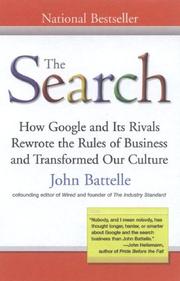
The Search

The Search

John Battelle
2005
T2 324 pages · about 5h 24m to read Open Librarygoodreads

Google set inside the wider history of search and the database of intentions.

Summary

Battelle, who founded Wired and The Industry Standard, wrote the first substantial account of the search industry, covering the pre-Google search engines, Google's founding and rise, the invention of paid search at GoTo and Overture, and the implications of search data.

The business history is the strongest part. Battelle documents that the auction-based paid search model was invented by Bill Gross at GoTo, not by Google, and that Google adopted and improved it after initially resisting advertising entirely. He explains why the earlier portals failed to build search businesses, since they treated search as a feature that sent users away rather than as the product, and he covers the AdWords quality score innovation that made the auction rank by expected revenue rather than by bid alone.

His broader concept is the database of intentions, meaning the accumulated record of everything people have searched for, which he argues is a new kind of artefact: a continuously updated record of collective and individual desire, held privately by companies, with commercial and political consequences nobody had yet worked out. That framing anticipated much of the subsequent debate about data and platforms.

The book was published in 2005 and is dated in every particular: Google's later products, mobile, social platforms and the current advertising structure are all absent, and Battelle's speculations about where search would go were mostly wrong in detail. It is worth reading for the origin of paid search economics and for the database of intentions concept, which is the most useful idea in it.

Key takeaways 7

  1. The auction model for paid search was invented at GoTo by Bill Gross, and Google adopted it after initially refusing to mix advertising with results.
  2. Ranking search advertisements by expected revenue rather than by bid alone was the change that made the auction produce better results and more money at once.
  3. Portal companies failed at search because they treated it as a feature that sent users away rather than as the product itself.
  4. The accumulated record of what people search for is a new kind of artefact, held privately, that reveals intention rather than merely behaviour.
  5. Search advertising works because it captures demand that already exists rather than creating it, which is why its economics differ fundamentally from display advertising.
  6. Google's refusal to sell placement in organic results was a commercial decision that protected the credibility on which the advertising business depended.
  7. Concentration of search intent data in a single company creates commercial and political power that existing regulation was not designed to address.

Who should read it

Founders and investors in advertising or marketplace businesses who want the origin of paid search economics and the earliest statement of the intent-data argument.

Who recommended it 2

Keith Raboisreported

Similar books 6

Chosen by shared topics, the entries that hold them, and the people who recommended both.
Robert H. Reid · 1997

Contemporary profiles including Yahoo's founding by Yang and Filo.

Recommended by: Keith Rabois
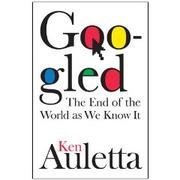
Ken Auletta · 2009

How Google disrupted newspapers, books, television and advertising.

Recommended by: Brian Chesky, Keith Rabois
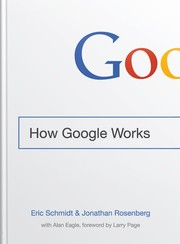
Eric Schmidt, Jonathan Rosenberg · 2014

How Google hired and managed smart creatives, people who can't be told what to do.

Randall E. Stross · 2008

Recommended by: Keith Rabois

Steven Levy · 2011

Google's technical and business decisions from Stanford research to 2011.

Nicholas Carlson · 2015

Marissa Mayer's arrival at Yahoo in 2012 and her struggle to turn it around.

Where it sits in the reference 2

Companies
Companies

Topics

Company HistoriesTechnology and ComputingTech company stories