Updates

  1. Person pages list letters, writing, profiles and links as sortable tables with filters, and show each person's companies as links; Fund letters show each letter's description in its own column.
  2. Experts show a checked job title and a short description of each person; 30 more people have photographs.
  3. Every company, fund, university and publication the experts work for has a page listing the people there.
  4. Fund letters show each letter's thesis and filter by it; 225 person pages list the essays, columns and newsletter issues the person wrote.
  5. Person pages list every essay and newsletter issue a person wrote, and their own books as a table in List view.
  6. Recommends shows the five largest kinds of book and the rest under More; browse pictures load sooner.
  7. Podcasts and talks link the original episode, filter by Audio and video or Press, and list each publisher once.
  8. Pages are wider, Recommends has List and Grid, and a filter clicked again turns off.
  9. Book cards sit in a ruled grid with Open Library and Goodreads links and each book's one-line note.
  10. Funds is now Investors; each investor's styles are buttons that filter the table.
  11. Podcasts and talks on a person's page filter by year and publisher and show as a list or a grid of pictures.
  12. Quotes show only people's own words: 472 summaries written by list sites are gone.
  13. Country pages open from Browse again, and every link on the shelf lands on a page.
  14. Subject and person pages show their sections as tabs, and each book appears once on a person's page.
  15. Book cards show the quote, who said it and the source; grids show five cards to a row.
  16. On a phone, a menu holds the sections, search, Updates, Feedback and dark mode.
  17. Feedback takes a screenshot of the page with no browser prompt, opens a screenshot full size when you click it, and clears itself once sent.
  18. Book cards are centred, search names the topic each book sits in, and any text cut short shows whole on hover.
  19. Search groups its results by kind: people, companies, geographies, subjects, topics, books, funds, fund letters and papers.
  20. The Books table lists who recommended each book by name, and the browser tab names the section you are in.
  21. Feedback can take a screenshot of the page, or one you paste or choose, and opens in the corner beside Updates.
  22. Each rail button reopens its section where you left it, and Browse, Table and People show on every book and subject page.
  23. Filters grey out choices that hold nothing instead of hiding them, and Books › People filters by authors or recommenders.
  24. Feedback takes a subject line and up to three screenshots.
  25. Biographies are grouped by the person they are about: 41 new pages, from Abraham Lincoln to Lee Kuan Yew.
  26. Sport splits into 23 sports, and Religion into one topic per faith.
  27. Book lists show as cards: the cover, one recommendation quote and every recommender by name.
  28. Seventeen subjects that had two or three pages under different names now have one page each.
  29. Every page lists its Experts as authors and recommenders, with a link to them on the Experts tab.
  30. Economics, Financial history, Financial panics and Accounting are subjects of their own, with one page per financial crisis.
  31. Book, person and subject pages open inside the app, so the tabs stay in view.
  32. 996 more book covers, and photographs or logos for 227 more people and companies.
  33. Books › Browse shows every subject as cards, and the rail holds Fund letters, Papers, Experts, Books and Funds.
  34. Every topic over 150 books splits into narrower topics, each with a page of its own.

Send feedback

What is it?
Screenshots, up to 3 (optional)
or paste one with Ctrl+V

We use your email only to reply to you.

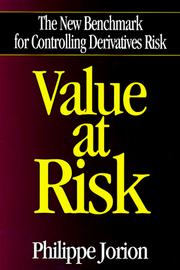
Value at Risk

Value at Risk

Philippe Jorion
1996
T3 454 pages · about 7h 34m to read Open Librarygoodreads

The standard technical reference for the measure and its limits.

Summary

Philippe Jorion wrote the standard reference on value at risk, the measure that summarises a portfolio's potential loss as a single number: the loss that will not be exceeded over a specified horizon with a specified probability.

The book covers the measure's construction. The three principal methods are the variance-covariance approach, which assumes normally distributed returns and computes the loss analytically from the portfolio's volatility; historical simulation, which revalues the current portfolio using historical price movements; and Monte Carlo simulation, which generates scenarios from an assumed distribution. Jorion sets out the assumptions each requires, the computational demands, and where each fails.

He is careful about the limitations, and later editions are more so. Value at risk says nothing about losses beyond the threshold, which is the region that matters in a crisis. It depends on estimated volatilities and correlations that change, and that change most when they matter most. It can be gamed by positions that concentrate risk beyond the confidence level, which is why option selling strategies report low value at risk. Jorion covers backtesting to detect model failure, stress testing as a complement, and the regulatory use of the measure under the Basel framework, which he notes creates incentives that pure risk management would not. The book also covers the applications to credit and operational risk. It is technical and assumes statistics.

Key takeaways 7

  1. Value at risk states the loss that will not be exceeded over a horizon at a confidence level and says nothing about losses beyond it.
  2. The variance-covariance method assumes normally distributed returns, which understates tail risk in every real portfolio.
  3. Historical simulation avoids distributional assumptions and assumes instead that the future resembles the sampled past.
  4. Estimated volatilities and correlations change most in exactly the conditions where the measure is relied upon.
  5. Strategies that concentrate risk beyond the confidence level, including option selling, report low value at risk while carrying large exposure.
  6. Backtesting breach frequency against the stated confidence level is how model failure is detected.
  7. Regulatory use of the measure under Basel creates incentives that pure risk management would not produce.

Who should read it

Risk managers and quantitative practitioners who need the standard reference on value at risk construction and, more importantly, on its failure modes.

Similar books 6

Chosen by shared topics, the entries that hold them, and the people who recommended both.
Nassim Nicholas Taleb · 2001

Why people mistake luck for skill, above all in markets.

“Fooled by Randomness is a serious, intellectually sophisticated book, well worth reading carefully. At times, the book is condescending. Nevertheless, there are some great insights.” — Barton Biggs

Source: Biggs on a sophisticated book worth reading carefully

Recommended by: Barton Biggs, Michael Mauboussin and 11 others
Paul Embrechts, Claudia Kluppelberg, Thomas Mikosch · 1997

The technical reference on extreme value theory for insurance and finance

Recommended by: Nassim Nicholas Taleb

Aaron Brown · 2011

A risk manager's history of quantitative risk and what value-at-risk is for.
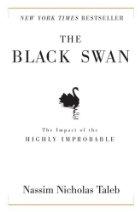
Nassim Nicholas Taleb · 2007

Rare, unforeseen, high-impact events drive history, explained only after the fact.

“The message of The Black Swan is how important it is to realize that the things everyone rules out can still come to pass.” — Howard Marks

Source: Oaktree memo 'The Limits to Negativism'

Recommended by: Howard Marks, Marc Andreessen, Nat Eliason and 18 others
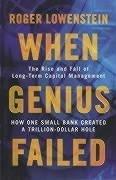
Roger Lowenstein · 2000

How a hedge fund's bond bets on borrowed money lost $4.6 billion in four months.

Didier Sornette · 2002

Log-periodic power laws as a physicist's model of crash formation

Recommended by: Nassim Nicholas Taleb

Where it sits in the reference 1

Portfolio & risk

Topics

Finance and Markets