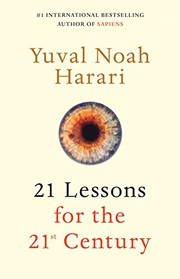
21 Lessons for the 21st Century
Twenty-one essays on today's challenges, from technology and politics to truth.
Summary
Harari's third book addresses the present rather than the past or the future, and is organised as twenty-one essays across five sections covering technological challenge, political challenge, despair and hope, truth, and resilience. The technology essays argue that the combination of biotechnology and machine learning threatens liberal democracy's foundational assumption that individual choice is authoritative, because systems that know a person better than they know themselves can predict and manipulate their decisions. He also raises the prospect of a large class of people who are economically irrelevant rather than exploited, which he argues is a novel political problem without historical precedent.
The political essays address the failure of nationalism, religion and traditional ideologies to address problems that are global by nature, specifically nuclear weapons, ecological collapse and technological disruption, and argue that no national government can address any of them alone.
The essays on truth cover post-truth politics, arguing that humans have always organised around fictions and that the current moment is not exceptional, and cover the responsibility of individuals in an information environment designed to capture attention. The final essays cover education, arguing that specific knowledge is a poor investment when the relevant knowledge changes within a career, and meditation, where Harari describes his own practice.
The book is a collection of essays adapted from journalism and it repeats material from his earlier books substantially. The arguments are stated confidently without much supporting evidence, and specialists in each area find the treatment shallow. Its value is as a compact statement of the questions rather than as analysis of any one of them.
Key takeaways 8
- Systems that combine biological knowledge with computing power can know a person better than they know themselves, which undermines the assumption that individual choice is authoritative.
- The political problem of the coming decades may be a class of people who are economically irrelevant rather than exploited, which has no historical precedent.
- Nuclear weapons, ecological collapse and technological disruption are global problems that no national government can address alone.
- Nationalism can address problems within a nation and has no mechanism for problems that cross borders by nature.
- Humans have always organised around collective fictions, so the current concern about post-truth misidentifies a permanent condition as a new crisis.
- Specific knowledge is a poor educational investment when the relevant knowledge changes several times within a career, which favours adaptability over content.
- Attention is the resource being competed for, and the information environment is designed to capture it rather than to inform.
- Harari treats none of these as settled, and the book states questions more effectively than it answers them.
Who should read it
Readers wanting a compact statement of the technological and political questions of the present decade, treating it as provocation rather than analysis.
Who recommended it 8 · 4 direct
“His book “Sapiens” was amazing, so I read this new one. It’s just some thoughts on our present and near future. Not so different from what you find in every-day articles. I’m personally averse to news commentaries, so I shouldn’t have read this. Still, some interesting ideas, and the last chapter was great.”
“An important examination into today's most pressing political, technological, social, and existential issues as we move into the unchartered territory of the future.”
Similar books 6
Chosen by shared topics, the entries that hold them, and the people who recommended both.
How information networks, from the Stone Age to AI, have made and unmade societies.
Recommended by: Andrew Wilkinson

Why customs that look irrational come from concrete social and economic conditions.
“Mind-blowing anthropology. Great argument that the reasons that religions worship cows or hate pigs, that tribes wage wars, or Europe's 200 years of witch hunts, are all very practical economic reasons usually unknown to the participants or washed out of history. But they're revealed here in zoomed-out hindsight. My notes here can't describe it. You have to read the whole book. Riveting.” — Derek Sivers
Source: Derek Sivers book notes (primary, rated list) · Rating: 9/10
Recommended by: Derek Sivers, Mohnish Pabrai
How shared fictions such as money, nations and gods let humans cooperate at scale.
“…books I've recommended, highlighted to death, or forced on friends.” — Andrew Wilkinson
Source: Andrew Wilkinson's Bookshelf, neverenough.com
Recommended by: Andrew Wilkinson, Bill Gates, David Perell and 40 others
What traditional societies can teach modern ones about living.
Recommended by: Bill Gates, Mohnish Pabrai
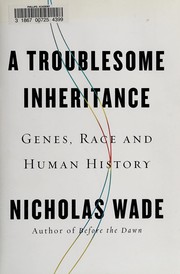
The genetic basis of race and its role in human history, from genome mapping.
Recommended by: Mohnish Pabrai
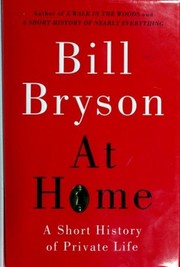
How commerce, architecture and technology shaped the modern home.
Recommended by: Andrew Wilkinson, Mohnish Pabrai and 1 other
Where it sits in the reference 4
As an Amazon Associate I earn from qualifying purchases.